
To avoid a herpes outbreak, keep your immune system strong and stay clear of the triggers that wake the virus up: long lasting stress, too little sleep, illness, strong sunlight on the lips, friction on the skin and a diet low in protein and fresh food. The research backs this up. A study that followed women with genital herpes week by week found that persistent stress predicted a genital herpes outbreak the following week. In a lip trial, sunscreen prevented every sunlight triggered cold sore, while 71% of people without it got one. And people taking more than 3 grams of lysine a day had 2.4 times fewer outbreaks. If you do feel the first tingle, act straight away: a beeswax ointment at that moment can stop an outbreak from building up. For all natural options in one place, see our guide to natural herpes remedies, and for location specific care, herpes on lips and genital herpes outbreak treatment at home.
How to avoid a herpes outbreak, in short
- Keep your immune system strong: protein at every meal, five portions of fruit and vegetables a day, 7 to 9 hours of sleep, daily movement.
- Lower ongoing stress, and rest after hard weeks.
- Protect your lips from sun and wind with an SPF lip balm.
- Avoid friction on sensitive skin and use lubricant during sex.
- Support your body with lysine, zinc and vitamin C.
- At the first tingle, apply a beeswax ointment and slow down.
Why Herpes Outbreaks Happen
After the first infection, the herpes virus sleeps in a nerve cluster near the spine for life. Most of the time your immune system keeps it quiet. In fact, it wakes up far more often than you’d think, and researchers found that about half of these wake ups are cleared within 12 hours, before any sore appears. An outbreak happens when something weakens that control long enough for the virus to reach the skin and multiply. That something is the trigger.
So avoiding outbreaks comes down to two things: keeping your immune system strong, and knowing your personal triggers. The stronger your defences, the less virus reaches the skin, and the fewer and shorter your outbreaks. We explain this viral charge in more depth in how long a herpes outbreak lasts.
The Most Common Herpes Outbreak Triggers
1. Ongoing stress
This is the biggest one I see. Not a single stressful moment, but weeks of pressure. The study above followed women with genital herpes for months and found that persistent stress and the highest levels of anxiety predicted outbreaks, while short term stress and one off events didn’t. Stress hormones weaken the immune cells that keep herpes in check, which researchers describe as stress associated changes in immune control. If your outbreaks keep following busy periods, that’s your pattern.
2. Too little sleep
Sleep is when your body repairs and your immune system resets. A few short nights in a row often come right before an outbreak.
3. Illness and fever
A cold, the flu or any fever keeps your immune system busy, which gives herpes a window. That’s where the names cold sore and fever blister come from.
4. Sunlight on the lips
UV light is one of the best proven triggers for herpes on the lips. In a controlled trial, 71% of people exposed to UV light got a cold sore within about three days, but none did when sunscreen was applied first. Skiing, beach days and summer holidays are classic moments.
5. Cold wind and dry, cracked lips
Damaged skin on the lips makes it easier for the virus to break through. Keep your lips moisturised, especially in winter.
6. Friction and skin damage
For genital herpes, friction from sex, tight clothing or shaving can set off an outbreak. On the lips, dental work, lip fillers, a knock or picking at dry skin can do the same. Use plenty of lubricant, wear loose cotton underwear and tell your dentist or beauty therapist if you get cold sores.
7. Your period
Many women notice outbreaks around their period. The research is mixed here: the same stress study didn’t find a link with the menstrual cycle. It may be that the tiredness and lower mood around your period play a role more than the hormones themselves. If you do notice the pattern, it’s worth planning extra care for that week.
8. A diet low in protein and fresh food
Your immune cells are built from protein, and a review explains that too little protein weakens immune function. Fruit and vegetables matter too: in a trial, people eating five portions a day had a stronger immune response than those eating two. A diet high in sugar, alcohol and processed food leaves less room for what your body actually needs.
9. Foods high in arginine
The herpes virus uses the amino acid arginine to multiply, while lysine works against it. Some people notice outbreaks after eating a lot of nuts, seeds or chocolate, which are high in arginine. The evidence isn’t strong, but if you see a pattern, cut back during stressful weeks.
10. A weakened immune system
Some illnesses and medications lower your defences, which can mean more frequent and longer outbreaks. If that applies to you, work with your doctor on a plan.
Cold sore triggers
Cold sores are herpes on the lips, so the triggers are the same, with sunlight, wind, fever and lip injuries at the top of the list. For everything cold sore specific, from causes to remedies, see our complete guide to cold sores.
How to Prevent Herpes Outbreaks Naturally
I think of prevention in four levels. The first two do the most work, every day. The last two come in when you feel an outbreak coming.
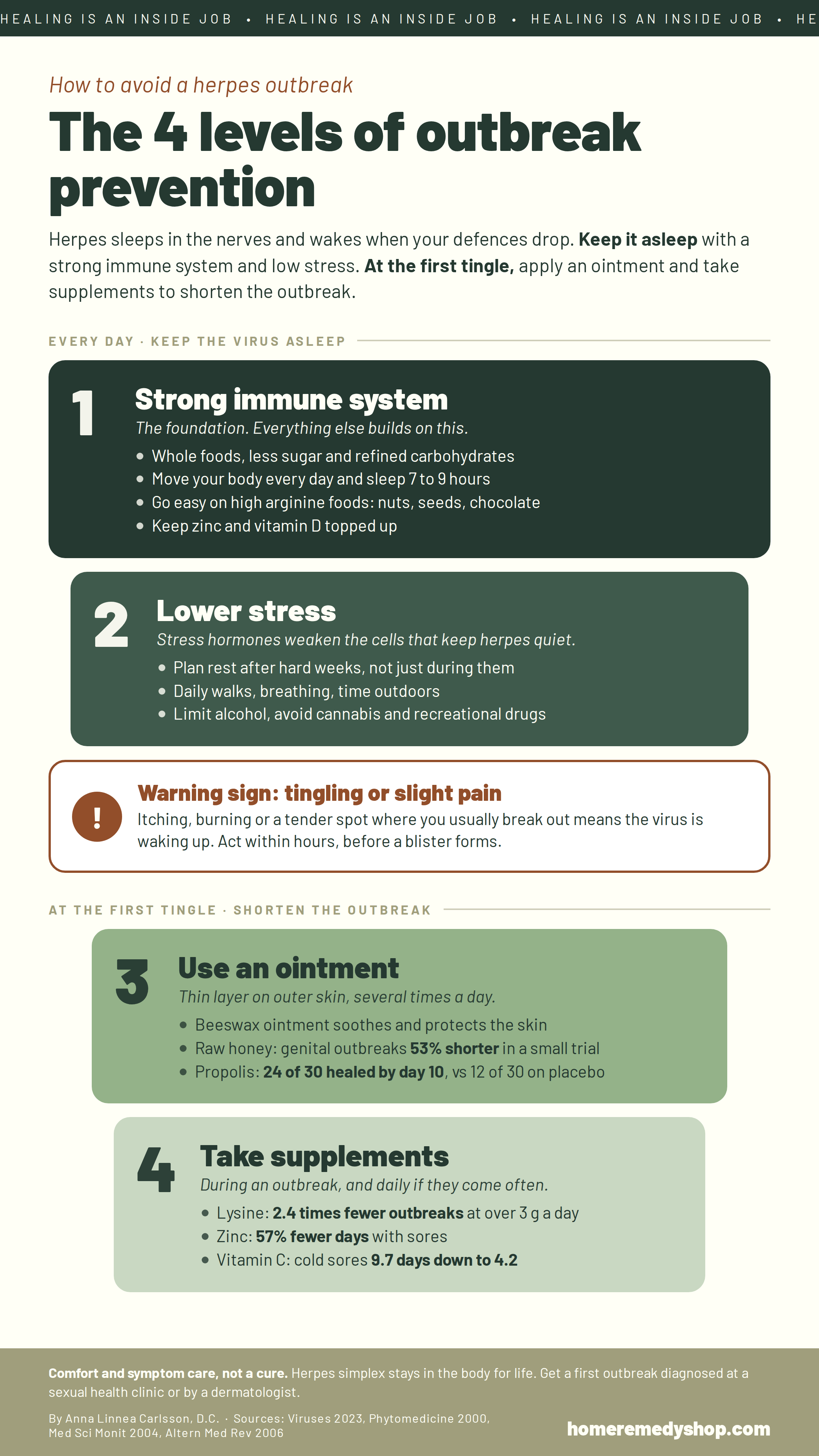
Level 1: A strong immune system
- Protein at every meal: eggs, fish, chicken, yogurt, lentils, chickpeas or tofu. Many of these are also rich in lysine.
- Five portions of fruit and vegetables a day, with plenty of vitamin C from peppers, kiwi, citrus and broccoli.
- Less sugar and alcohol, especially in busy weeks.
- 7 to 9 hours of sleep.
- Daily movement, even a 30 minute walk.
Level 2: Lower stress
You can’t remove all stress, but you can stop it from becoming the constant background of your life. Build real rest into your week, go outside, breathe, say no a bit more often, and plan a quieter few days after a demanding period. When you notice your outbreaks follow the same stressful situations, that’s valuable information. It tells you where to put your care.
Level 3: Act at the first tingle
Tingling, itching or a slight burning means the virus is on its way to the skin. This is the moment to act, not when the blisters appear. I put a beeswax ointment on straight away, and in my experience the outbreak is usually gone within about two days. Research on bee products supports this: honey made lip outbreaks 35% shorter and genital outbreaks about half as long. Learn to recognise your own early signs in our guide to herpes outbreak symptoms.
The ointment I use at the first tingle
The Aromafisis beeswax ointment with oregano is handmade from olive oil, beeswax, oregano oil, clary sage and mastic oil, with no preservatives. I use it on every outbreak, and it’s usually gone within about two days.
Not an affiliate link. I recommend it because I use it myself. It’s comfort care for the skin, not a cure for herpes.
Level 4: Supplements
- Lysine: the research points to more than 3 grams a day for fewer outbreaks. Lower doses didn’t work as well.
- Zinc: a zinc treatment shortened cold sores from 9.7 to 4.2 days on average.
- Vitamin C, ideally from food, to support your immune system.
Check with your doctor or pharmacist before taking supplements if you’re pregnant, take medication or have a health condition. For more natural antivirals, read about the strongest natural antiviral for herpes.
How to Prevent a Herpes Outbreak During Your Period
- Plan a lighter week and go to bed earlier in the days before your period.
- Keep protein, fruit and vegetables high, and cut back on sugar and alcohol that week.
- Wear loose cotton underwear and change pads or tampons often to keep the area dry.
- Keep your ointment within reach so you can use it at the first tingle.
Keep a Trigger Diary
Everyone’s triggers are a little different. For two or three months, write down each outbreak and what happened in the week before: stress, sleep, food, alcohol, sun, illness, sex, your cycle. Patterns usually show up quickly, and once you know your triggers, you know exactly where to focus.
When to See a Doctor
- Six or more outbreaks a year, or outbreaks that keep getting worse. See your GP or a dermatologist, and ask them to check your general health, including iron, vitamin D and B12.
- An outbreak that hasn’t healed after three weeks. See your GP.
- A weakened immune system from illness or medication. Make a prevention plan with your doctor.
- Pregnancy. Tell your midwife or obstetrician if you have herpes.
- A painful red eye or blurred vision. See an eye doctor the same day.
Knowing exactly what you’re dealing with is what lets you care for it the right way naturally. If pain keeps you up during an outbreak, read how to sleep during a herpes outbreak, and for what each phase looks like, see herpes outbreak stages.
Frequently Asked Questions
How can I avoid a herpes outbreak?
Keep your immune system strong with protein, fruit, vegetables, sleep and movement, lower ongoing stress, protect your lips from the sun, avoid friction on sensitive skin and consider lysine and zinc. At the first tingle, apply a beeswax ointment and rest.
What triggers a herpes outbreak?
The most common triggers are ongoing stress, too little sleep, illness or fever, sunlight on the lips, cold wind, friction or skin damage, and a diet low in protein and fresh food. Some people also notice outbreaks around their period.
Can stress cause a herpes outbreak?
Yes. Research found that persistent stress and high anxiety predicted genital herpes outbreaks the following week, while short term stress didn’t.
How do you prevent a herpes outbreak naturally?
Build a strong immune system with a balanced diet, sleep and movement, keep stress low, use an SPF lip balm, and take lysine, zinc and vitamin C. Act at the first tingle with a beeswax, honey or propolis ointment.
Does sunscreen prevent cold sores?
It can prevent cold sores triggered by sunlight. In a trial, no one got a cold sore after UV exposure when sunscreen was applied to the lips first, compared with 71% without it.
This article is for general information and does not replace a diagnosis. If outbreaks are frequent, severe or don’t heal, see your GP, a dermatologist or a sexual health clinic.
