
Home Remedies for Eczema on Hands and Fingers: Natural Treatment That Starts in the Gut

Written by Montoya Sigafoose, founder of Home Remedy Shop · Medically reviewed by Veronique Claes d’Erckenteel, D.C., chiropractor since 1991 · Last reviewed: 22 October 2026
The best home remedies for eczema on hands and fingers work on two levels. On the outside: protect your hands from water, soap and irritants with gloves, wash with lukewarm water and a mild, fragrance-free wash, and apply a thick ointment or balm many times a day, sealed under cotton gloves at night. Cool soaks calm itchy blisters. On the inside: eczema is an inflammation that very often starts in the gut, so look for food triggers (milk is a common one), support your gut bacteria with fermented foods and fibre, and consider a gentle detox. See a doctor or dermatologist if your hands are infected (yellow crusts, pus, spreading redness), if eczema spreads quickly, or if it doesn’t improve within two to three weeks.
Eczema on the hands is one of the most common skin problems there is, and one of the most frustrating, because you use your hands for everything. It can look like very dry, cracked skin, like tiny itchy blisters along the fingers, or like red, rough patches that never quite heal. Most advice stops at creams. In this article I’ll share those too, but also the part that made the real difference in our family: looking at the gut. It’s part of our hands and feet series; for plain dry, cracked hands see our dry hands remedies, for the main guide see home remedies for calluses and dead skin, or browse all our natural home remedies.
The short version
- Protect: gloves for water and cleaning, lukewarm water, a mild wash.
- Moisturise: a thick ointment 4 to 6 times a day; cotton gloves overnight.
- Blisters: cool soaks, don’t pop them, and look at nickel and cobalt.
- Look inside: food triggers (milk, gluten), gut health, fermented foods and fibre.
- My son’s eczema: milk out, then zeolite cleared the last patches.
- Infection, rapid spreading or no improvement in 2 to 3 weeks: see a doctor.
See a doctor or dermatologist if the eczema has yellow crusts, pus, spreading redness or you feel feverish (infection), if painful, grouped blisters appear suddenly (this can be a herpes infection on eczema skin and needs care the same day), if a baby or young child has eczema with poor feeding, vomiting, diarrhoea or poor growth, or if your hands don’t improve after two to three weeks of good home care. Before cutting major food groups from a child’s diet, make sure they still get enough calcium, protein and energy from other foods.
Table of Contents
- What Does Eczema on Hands Look Like?
- Dry Eczema on Hands
- Eczema on Hands With Blisters (Dyshidrotic Eczema)
- My Son’s Eczema: Why I Look at the Gut First
- Eczema on Hands Natural Treatment: Heal From the Inside
- Eczema on Hands Home Treatment: Daily Routine
- 6 Home Remedies for Eczema on Hands and Fingers
- Best Lotion and Cream for Eczema on Hands
- Eczema on Fingers
- Frequently Asked Questions
What Does Eczema on Hands Look Like?
Hand eczema (hand dermatitis) can look quite different from person to person, and even from week to week. Typical signs:
- Dry, rough, red or darker patches on the backs of the hands, the knuckles or between the fingers.
- Thick, scaly skin and painful cracks, especially on the fingertips and palms.
- Tiny, deep, very itchy blisters along the sides of the fingers and on the palms.
- Itching or burning, often worse at night.
- Weeping, crusting or peeling skin during a flare.
Doctors usually describe a few types, depending on the cause: irritant hand eczema (from water, soap, detergents and friction, the most common type), allergic contact eczema (from something you’re allergic to, like nickel, rubber, fragrance or preservatives), and atopic hand eczema in people who also have eczema elsewhere, hay fever or asthma. Many people have a mix (European hand eczema guideline, Thyssen et al., 2022). Hand eczema that won’t settle, or that only appears where something touches your skin, is worth a patch test to find a contact allergy.
Hand eczema is sometimes confused with plain dry hands (no itch, no redness, better with cream within days) or with a fungal infection (often one hand only, with a clear, scaly edge; see our athlete’s foot guide).
Dry Eczema on Hands
Dry eczema on hands is the most common form: rough, tight, flaky skin that cracks on the knuckles and fingertips and itches. It’s usually triggered by frequent hand washing, cold weather, cleaning products and wet work, on top of a sensitive skin barrier. The treatment is protection and moisture: gloves for anything wet, a mild wash, and a thick ointment many times a day (see the routine below). Because the skin is cracked, avoid scrubs, fragrances and essential oils on the patches; they sting and can cause new allergies.
Eczema on Hands With Blisters (Dyshidrotic Eczema)
When eczema on your hands comes with tiny, deep, fluid-filled blisters, usually along the sides of the fingers and on the palms (sometimes the soles too), it’s called dyshidrotic eczema or pompholyx. The blisters itch intensely, then dry out and peel after a few weeks, and flares often come back in warm weather or with stress.
Metal allergy plays a surprisingly big role. Many people with dyshidrotic eczema react to nickel or cobalt, and these metals can trigger flares not only by touch but also through food (Nishizawa, 2016). In people sensitive to cobalt, a low-cobalt diet improved their dyshidrotic eczema (Stuckert and Nedorost, 2008). Foods high in nickel and cobalt include chocolate and cocoa, nuts, legumes (beans, lentils, soy), oats, whole grains, shellfish and canned food.
What helps: cool soaks and compresses, not popping the blisters, a thin ointment once they’ve dried, cotton gloves, avoiding metal jewellery during a flare, managing stress, and asking for a patch test if flares keep returning.
My Son’s Eczema: Why I Look at the Gut First
My son was born perfectly healthy. Then, at a year and a half, he burst out in eczema all over his body, right in the middle of a trip to the United States. It was terrifying. His beautiful soft skin turned into a harsh Mars landscape in a matter of days.
I’m still not completely sure what started the outburst, although I’d dare to say: be careful with raw organic milk. To me it felt very clear that the change in food on that trip was upsetting his gut, and I also wondered whether three months of breastfeeding had been enough to give him all the good bacteria he needed. (Raw, unpasteurised milk is something I’d now be extra careful with for little ones in any case.)
As soon as we got back to Europe, we went to the paediatrician to get tests done, and, to no surprise to me, everything was fine. How many parents have heard that, while clearly not everything is fine?
There’s actually a good reason for that. Standard allergy tests (skin prick tests and blood IgE tests) pick up fast, immediate reactions. But food can also cause delayed eczema flares that appear hours to days later, and these often don’t show up on those tests (Sütas et al., 2000). That’s why allergy guidelines say the most reliable way to find a food trigger in eczema is to take the food out and then carefully bring it back while watching the skin (Werfel et al., 2009).
That’s exactly what I ended up doing, with my obsession for getting to the bottom of health issues. The first two things I took out of his diet were milk and bread, and his skin was already improving. Then I reintroduced them one by one, and discovered that milk was the product he wasn’t tolerating any more. The solution was quite simple: take it out of his diet.
His skin improved a lot, but there were still some spots that just didn’t go away. So I gave him zeolite, and that cleared his skin entirely. It’s what I now use for any type of detox.
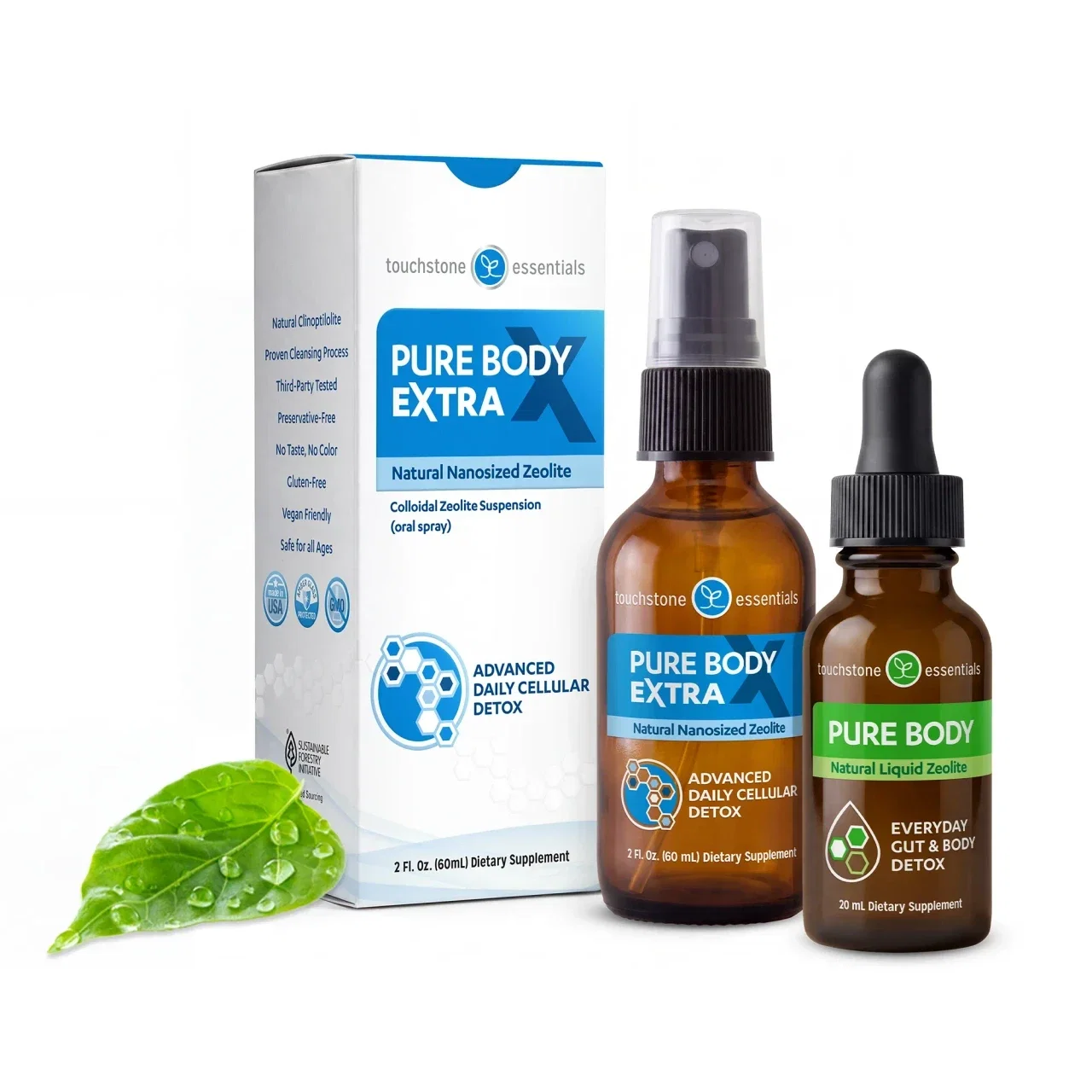
What finally cleared my son’s skin
The zeolite I now use for every detox
Taking milk out of my son’s diet improved his eczema a lot, but a few stubborn patches just wouldn’t go. That’s when I started him on zeolite. His skin cleared completely, and it’s what I now use for any kind of detox, for the whole family.
- Liquid zeolite spray: a few sprays in water, 30 seconds a day
- Binds heavy metals and toxins in the gut, lab tested
- Pure Body for the gut, Pure Body Extra for the whole body
- Follow the dosing on the label, especially for children
Affiliate link: we may earn a small commission at no extra cost to you.
A note on zeolite: zeolite (clinoptilolite) is a volcanic mineral that binds heavy metals and toxins in the gut, so they leave the body instead of being absorbed. A scientific review describes it as safe for use in humans, with effects on detoxification and the immune system (Kraljević Pavelić et al., 2018), and in a clinical study long-term supplementation lowered levels of metals such as nickel, aluminium and arsenic in the body (Kraljević Pavelić et al., 2022). Interestingly, nickel is also one of the metals linked to blistering hand eczema. There are no studies yet on zeolite for eczema itself, so this is our experience rather than proven treatment. Choose a purified, lab-tested product, follow the dose on the label, and for children talk it through with someone who knows your child’s health.
Eczema on Hands Natural Treatment: Heal From the Inside
Eczema shows up on the skin, but it’s an inflammation of the whole body, and the gut plays a big part. Research increasingly points to a “gut-skin axis”: the bacteria in your gut help train your immune system, and an imbalance there is linked to eczema. A review concluded that specific gut bacteria can either calm or fuel the immune response in eczema (Kang et al., 2018), and in babies a slower build-up of good gut bacteria in the first year was linked to atopic eczema (Ta et al., 2020).
For hand eczema specifically, a Canadian dermatology team found that people with moderate to severe chronic hand eczema had a clearly different gut microbiome from healthy people, with fewer bifidobacteria, bacteria known to calm the immune system (Bissonnette et al., 2024). In a follow-up, people with hand eczema without an allergic background had a less diverse gut microbiome (Bissonnette et al., 2025). These are small, early studies, but they match what I saw at home.
How to support your skin from the inside:
- Find your food triggers. Take out one or two suspects (milk and wheat/bread are common ones) for 3 to 4 weeks, watch the skin, then bring them back one at a time. Keep a simple food and skin diary.
- Eat fermented foods daily: plain yoghurt or kefir (if you tolerate dairy), sauerkraut, kimchi, miso.
- Feed your good bacteria with fibre: vegetables, onions, leeks, garlic, oats, slightly green bananas.
- Consider a probiotic. A meta-analysis of 20 trials found that probiotics, alone or with prebiotics, reduced eczema severity in children without food allergies (Vassilopoulou et al., 2024).
- Cut back on sugar, alcohol and ultra-processed food; eat more green vegetables and healthy fats (see our alkaline diet list).
- Detox gently: zeolite, as in our story above.
- Look at stress and sleep: flares often follow stressful weeks.
Eczema on Hands Home Treatment: Daily Routine
- Wash gently: lukewarm water and a mild, fragrance-free, soap-free wash; rinse well and pat dry.
- Moisturise immediately: a thick ointment or balm within a few minutes of washing, every time.
- Moisturise often: 4 to 6 times a day, and keep a tube next to every sink and in your bag.
- Glove up: rubber or nitrile gloves with cotton gloves inside for washing up, cleaning and wet work; warm gloves outdoors in winter.
- Remove rings when washing and during flares: soap and water get trapped underneath.
- Seal it at night: a thick layer of ointment under cotton gloves.
- Work on the inside: food triggers, gut health, stress.
Washing and wet work are the main triggers of hand eczema, and protecting the hands with gloves and regular moisturising is the foundation of every treatment plan (Thyssen et al., 2022).
6 Home Remedies for Eczema on Hands and Fingers
1. A thick ointment, many times a day
The single most important home remedy for eczema on hands. Eczema skin has a damaged barrier that lets water out and irritants in; a thick layer of ointment patches that barrier up.
- Apply after every hand wash, and at least 4 to 6 times a day.
- Choose ointments and balms over creams and lotions on very dry, cracked eczema.
- Plain petroleum jelly, a beeswax balm or a fragrance-free ointment all work.
Why it helps: A Cochrane review of 77 trials found that moisturisers reduce eczema flares and the need for medicated creams (van Zuuren et al., 2017).
2. Virgin coconut oil
A natural moisturiser with antibacterial properties, and one of the few oils tested in eczema.
- Use cold-pressed virgin coconut oil.
- Massage a thin layer into damp hands twice a day and after washing.
- Seal with cotton gloves at night.
Why it helps: In a randomised trial in children with mild to moderate eczema, virgin coconut oil applied twice daily for 8 weeks improved eczema severity and skin hydration better than mineral oil (Evangelista et al., 2014).
3. Sunflower seed oil (not olive oil)
If you prefer a kitchen oil, choose sunflower seed oil. It’s rich in linoleic acid, a fat your skin barrier is built from.
- Use cold-pressed sunflower seed oil.
- Massage into hands after washing, or mix 50:50 with coconut oil.
Why it helps: In adults, sunflower seed oil kept the skin barrier intact and improved hydration, while olive oil actually damaged the barrier (Danby et al., 2013). Skip olive oil on eczema.
4. Colloidal oatmeal soak
Finely ground oats calm itching and form a soft protective film on the skin.
- Blend 2 tablespoons of plain oats into a fine powder.
- Stir into a bowl of lukewarm water until milky.
- Soak your hands for 10 minutes, pat dry and apply ointment straight away.
Why it helps: Colloidal oatmeal cream improved the skin barrier and the skin microbiome in people with eczema (Capone et al., 2020).
5. Cool soaks and compresses for blisters
For itchy, blistering eczema on the palms and fingers, cool water is your friend.
- Soak hands in cool water or cooled chamomile tea for 10 to 15 minutes, 2 to 3 times a day.
- Or lay a cool, damp cloth over the blisters.
- Pat dry, then apply a thin layer of ointment.
- Don’t pop the blisters.
Why it helps: Cool soaks calm the itch and dry out weeping blisters; chamomile is a traditional soothing herb.
6. Overnight cotton gloves and wet wraps
For severe flares, lock moisture in overnight.
- Apply a thick layer of ointment.
- For an extra-strong treatment, put on a pair of damp cotton gloves, then a dry pair on top (a wet wrap).
- Leave for a few hours or overnight.
Why it helps: Wet wrap therapy calms moderate to severe eczema flares by cooling, hydrating and protecting the skin (Nicol and Boguniewicz, 2017).
Best Lotion and Cream for Eczema on Hands
For eczema, the texture matters as much as the ingredients. From most to least protective: ointments and balms, then creams, then lotions. Lotions are mostly water and can sting or evaporate quickly, so the best lotion for eczema on hands is really a rich cream or balm; keep true lotions for very mild eczema or daytime top-ups. The best cream for eczema on hands is thick, fragrance-free and simple. Look for:
- Barrier repair: ceramides, cholesterol and fatty acids, or natural oils rich in linoleic acid (sunflower seed oil).
- Humectants: glycerine (urea can sting on broken eczema skin, so use it once the cracks have closed).
- Occlusives: petroleum jelly, beeswax or shea butter to seal it all in.
- Soothers: colloidal oatmeal.
Avoid: fragrance (including “natural” fragrance and essential oils), lanolin if you’re sensitive to it, and preservatives such as methylisothiazolinone, all common causes of contact allergy on the hands. Test any new product on a small patch first.
Simple homemade eczema balm: melt 2 tablespoons of shea butter, 1 tablespoon of beeswax, 2 tablespoons of virgin coconut oil and 1 tablespoon of sunflower seed oil, pour into a small jar and let it set. No fragrance needed.
Eczema on Fingers
Eczema on the fingers often shows up in specific spots, and the spot can give you a clue:
- Under a ring: soap and water trapped under the ring, or a nickel allergy. Take rings off for washing.
- Fingertips (dry, cracked, shiny): often from handling paper, food, dough or cleaning products; protect with gloves or finger cots.
- Sides of the fingers with tiny blisters: dyshidrotic eczema (see above).
- Around the nails: eczema here can affect nail growth; see our nail care guide and ingrown fingernail remedies.
Painful cracks on the fingertips heal faster under a thick balm and a plaster overnight. If your hands are wet with sweat rather than dry, sweating can trigger blistering eczema too; see our sweaty hands guide.
Related Hands and Feet Guides
- Dry, cracked hands: home remedies and DIY hand masks
- Home remedies for calluses and dead skin (our main hands and feet guide)
- Athlete’s foot home remedies
- How to heal blisters
- How to stop sweaty hands
Frequently Asked Questions
What are the best home remedies for eczema on hands and fingers?
Protect your hands with gloves, wash with lukewarm water and a mild wash, apply a thick ointment many times a day, use virgin coconut or sunflower seed oil and colloidal oatmeal soaks, wear cotton gloves at night, and look for food triggers and gut health on the inside.
What does eczema on hands look like?
Dry, rough, red or darker patches, cracks on the knuckles and fingertips, tiny itchy blisters on the sides of the fingers and palms, and peeling or weeping skin during a flare.
What is the best cream for eczema on hands?
A thick, fragrance-free ointment or cream with barrier-repair ingredients (ceramides or linoleic-rich oils), glycerine and an occlusive like petroleum jelly, beeswax or shea butter.
What is the best lotion for eczema on hands?
Lotions are often too thin for hand eczema. If you prefer a lotion during the day, choose a fragrance-free one with glycerine and colloidal oatmeal, and use a thick ointment at night.
What causes eczema on hands with blisters?
Blistering hand eczema (dyshidrotic eczema) is linked to sweating, warm weather, stress and allergies to metals like nickel and cobalt, which can trigger flares through touch and through food.
How do you treat dry eczema on hands?
Gloves for wet work, a mild wash, a thick ointment 4 to 6 times a day and cotton gloves at night. Avoid fragrance and scrubs on the patches.
Can food cause eczema?
Yes, in some people. Milk, wheat and eggs are common triggers, and delayed reactions often don’t show on standard allergy tests. Taking a food out for a few weeks and then reintroducing it is the most reliable way to find out.
Is eczema linked to gut health?
Research increasingly says yes. People with eczema, including chronic hand eczema, have different gut bacteria, and probiotics reduced eczema severity in children in a meta-analysis of 20 trials.
When should you see a doctor for eczema on hands?
If it looks infected, spreads quickly, comes with sudden painful blisters, or doesn’t improve within two to three weeks of home care.
Recommended
- Dry, Cracked Hands Remedies
- Home Remedies for Calluses and Corns
- Alkaline Diet List
- More natural home remedies
Some links on this page are affiliate links, marked as such. If you buy through them, we may earn a small commission at no extra cost to you. This article is for general information and does not replace a diagnosis from a qualified professional. Read our medical disclaimer or browse more natural remedies.
