
Essential Oils for Bronchitis: The Best Oils for Babies, Kids and Adults (and How to Use Them)
Written and medically reviewed by Veronique Claes d’Erckenteel, D.C., chiropractor since 1991 · Last reviewed: 20 October 2026
The best essential oils for bronchitis are eucalyptus, thyme, oregano, tea tree, rosemary, peppermint and myrtle for adults; eucalyptus, thyme, lavender and gentle kids’ blends for children from age 2; and only the gentlest oils for babies under 2: linalool thyme, chamomile and true lavender, breathed in from a bowl of hot water or a diffuser. Essential oils don’t stop the cough: they loosen mucus, calm inflamed airways and act against germs, so each cough clears more. Never use eucalyptus or peppermint under 2, never put oils in a nebulizer, and always dilute them before they touch the skin.
In our family, essential oils have been part of every chest cold for three generations, from my grandson’s bronchiolitis at five months to my own winter bronchitis. The secret isn’t one magic oil, it’s choosing the right oil for the right age and using it the right way. A drop that soothes an adult’s chest can be far too strong for a baby. This guide gives you the oils I trust for babies, kids and adults, with exact doses and recipes. For all the other bronchitis remedies, see home remedies for bronchitis.
The short version
- Babies under 2: linalool thyme, chamomile, true lavender, in a steam bowl or diffuser only.
- No eucalyptus or peppermint under 2.
- Kids 2 to 10: eucalyptus in the diffuser, kids’ blends, very diluted chest rubs.
- Adults: eucalyptus first, then thyme, oregano, tea tree, rosemary, peppermint.
- Oils go in a diffuser, steam bowl, chest rub or bath, never in a nebulizer.
- Always dilute on the skin; only a few oils, for adults, in a drink.
When the body needs more than oils: ribs pulling in with each breath, gasping, blue or grey lips, pauses in breathing, a tight chest with pain spreading to the arm or jaw, coughing up blood, or a baby drinking less than half the usual amount. Call 112 (Europe) or 911 (US). All the warning signs are in when to see a doctor for a cough.
Table of Contents
- How Essential Oils Help Bronchitis
- How to Use Essential Oils for Bronchitis
- Oils and Doses by Age
- Essential Oils for Babies and Infants (Under 2)
- Essential Oils for Kids (2 to 12)
- 10 Best Essential Oils for Bronchitis in Adults
- Recipes: Chest Rubs, Steam and Diffuser Blends
- Essential Oils for Chest Congestion
- Safety Rules
- Frequently Asked Questions
How Essential Oils Help Bronchitis
Bronchitis is inflammation of the airways, usually after a cold, with a deep cough and thick mucus. Essential oils help in three ways:
- They loosen mucus and calm the airways. Cineole, the main compound in eucalyptus, rosemary and myrtle, reduced coughing fits in adults with acute bronchitis in a placebo-controlled trial (Fischer and Dethlefsen, 2013). Thyme, combined with ivy, did the same (Kemmerich et al., 2006).
- They act against germs. In a review of essential oil compounds for children’s infections, compounds from thyme, clove and chamomile acted against bacteria such as Streptococcus pneumoniae and Staphylococcus aureus, and the authors concluded that breathing them in is the sensible route for mild infections (Pauli and Schilcher, 2004).
- They help you rest. Lavender, chamomile and a calm diffuser at night help the body do its healing.
Just as important is what oils don’t do: they don’t stop your cough. Bronchitis needs the cough to clear the mucus, and the oils help each cough do more. More on that in natural cough suppressants.
How to Use Essential Oils for Bronchitis
- Diffuser: the easiest and gentlest way. Run it in the bedroom for 30 to 60 minutes before and during sleep, with the door slightly open.
- Steam bowl: drops in a bowl of steaming water. Adults lean over it with a towel over the head for 10 minutes; for babies and toddlers the bowl goes across the room, never under a towel.
- Chest rub: oils diluted in coconut, olive or almond oil, rubbed on the chest, back and soles of the feet.
- Bath: mix the drops into a cup of Epsom salt first, because oil floats on water and would touch the skin undiluted.
- By mouth (adults only): only a few oils, only labelled for internal use, 1 drop at a time in a teaspoon of honey stirred into a drink. See my thyme tea.
- Never in a nebulizer. Oil doesn’t mix with water, so a nebulizer would send pure oil droplets deep into inflamed airways. Use the nebulizer with sterile saline only.
Oils and Doses by Age
| Age | Oils | How much | Avoid |
|---|---|---|---|
| Under 2 | Thyme (linalool), chamomile, true lavender; a single drop of clove in the steam bowl | 1 to 3 drops in a bowl of hot water across the room, or a diffuser; nothing on the skin | Eucalyptus, peppermint, rosemary, spike lavender, tea tree, oregano |
| 2 to 6 | Eucalyptus, kids’ blends, thyme, chamomile, lavender, tea tree | 3 to 4 drops in the diffuser; chest rub at 0.5% (1 drop in 2 teaspoons of oil) | Oregano, internal use |
| 6 to 12 | All of the above, plus peppermint, rosemary, myrtle | 4 to 5 drops in the diffuser; chest rub at 1% (1 drop per teaspoon); supervised steam | Oregano, internal use |
| Adults | All oils in this guide | 5 to 8 drops in the diffuser; chest rub at 2 to 3%; steam; bath; some oils internally | Neat on the skin, in a nebulizer |
Essential Oils for Babies and Infants (Under 2)
A baby’s airways are tiny, and strong oils can make them spasm. The same review that found thyme, clove and chamomile compounds act against bacteria warns that menthol and camphor can stop a baby’s breathing when they’re used near the nose (Pauli and Schilcher, 2004). That’s why we never use eucalyptus or peppermint under 2, and also leave out the other strong, camphor and cineole rich oils: rosemary, spike lavender, tea tree and oregano. What we do use:
Thyme (linalool type)
Not all thyme oil is the same. Thyme with a lot of thymol is strong and burns; the linalool type is soft enough for little ones. 1 drop in a steam bowl or diffuser.
Chamomile
The gentlest, calming oil, and its compound bisabolol acts against bacteria. 3 drops in a steam bowl or diffuser.
True lavender
True lavender (Lavandula angustifolia), not spike lavender, for calm sleep. 1 to 2 drops in the diffuser at bedtime.
Clove, one drop only
In our family’s bronchiolitis steam, we add a single drop of clove. Be very strict: really not more than one drop, or it will be far too strong. Revive lists its clove oil as not for children, so we only ever use it in the steam bowl across the room, never on the skin.
Our baby bronchiolitis steam
1 drop of thyme, 1 drop of clove and 3 drops of chamomile in a bowl of steaming hot water placed safely across the room, or in a diffuser, three times a day. Together with upright sleep on a parent, saline nose rinses three times a day, warm Epsom salt baths and saline in the nebulizer, this is how my grandson came through bronchiolitis at five months without any medicine. The full plan is in our family’s bronchiolitis plan.
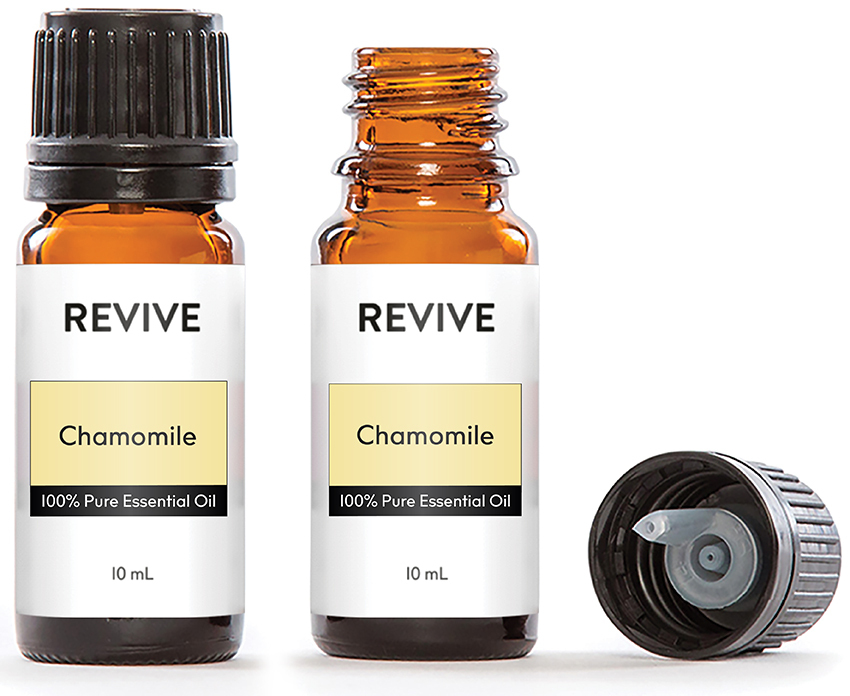
For babies under 2
Chamomile for little lungs
Chamomile is the gentlest oil in our baby bronchiolitis steam: calming, anti-inflammatory, and its compound bisabolol acts against bacteria. Together with a drop of linalool thyme, it lets a baby breathe in something soothing without the strong oils little airways can’t handle.
- Roman chamomile (Anthemis nobilis), labelled safe for children under parent supervision
- 3 drops in a bowl of hot water across the room, or in the diffuser
- Pairs with 1 drop of linalool thyme
- Never on a baby’s skin, never in the nebulizer
Affiliate link: we may earn a small commission at no extra cost to you. The gentle thyme we pair it with is Revive Thyme (linalool).
Essential Oils for Kids (2 to 12)
From age 2, the airways are stronger and eucalyptus is allowed, in the diffuser and well diluted on the skin.
Eucalyptus
3 to 4 drops in the diffuser at night from age 2. For a chest rub, 1 drop in 2 teaspoons of coconut oil (0.5%) up to age 6, 1 drop per teaspoon (1%) from 6.
Kids’ blends
Ready-made blends made for children, based on fir, spruce, cypress and spearmint, are an easy option if you’d rather not mix your own.
Thyme, chamomile and lavender
The baby oils stay good choices: thyme (linalool) and chamomile in the diffuser or a steam bowl, lavender for sleep.
Tea tree
1 to 2 drops in a steam bowl or diffuser from age 2; never swallowed.
Peppermint, rosemary and myrtle (6 and over)
These stronger oils are best kept for children from about 6: 1 to 2 drops in the diffuser, or in a 1% chest rub.
No oregano and no oils by mouth for children. Store all oils out of reach: swallowing even a teaspoon of eucalyptus oil can poison a child. More in home remedies for cough in kids.
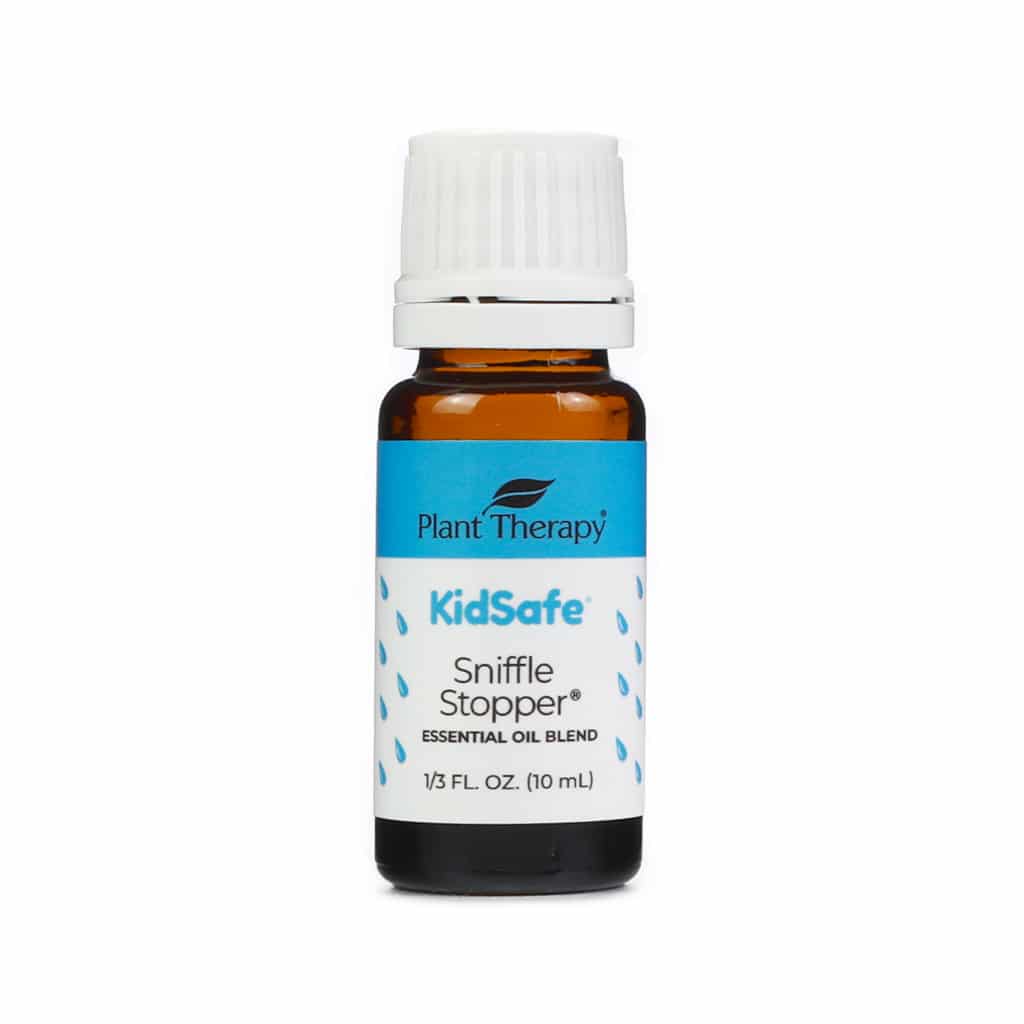
For children 2 to 10
A ready-made blend made for kids
If you’d rather not mix your own, this KidSafe blend of fir needle, spruce, cypress, spearmint, rosalina and cedarwood is made for children’s airways, without eucalyptus or peppermint.
- Formulated for ages 2 to 10
- 3 to 4 drops in the diffuser at bedtime
- Pre-diluted roll-on (3%) for the chest and back
- No eucalyptus or peppermint
Not an affiliate link.
10 Best Essential Oils for Bronchitis in Adults
1. Eucalyptus
My number one for adult bronchitis. Its cineole thins mucus, calms the airways and reduced coughing fits in adults with acute bronchitis (Fischer and Dethlefsen, 2013). Generally a diffuser at night is enough: 5 to 8 drops. When it’s really bad, add a steam bowl two to three times a day, and end the day with an Epsom salt bath with 5 drops mixed into the salt.

The number one oil for adult bronchitis
Eucalyptus for a chesty cough
Eucalyptus is my first choice for bronchitis in adults. Its main compound, cineole, reduced coughing fits in a trial in adults with acute bronchitis. I use it in the diffuser at night, in a steam bowl during the day, and mixed into my Epsom salt bath.
- Pure Eucalyptus globulus oil
- 5 to 8 drops in the diffuser at night
- 3 to 5 drops in a steam bowl, 2 to 3 times a day
- From age 2 in the diffuser; not under 2
Affiliate link: we may earn a small commission at no extra cost to you.
2. Thyme
Thyme loosens mucus, relaxes the airways and acts against bacteria. Use it in the diffuser or steam, in a chest rub, or the way I like it best: 1 drop stirred into a teaspoon of honey in a cup of herbal tea, with extra vitamin C. Recipe in natural expectorants.
3. Oregano
Oregano oil is one of the strongest antibacterial oils, rich in carvacrol. For adults: 1 drop in a teaspoon of honey stirred into a small glass of water, once or twice a day, for a few days. Never neat, never on the skin undiluted, not for children or in pregnancy.
4. Tea tree
Antibacterial and antifungal. 2 to 3 drops in a steam bowl, or in a chest rub. Never swallowed.
5. Rosemary
Rosemary (cineole type) is rich in the same compound as eucalyptus and opens the chest. In a chest rub or the diffuser. Avoid with epilepsy and in pregnancy.
6. Peppermint
Peppermint’s menthol makes breathing feel easier and cools an irritated throat. 1 to 2 drops in a chest rub or the diffuser, mixed with eucalyptus. Skip it with reflux.
7. Myrtle
Myrtle is a gentle cineole oil, and a traditional European chest oil. Lovely in the diffuser for a lingering cough.
8. Spike lavender
Not the same as true lavender: spike lavender contains cineole and camphor, so it’s a chest oil for adults. In a chest rub or the diffuser.
9. Balsam copaiba
Soothing and anti-inflammatory, with a soft woody scent. Good in a chest rub with eucalyptus for a sore, tight chest.
10. Niaouli
A cousin of tea tree, rich in cineole, traditionally used for chest infections. In the diffuser or a chest rub.
Prefer a ready-made blend? A good breathing blend combines several of these oils in one bottle.
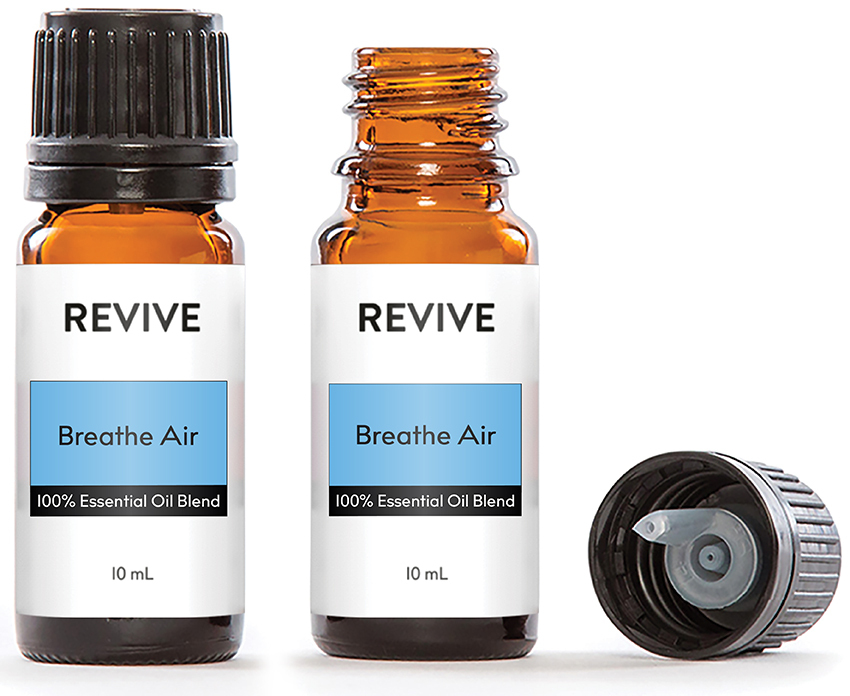
Ready-made adult blend
Breathe Air for open airways at night
When I don’t want to mix my own, this blend does it for me: laurel, eucalyptus, peppermint, tea tree, lemon, cardamom, ravintsara and ravensara, many of the oils in this guide in one bottle. It’s for adults only.
- 3 to 4 drops in the diffuser before bed
- 1 drop in a teaspoon of coconut oil as a chest, back and neck rub
- Also as a 10 ml roll-on
- Adults only: Revive lists it as not for children
Affiliate link: we may earn a small commission at no extra cost to you.
Recipes: Chest Rubs, Steam and Diffuser Blends
Adult chest rub
4 tablespoons of coconut oil with 6 drops of eucalyptus, 4 drops of thyme, 3 drops of rosemary and 2 drops of peppermint (about 2.5%). Rub into the chest, back and soles of the feet at night.
Kids’ chest rub (6 to 12)
4 tablespoons of coconut oil with 3 drops of eucalyptus and 3 drops of lavender (about 1%). For ages 2 to 6, halve the drops.
Steam blend (adults)
2 drops of eucalyptus, 1 drop of thyme and 1 drop of tea tree in a bowl of steaming water. Towel over your head, 10 minutes, eyes closed.
Night diffuser blends
- Adults: 4 drops of eucalyptus, 2 drops of lavender, 1 drop of peppermint.
- Kids from 2: 2 drops of eucalyptus, 2 drops of lavender.
- Babies: 1 drop of thyme (linalool), 1 drop of clove, 3 drops of chamomile.
Epsom salt bath (adults)
Mix 5 drops of eucalyptus into 2 cups of Epsom salt, then add it to a warm bath and soak for 20 minutes before bed.
Essential Oils for Chest Congestion
The same oils loosen a heavy, congested chest: eucalyptus, thyme, rosemary, peppermint and myrtle for adults; eucalyptus and kids’ blends from 2; thyme and chamomile under 2. Use them in a steam bowl twice a day and the diffuser at night, and add warm fluids and an expectorant tea. More in chest congestion relief and natural expectorants.
Safety Rules
- Under 2: no eucalyptus or peppermint, and no oils on the skin.
- Never in a nebulizer, at any age.
- Always dilute before oils touch the skin, and patch test on the inside of the arm first.
- By mouth: adults only, only oils labelled for internal use, 1 drop in honey, a few days.
- Keep oils out of children’s reach. Swallowing a small amount can poison a child.
- Pregnancy and breastfeeding: stick to a little lavender or chamomile in the diffuser, and ask your midwife.
- Asthma: start with one drop in the diffuser; some people with asthma react to strong scents.
- Pets: cats are very sensitive to essential oils; keep them out of the diffuser room.
Frequently Asked Questions
What is the best essential oil for bronchitis?
Eucalyptus for adults: its main compound, cineole, reduced coughing fits in a trial in adults with acute bronchitis. Thyme is a close second, and my favourite in a herbal tea.
Which essential oils are safe for babies with bronchiolitis?
We use linalool thyme, chamomile and true lavender, plus a single drop of clove, in a bowl of hot water across the room or a diffuser. Never eucalyptus or peppermint under 2, and no oils on a baby’s skin or in a nebulizer.
Can I use eucalyptus oil for my child?
From age 2, in the diffuser (3 to 4 drops) or a very diluted chest rub. Not under 2, and never by mouth.
How do you use essential oils for bronchitis?
In a diffuser at night, a steam bowl during the day, a diluted chest rub, or mixed into Epsom salt for a bath. Adults can take a few oils, like thyme and oregano, 1 drop in honey in a drink.
Can you put essential oils in a nebulizer?
No. Oil doesn’t mix with water, so a nebulizer would send pure oil droplets deep into the airways. Use a nebulizer with sterile saline, and essential oils in a diffuser or steam bowl.
What essential oils help chest congestion?
Eucalyptus, thyme, rosemary, peppermint and myrtle for adults, used as steam, a chest rub or in the diffuser. For children from 2, eucalyptus and kids’ blends.
Is peppermint oil good for bronchitis?
For adults, yes: menthol makes breathing feel easier. Use 1 to 2 drops in a chest rub or diffuser. Not under 2, and skip it with reflux.
Where do you rub essential oils for bronchitis?
On the chest, upper back and soles of the feet, always diluted in a carrier oil like coconut oil. Keep oils away from the face and nose of young children.
Recommended
- Home Remedies for Bronchitis
- Natural Expectorants
- Chest Congestion Relief
- Home Remedies for Cough in Kids
- How to Stop Coughing at Night
Some links on this page are affiliate links, marked as such. If you buy through them, we may earn a small commission at no extra cost to you. This article is for general information and does not replace a diagnosis from a qualified professional. Read our medical disclaimer or browse more natural remedies.
