
Home Remedies for Gas and Bloating: Foods, Intolerances, Posture and Teas That Get to the Root

Written by Montoya Sigafoose, founder of Home Remedy Shop · Medically reviewed by Veronique Claes d’Erckenteel, D.C., chiropractor since 1991 · Last reviewed: 23 October 2026
The best home remedies for gas and bloating get to the root: gas usually comes from a combination of foods that react in a certain way (coffee and milk together are a big one), from a food intolerance such as wheat or dairy, or simply from a posture that squeezes your intestines. Swap cow’s milk for oat milk, look into food combining, find your intolerances with a low FODMAP or elimination diet, open up your ribs to give your gut space, and sip peppermint, ginger or fennel tea after meals. Need relief right now? Child’s pose, burping on purpose and a short walk work within minutes (see our gas relief guide). See a doctor for severe or sudden pain, chest pain, blood in your stool, vomiting, fever or weight loss you can’t explain.
Everyone has gas. Passing it 10 to 20 times a day is completely normal: it comes from air you swallow and from the bacteria in your gut breaking down food. But if your belly swells up like a balloon after every meal, the question isn’t just how to get the gas out, but why there’s so much of it. This article is about the causes and the home remedies for gas that address them: the foods and food combinations behind it, intolerances and the low FODMAP diet, how your posture plays a part, and the teas and herbs that help. For fast, in-the-moment relief (positions, trapped gas, gas pain), read how to relieve gas and bloating fast. For the bigger picture of digestion, see our guide to healing your gut naturally, or browse all our natural home remedies.
The short version
- Food: coffee with milk is a big gas maker; try oat milk, and look into food combining.
- Intolerances (wheat, dairy): try a low FODMAP or elimination diet.
- Posture: open your ribs, tighten your core, give your intestines space.
- Teas: peppermint, ginger, fennel, caraway, chamomile.
- Right now: child’s pose, burping, a walk (see our gas relief guide).
See a doctor straight away if you have severe or sudden belly pain, pain in your chest, jaw or left arm (don’t assume it’s gas), a hard, swollen belly with vomiting or no gas or stool passing at all, blood in your stool or black stools, or a fever. Book an appointment if gas and bloating come with weight loss you can’t explain, ongoing diarrhoea or constipation, or a change in your bowel habits that lasts more than a few weeks, especially over 45.
Table of Contents
- Need Relief Right Now?
- Foods That Cause Gas and Bloating
- Food Intolerances and the Low FODMAP Diet for Gas
- Is It Your Posture? Give Your Intestines Space
- 8 Home Remedies for Gas and Bloating: Teas, Herbs and More
- How to Prevent Gas and Bloating
- Frequently Asked Questions
Need Relief Right Now?
When gas is trapped and painful, start with your body: get into child’s pose (baby pose), pull your knees to your chest, try to burp on purpose, and go for a 10 to 15 minute walk. On the toilet, put a small stool under your feet so you’re in a squat. We explain every position, trapped gas and gas pain step by step in how to relieve gas and bloating fast. Then come back here to stop it from happening again.
Foods That Cause Gas and Bloating
Gas is often not about a single food, but about a combination of foods that interact in a certain way. Some foods ferment in the gut, some slow digestion, and some together are a recipe for bloating.
Coffee and milk are a big one. Coffee speeds up the gut and stimulates acid and bowel movements (Nehlig, 2022), and milk sugar (lactose) produces gas in the many adults who don’t fully digest it (Savaiano et al., 2006). Together, in a big milky coffee on an empty stomach, they’re one of the most common gas triggers I see. If you’re working on lowering gas, avoid them for a while. If you can’t live without your coffee, switch to a vegetable milk like oat milk and see what changes.
A good gas relief diet starts with knowing the usual suspects. Other common foods that cause gas and bloating:
- Beans, lentils and chickpeas: rich in fibres that gut bacteria ferment. They’re also some of the best foods for your gut bacteria (Foods, 2022; BE GONE trial protocol, 2019), so don’t cut them out: soak them, cook them with cumin or fennel, and build up slowly.
- Cabbage family: broccoli, cauliflower, cabbage, Brussels sprouts.
- Onions, garlic and leeks.
- Wheat (bread, pasta) in sensitive people.
- Dairy: milk, soft cheese, ice cream.
- Fruit high in fructose: apples, pears, mango, dried fruit, fruit juice.
- Sugar-free sweets and gum with sorbitol, xylitol or other sugar alcohols.
- Fizzy drinks and beer.
- Large, fatty meals, which slow digestion.
Food combining for gas
There’s a lot of information on food combining: the idea that certain foods digest better on their own and cause gas or bloating when eaten together (proteins with starches, fruit after a meal, milk with other foods). If you’d like to learn more about these combinations and how to lower the chance of creating gas in the first place, a good book to start with is Food Combining and Digestion: 101 Ways to Improve Digestion by Steve Meyerowitz. Ayurveda has its own food combining traditions too, explained in Vatsala Sperling’s The Ayurvedic Reset Diet.
A simple food combining chart (the classic rules most books share):
| Food group | Combines well with | Traditionally kept apart from |
|---|---|---|
| Proteins (meat, fish, eggs, cheese) | Non-starchy vegetables, leafy greens | Starches (bread, pasta, potatoes), fruit |
| Starches (bread, rice, pasta, potatoes) | Non-starchy vegetables, healthy fats | Proteins, acidic fruit |
| Fruit | Eaten alone, on an empty stomach | After a meal, with other food groups |
| Milk | On its own | Most other foods (and coffee) |
| Vegetables and leafy greens | Almost everything | Fruit (in some systems) |
To be honest about the science: food combining hasn’t been studied for gas, and the one controlled trial (on weight) found no difference from a balanced diet (Golay et al., 2000). It’s traditional wisdom rather than proven. But many people, me included, feel the difference, and simpler meals with fewer foods at once are easier to digest and make it much easier to spot what your body doesn’t like. A food and symptom diary helps.
Food Intolerances and the Low FODMAP Diet for Gas
Intolerances also create gas. If your body doesn’t handle wheat or dairy well, for example, you’ll likely start bloating quickly after eating them, sometimes within an hour.
The low FODMAP diet for gas and bloating is the best-researched way to find out what your body is intolerant to. FODMAPs are fermentable sugars and fibres (in wheat, onion, garlic, beans, milk, some fruit and sweeteners) that gut bacteria turn into gas. You cut them back for 2 to 6 weeks, then reintroduce them one group at a time to see which ones you react to. A meta-analysis found the low FODMAP diet reduces bloating, pain and overall symptoms in people with functional gut problems (Marsh et al., 2016). It’s best done with guidance, and it’s meant to be temporary: the goal is to find your triggers, not to avoid all of these foods forever.
For a simpler start, our food elimination diet guide shows you how to take out the most common suspects and bring them back one by one.
Blood type: some nutritionists also work with lists of common intolerances per blood type, and you can look into this by consulting a blood type food nutritionist. Research on blood type diets is limited: a systematic review found no studies proving their benefits (Cusack et al., 2013), and in another study people did feel better on them, but whatever their blood type (Wang et al., 2014). It can still be a useful framework to start an elimination with.
Is It Your Posture? Give Your Intestines Space
There’s a chance it’s actually just your posture. When you slouch, sit for hours or hold your breath in your chest, your ribs collapse down onto your belly and your intestines have no room. Gas gets squeezed, stuck, and the belly pushes out.
Research backs this up. In many people with bloating, the diaphragm drops down and the belly wall relaxes outward when they feel gassy, instead of the chest expanding, a pattern called abdomino-phrenic dyssynergia (Villoria et al., 2011). Training people to breathe and hold their posture differently, with biofeedback, reduced their visible bloating (Barba et al., 2024), and a 2025 European consensus on bloating includes this kind of training in its advice (Melchior et al., 2025).
Try this:
- Stand or sit tall.
- Flare your ribs open as if you’re taking a big breath in, letting your chest and the sides of your ribcage widen.
- Keep that space and gently tighten your core, drawing your belly button in.
- Breathe slowly into your ribs and back for a few breaths.
- Repeat several times a day, especially after meals and when you’ve been sitting.
When you exercise, start bringing awareness to this too: your ribs and lungs need to expand to the maximum to give your intestines enough space. It’s a small change that many people with chronic bloating have never been told about.
8 Home Remedies for Gas and Bloating: Teas, Herbs and More
These herbal teas for gas relief and kitchen remedies calm the gut and help trapped gas move. They work best alongside the food and posture changes above.
1. Peppermint tea
Peppermint tea for gas relief is the classic. Peppermint relaxes the smooth muscle of the gut, so trapped gas can move on.
- Pour hot water over 1 tablespoon of fresh mint leaves or a peppermint tea bag.
- Steep for 5 to 10 minutes and sip slowly after meals.
- Skip it if you have heartburn: peppermint can make reflux worse.
Why it helps: Peppermint oil eased abdominal pain and overall symptoms in people with irritable bowel syndrome in a meta-analysis of trials (Ingrosso et al., 2022).
2. Ginger tea
Ginger warms the belly and helps the stomach empty, so food (and gas) don’t sit as long.
- Slice a thumb-sized piece of fresh ginger, pour over hot water and steep 7 to 10 minutes.
- Add lemon and a little honey to taste.
- Drink before or after a heavy meal.
Why it helps: In a small trial, ginger sped up stomach emptying in people with indigestion (Hu et al., 2011).
3. Fennel seeds
Chewing a teaspoon of fennel seeds after a meal is an age-old Indian habit for good reason: fennel is a traditional carminative, a herb that helps release gas.
- Chew ½ to 1 teaspoon of fennel seeds after meals.
- Or crush 1 teaspoon, pour over hot water and steep 10 minutes for fennel tea.
4. Caraway seeds
Caraway has been used for gas and bloating for centuries, often together with peppermint.
- Crush 1 teaspoon of caraway seeds, pour over hot water and steep 10 minutes.
- Or mix caraway, fennel and peppermint for a gas relief tea blend.
Why it helps: A combination of peppermint and caraway oil reduced fullness, bloating and pain in people with functional dyspepsia (Li et al., 2019).
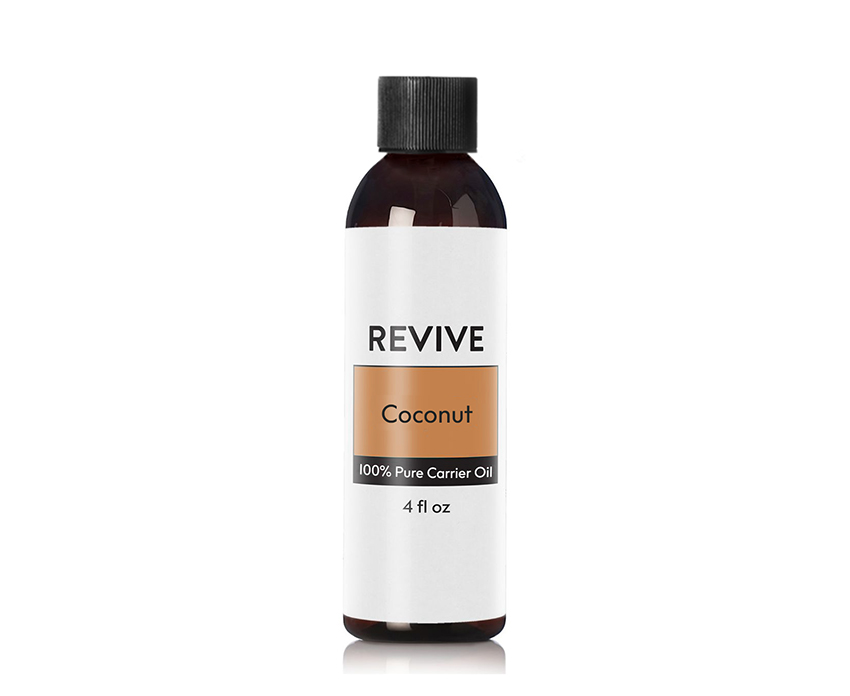
For a gas relief tummy massage
The oil I use for a belly massage
When my belly is tight with trapped gas, a slow clockwise tummy massage helps everything move. I use this light coconut oil with a drop of peppermint or fennel oil: it glides without leaving my clothes greasy.
- 1 tablespoon of oil with 1 to 2 drops of peppermint or fennel oil (adults)
- Massage clockwise around the belly button for 5 to 10 minutes
- Lie on your back with your knees bent
- Pure coconut oil only for children; no peppermint oil under 2
Affiliate link: we may earn a small commission at no extra cost to you.
5. Chamomile tea
Calming for the gut and the nervous system; lovely in the evening when gas keeps you awake.
- Steep 1 to 2 teaspoons of dried chamomile in hot water for 5 to 10 minutes.
- Drink warm before bed.
6. Cumin, dill and anise
Three traditional kitchen spices for gas, all carminatives.
- Chew ½ teaspoon of cumin seeds with a glass of water, or make cumin tea.
- Steep 1 tablespoon of dill seeds or ½ teaspoon of anise seeds in hot water for 10 minutes.
- Cook with them: cumin with beans and lentils is a classic for a reason.
7. Fermented foods
Plain yoghurt, kefir, sauerkraut, kimchi, miso and tempeh bring good bacteria to the gut, which over time can mean less gas.
- Add a small portion of a fermented food to one meal a day.
- Start small: a sudden large amount can cause gas at first.
Why it helps: Probiotics improved symptoms, including bloating, in people with irritable bowel syndrome in a meta-analysis (Didari et al., 2015).
8. A warm compress and tummy massage
Heat relaxes a cramping belly; massage helps the gas move along.
- Lie on your back with a hot water bottle or warm towel on your belly for 15 minutes.
- Then massage slowly clockwise around your belly button for 5 to 10 minutes (the direction your large intestine runs).
Other traditional herbs from the original version of this article: basil, cinnamon, nutmeg, parsley and spearmint, all used as teas or chewed fresh. Garlic is often recommended too, but it’s high in FODMAPs and can cause gas in sensitive people.
How to Prevent Gas and Bloating
Home remedies for gas work best as habits:
- Eat slowly and chew well. Fast eating means swallowing air; try 15 to 20 chews per bite.
- Smaller, simpler meals with fewer foods combined.
- Cut back on fizzy drinks, beer and chewing gum, which all add air.
- Walk after meals, even 10 minutes.
- Build up fibre slowly, and drink enough water with it.
- Find your triggers with a food diary, the low FODMAP diet or an elimination diet.
- Look after your gut bacteria with fermented foods; see also how to heal a leaky gut and candida overgrowth.
- Mind your posture and give your intestines space.
Related Digestive Guides
- Gas relief: how to relieve gas and bloating fast
- Healing your gut: a comprehensive guide
- Home remedies for severe indigestion
- Stomach ache remedies
- Home remedies for acid reflux and GERD cough
- What is a holistic diet? and our alkaline diet list
Frequently Asked Questions
What are the best home remedies for gas and bloating?
Find out what causes it: cut back on coffee with milk (try oat milk), look for intolerances with a low FODMAP or elimination diet, try simpler food combinations, open your ribs and tighten your core, and drink peppermint, ginger or fennel tea after meals.
What is a good gas relief diet?
Avoid the common gas makers for a few weeks (coffee with milk, fizzy drinks, sugar-free sweeteners, large fatty meals), eat simpler meals, cook beans with cumin and build them up slowly, and use the low FODMAP diet to find your personal triggers.
Does coffee cause gas?
It can. Coffee speeds up the gut and stimulates acid, and with milk it’s a common gas trigger. Avoid it while lowering gas, or switch to a vegetable milk like oat milk.
Does milk cause gas?
Yes, in the many adults who don’t fully digest lactose. Try lactose-free milk or oat milk and see whether your gas improves.
What foods cause gas and bloating?
Beans and lentils, cabbage family vegetables, onions and garlic, wheat, dairy, high-fructose fruit, sugar-free sweeteners, fizzy drinks and large fatty meals.
Does the low FODMAP diet help with gas?
Yes. It’s the best-researched diet for gas and bloating. You cut back fermentable foods for a few weeks, then reintroduce them to find your personal triggers.
Can posture cause bloating?
Yes. Slouching and a dropped diaphragm squeeze the intestines, and research shows this pattern in many people with bloating. Opening the ribs and tightening the core gives your gut more space.
What tea is best for gas?
Peppermint tea is the classic, followed by ginger, fennel, caraway and chamomile. Skip peppermint if you have heartburn.
Recommended
- Healing Your Gut: A Comprehensive Guide
- Home Remedies for Indigestion
- Gas Relief: How to Relieve Gas and Bloating Fast
- How to Heal Leaky Gut
- More natural home remedies
Some links on this page are affiliate links, marked as such. If you buy through them, we may earn a small commission at no extra cost to you. This article is for general information and does not replace a diagnosis from a qualified professional. Read our medical disclaimer or browse more natural remedies.
