

Trying to eat for better health can quickly get confusing when so much advice sounds like one-size-fits-all. Many people seeking lasting wellness realize that true nourishment goes beyond counting calories or following the latest diet trends. By embracing whole-person wellness, holistic nutrition empowers you to address physical, emotional, and lifestyle factors for individualized results and fewer myths. This guide helps you separate outdated beliefs from evidence-based strategies for a healthier life.
Table of Contents
- Defining Holistic Nutrition and Common Myths
- Real Food Versus Processed Food Explained
- How Holistic Nutrition Supports Self-Healing
- Preservatives, Additives, and Health Risks
- Simple Steps for Adopting Holistic Nutrition
Key Takeaways
| Point | Details |
|---|---|
| Holistic Nutrition Philosophy | Emphasizes whole-person wellness by integrating physical, mental, emotional, and environmental factors into nutritional choices. |
| Differences with Traditional Nutrition | Unlike traditional methods, holistic nutrition promotes personalized, lifestyle-based dietary guidance rather than standardized rules. |
| Impact of Food Processing | Not all processed foods are harmful; understanding the differences helps in making healthier dietary choices. |
| Strategies for Adoption | Gradually replace processed foods with whole foods and practice mindful eating to develop a more intuitive relationship with nutrition. |
Defining Holistic Nutrition and Common Myths
Holistic nutrition represents a profound approach to understanding health that goes far beyond simple dietary recommendations. At its core, this philosophy recognizes that human wellness is a complex, interconnected system involving physical, mental, emotional, and environmental factors. Holistic nutrition professionals view each individual as a unique ecosystem, where nutrition plays a central role in supporting overall well-being.
Unlike traditional nutritional approaches that often focus narrowly on calories or macronutrients, holistic nutrition emphasizes whole-person wellness. This means considering not just what you eat, but how food interacts with your body’s unique biochemistry, emotional state, and lifestyle. The fundamental principles include:
- Consuming whole, unprocessed foods
- Understanding individual nutritional needs
- Recognizing food’s impact beyond basic sustenance
- Integrating physical, mental, and emotional health strategies
Many persistent myths have unfortunately clouded people’s understanding of nutrition. Research consistently debunks common misconceptions, revealing that nutrition is far more nuanced than simplistic dietary rules. Some prevalent myths include believing that all carbohydrates cause weight gain, or that ultra-processed foods are universally harmful.
The holistic nutrition approach challenges these oversimplified narratives by promoting a balanced, personalized perspective. It acknowledges that nutritional needs vary dramatically between individuals based on genetics, lifestyle, stress levels, and environmental factors. This means there’s no universal diet that works identically for everyone.
This table highlights differences between holistic and traditional nutrition approaches for quick reference:
| Aspect | Holistic Nutrition | Traditional Nutrition |
|---|---|---|
| Focus | Whole-person wellness | Nutrient and calorie counts |
| Dietary Guidance | Personalized, lifestyle-based | Standardized, one-size-fits-all |
| View of Food | Nourishment, emotional impact | Energy source, physical health only |
| Health Strategy | Integrates stress, sleep, environment | Primarily food focused |
Pro tip: Start your holistic nutrition journey by keeping a detailed food and wellness journal, tracking not just what you eat, but how different foods make you feel physically and emotionally.
Real Food Versus Processed Food Explained
Food processing techniques represent a critical spectrum that dramatically impacts nutritional value and health outcomes. Not all processed foods are created equal – there’s a significant difference between minimally processed items like frozen vegetables and ultra-processed products loaded with artificial ingredients. Understanding these distinctions is crucial for making informed dietary choices.
The NOVA classification system helps consumers navigate food processing complexity by categorizing foods into distinct groups:
- Unprocessed or minimally processed foods: Whole fruits, vegetables, grains in their natural state
- Processed culinary ingredients: Oils, salt, sugar used for cooking
- Processed foods: Canned vegetables, cheeses, freshly made breads
- Ultra-processed foods: Packaged snacks, soft drinks, frozen meals with multiple industrial ingredients
Ultra-processed foods pose significant health risks. Research indicates these products are often engineered to be hyper-palatable, containing excessive sugar, unhealthy fats, and sodium. These foods can contribute to obesity, chronic inflammation, and metabolic disorders by disrupting natural hunger signals and providing empty calories.
Whole foods, conversely, deliver complex nutritional profiles that support bodily functions. They contain natural fiber, vitamins, minerals, and phytonutrients that work synergistically to promote health. By prioritizing minimally processed foods, individuals can dramatically improve their nutritional intake and reduce the risk of diet-related chronic diseases.

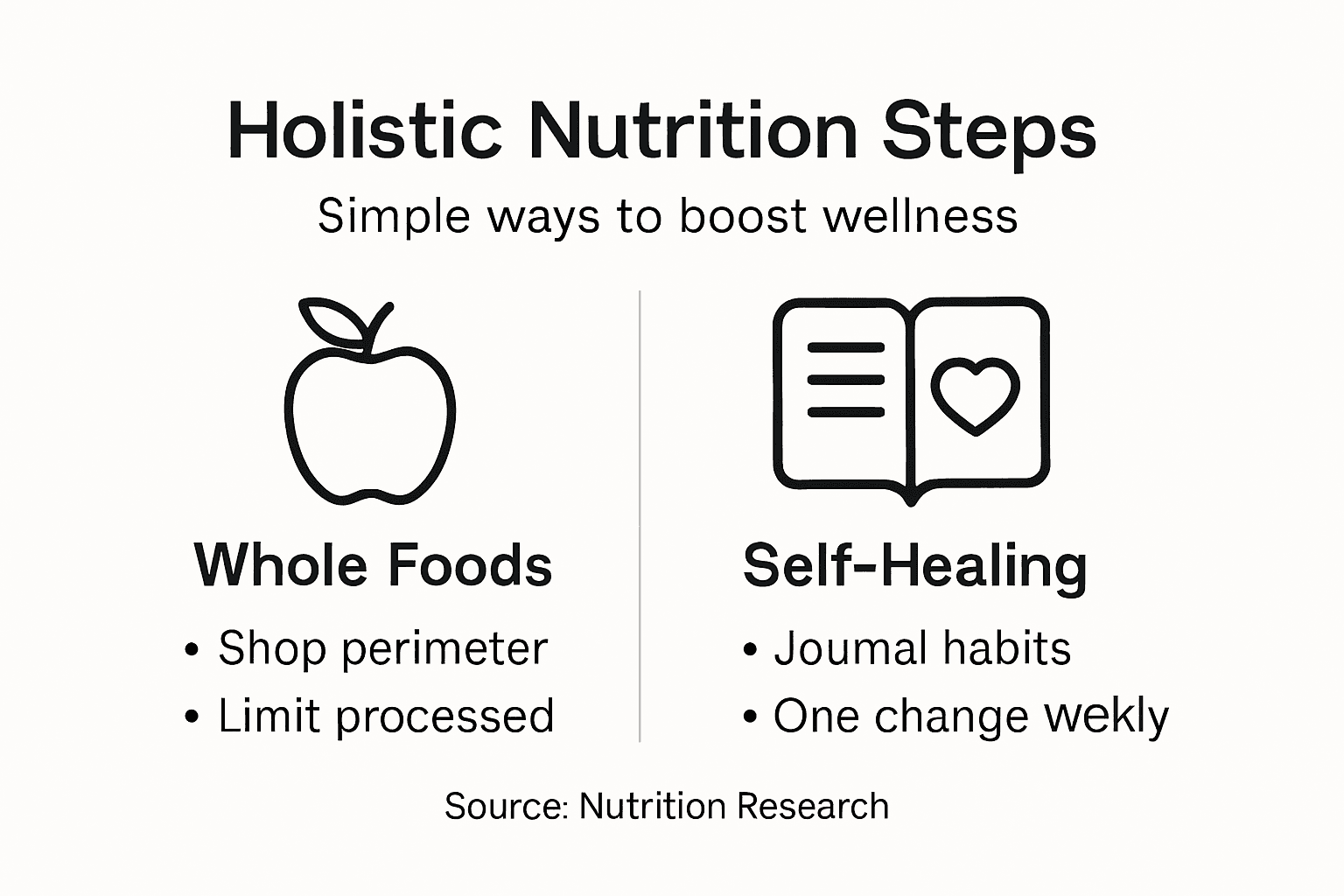
Pro tip: When grocery shopping, focus on shopping the perimeter of the store where fresh, whole foods are typically located, and minimize purchases from inner aisles filled with processed products.
How Holistic Nutrition Supports Self-Healing
Holistic nutrition approaches recognize the human body’s extraordinary capacity for self-healing when provided with the right nutritional foundation. This philosophy goes beyond mere dietary recommendations, viewing food as a powerful tool for addressing root causes of health challenges and supporting the body’s innate healing mechanisms.
The self-healing process involves multiple critical components:
- Reducing inflammatory responses
- Supporting immune system function
- Balancing hormonal systems
- Enhancing cellular regeneration
- **Promoting mental and emotional wellness
The body’s natural healing capacity is profoundly influenced by nutritional choices. Research demonstrates that whole-food approaches can dramatically support physiological repair mechanisms. Inflammation, often misunderstood as a negative condition, is actually a critical healing response – a sign that the body is actively working to restore balance and eliminate harmful agents.
Understanding self-healing requires recognizing that symptoms are not enemies to be suppressed, but messages from the body indicating a need for comprehensive care. Holistic nutrition provides the essential nutrients, clean environment, and lifestyle support necessary to activate and sustain these natural healing processes. By minimizing processed foods, managing stress, and consuming nutrient-dense whole foods, individuals can create an internal ecosystem that supports ongoing wellness and resilience.
Pro tip: Start your self-healing journey by introducing one whole food replacement per week, gradually building a nutrition strategy that supports your body’s natural regenerative processes.
Preservatives, Additives, and Health Risks
Chemical preservatives have become ubiquitous in modern food systems, extending shelf life but potentially compromising long-term health. These synthetic additives, while seemingly convenient, represent a complex landscape of potential risks that extend far beyond simple food preservation.
Common preservatives found in processed foods include:
- Sodium nitrite: Used in processed meats
- Sodium benzoate: Prevalent in acidic foods and beverages
- Butylated hydroxytoluene (BHT): Added to prevent food oxidation
- Potassium sorbate: Prevents mold growth
- Sulfites: Used in dried fruits and wines
Nutrition research highlights the nuanced nature of preservatives, revealing that not all additives are equally harmful. Some, like citric acid, are generally considered safe, while others may pose significant health concerns. Potential risks include increased inflammation, potential carcinogenic effects, and disruption of gut microbiome balance. Long-term consumption of synthetic preservatives has been linked to allergic reactions, cellular damage, and compromised immune system function.
Use this table to compare major types of food preservation additives and their potential health concerns:
| Preservative | Typical Use | Potential Health Concern |
|---|---|---|
| Sodium nitrite | Cured meats | May increase cancer risk |
| Sodium benzoate | Soft drinks, condiments | Can trigger allergies |
| BHT | Snack foods | Possible cellular damage |
| Sulfites | Dried fruit, wine | May cause asthma symptoms |
Holistic nutrition advocates for a strategic approach to minimizing preservative intake. This involves prioritizing whole foods, understanding ingredient labels, and selecting minimally processed alternatives. By consciously reducing exposure to synthetic additives, individuals can support their body’s natural healing mechanisms and maintain optimal health.
Pro tip: When grocery shopping, focus on products with five or fewer ingredients, prioritizing those with natural, recognizable components to minimize preservative exposure.
Simple Steps for Adopting Holistic Nutrition
Improving eating habits requires a strategic and mindful approach that goes beyond temporary dietary restrictions. Holistic nutrition is not about drastic changes, but rather creating sustainable lifestyle transformations that nourish both body and mind.
Key strategies for adopting holistic nutrition include:
- Track current eating patterns
- Identify nutritional triggers
- Replace processed foods gradually
- Practice mindful eating
- Create supportive meal environments
- Listen to body’s nutritional signals
Practical implementation involves multiple dimensions beyond food selection. Nutrition experts recommend setting realistic goals, understanding portion control, and addressing underlying lifestyle factors like stress management and sleep quality. This comprehensive approach ensures that dietary changes are not just about what you eat, but how you approach nutrition as a holistic practice.
Successful holistic nutrition adoption requires patience and self-compassion. Instead of viewing dietary changes as restrictive, consider them an opportunity for personal exploration and wellness. By making incremental shifts, individuals can develop a more intuitive relationship with food that supports long-term health and vitality.
Pro tip: Start by replacing one processed food item with a whole food alternative each week, gradually building a more holistic approach to nutrition.
Embrace Holistic Nutrition for True Wellness Today
Understanding the profound connection between whole-person wellness and nutrition can transform your health journey. If you are seeking to reduce inflammation, balance your hormones, and support your body’s natural self-healing abilities by minimizing preservatives and processed foods, you are not alone. The path to lasting wellness starts with personalized, mindful choices that nourish your body emotionally and physically.
Discover how natural remedies and herbal supplements can complement your holistic nutrition approach. At Homeremedyshop.com, we empower you with trusted products and evidence-based guides designed to support self-healing and optimize your health naturally. Start replacing processed foods gradually and embrace a lifestyle centered on nutrient-dense whole foods today. Visit Homeremedyshop.com now and take your first step towards vibrant, lasting wellness.
Frequently Asked Questions
What is holistic nutrition?
Holistic nutrition is an approach that considers health as an interconnected system involving physical, mental, emotional, and environmental factors, emphasizing whole-person wellness rather than just dietary guidelines.
How does holistic nutrition differ from traditional nutrition?
Holistic nutrition focuses on personalized dietary strategies and considers the emotional impact of food, whereas traditional nutrition often emphasizes standardized nutrient and calorie counts without addressing individual needs.
What are the benefits of adopting a holistic nutrition approach?
Adopting holistic nutrition can enhance overall well-being by reducing inflammation, supporting immune function, balancing hormones, and promoting mental wellness through a nutrient-dense, minimally processed diet.
How can I begin integrating holistic nutrition into my lifestyle?
Start by tracking your current eating patterns, gradually replacing processed foods with whole food alternatives, and practicing mindful eating. Small, incremental changes can lead to sustainable lifestyle transformations.
Recommended
- What Is a Holistic Diet and Why It Matters – Home Remedies
- Holistic Wellness: Achieving Whole-Body Health Naturally – Home Remedies
- What Is Holistic Pet Care and Why It Matters – Home Remedies
- Tips on How to Lose Weight without Exercise – Home Remedies
- Improving Gut Health Process for Enhanced Wellbeing
