
Home Remedies for Sinus Infection: 7 Steps to Clear Your Sinuses Naturally

Written and medically reviewed by Veronique Claes d’Erckenteel, D.C., chiropractor since 1991 · Last reviewed: 19 October 2026
Most sinus infections are caused by a virus and clear up on their own within 7 to 10 days, so home remedies are usually the best place to start. The most effective are a salt water nasal rinse two to three times a day, steam with eucalyptus, plenty of fluids, warm compresses for the pain, and sleeping with your head raised. For a sinus infection that keeps coming back, look deeper: research has found fungi in the sinus mucus of almost everyone with chronic sinusitis. My own approach then is oil pulling with coconut oil twice a day and a diluted shot of apple cider vinegar three times a day. See a doctor for a high fever, swelling around the eyes, a severe headache or symptoms lasting more than 10 days.
A sinus infection makes your whole head ache. Your face feels full and heavy, the pressure behind your eyes gets worse every time you bend forward, your nose is blocked, thick mucus runs down the back of your throat, and sometimes even your teeth hurt. It’s one of the most common reasons people visit their doctor, and one of the most common reasons antibiotics are prescribed, even though most sinus infections don’t need them.
In The Sinus Cure, ENT specialist Dr. Murray Grossan and medical writer Debra Fulghum Bruce describe a simple seven-step plan for sinus sufferers: get the right diagnosis, rinse your nose, consider complementary treatments, clean the air, eat right, reduce stress, and choose medical treatment wisely when you need it (Bruce and Grossan, 2007). It’s exactly how I like to approach any health problem, so this guide follows the same seven steps. It’s part of our cough and cold series; for a cough that comes with it, see how to stop coughing.
The short version
- Most sinus infections are viral and go away on their own in 7 to 10 days.
- Rinse your nose with salt water 2 to 3 times a day: the best studied home remedy.
- Steam with eucalyptus, a humidifier, warm compresses and lots of fluids.
- Chronic or recurring sinusitis? Look at fungi, allergies, mould, diet and stress.
- My fungal approach: coconut oil pulling twice a day, diluted apple cider vinegar three times a day.
- See a doctor for high fever, swelling around the eyes, severe headache, or symptoms over 10 days.
Get help straight away for swelling or redness around the eyes, double vision or changes in your sight, a severe headache with a stiff neck, confusion, or a high fever that won’t come down. These are rare signs that the infection is spreading. In an emergency, call 112 (Europe) or 911 (US).
Table of Contents
- What Is a Sinus Infection?
- Sinus Infection Symptoms: What It Feels Like
- Step 1: The Right Diagnosis (Viral, Bacterial, Fungal or Allergic?)
- Step 2: Rinse Your Nose
- Step 3: Natural Remedies for Sinus Infection
- The Fungal Link: Apple Cider Vinegar and Coconut Oil
- Step 4: Clean the Air
- Step 5: Eat Right
- Step 6: Reduce Stress
- Step 7: Choose Medical Treatment Wisely
- Is a Sinus Infection Contagious?
- How Long Does a Sinus Infection Last?
- Sinus Infection in Pregnancy
- When to See a Doctor or ENT Specialist
- Frequently Asked Questions
What Is a Sinus Infection?
Your sinuses are air-filled spaces in the bones of your face: behind your cheeks, between your eyes, in your forehead and deeper behind your nose. They’re lined with the same moist membrane as your nose, which makes mucus and sweeps it out through small openings into the nose.
A sinus infection (sinusitis) happens when that lining swells, the small openings block, and mucus gets trapped. Germs grow in the trapped mucus, the pressure builds, and you feel it as pain and fullness in your face. It usually starts with a cold, but allergies, a deviated septum, nasal polyps, dental problems, dry air and smoke can all set it off.
- Acute sinusitis: lasts less than 4 weeks, usually after a cold.
- Chronic sinusitis: lasts 12 weeks or more, often with a blocked nose, post nasal drip and a reduced sense of smell rather than strong pain.
- Recurrent sinusitis: several separate infections a year.
Sinus Infection Symptoms: What It Feels Like
- Pain, pressure and fullness in the face, worse when you bend forward
- A blocked nose and thick yellow or green mucus
- Mucus running down the back of your throat (post nasal drip) and a cough, often worse at night
- A headache, often around the forehead and eyes
- Pain in your upper teeth or jaw, because the roots of your upper teeth sit right under the cheek sinuses
- A puffy face, especially around the eyes in the morning
- A reduced sense of smell and taste
- Bad breath and tiredness
- Sometimes a fever
Toothache or sinus infection? Sinus tooth pain usually affects several upper back teeth at once, on one side, and gets worse when you bend over or jump. Pain in one single tooth, or in the lower jaw, points more to a dental problem, so see your dentist.
Step 1: The Right Diagnosis (Viral, Bacterial, Fungal or Allergic?)
The first step in The Sinus Cure is to find out what kind of sinus problem you have, instead of treating every sinus problem the same way. That’s how I see it too: diagnosis first, then treatment.
| Type | Typical signs |
|---|---|
| Viral (most common) | Starts with a cold, improves within 7 to 10 days. Thick, coloured mucus is normal and doesn’t mean bacteria. |
| Bacterial | Symptoms last more than 10 days without improving, or get better and then suddenly worse again (“double sickening”), or start with a high fever and severe face pain for 3 to 4 days. |
| Allergic | Sneezing, itchy eyes and nose, clear runny mucus, in the same season or around pets, dust or mould. |
| Fungal / chronic | A sinus problem that never fully clears or keeps coming back, with a blocked nose, post nasal drip and a reduced sense of smell. |
Cold vs sinus infection: a cold peaks in two to three days and improves within a week. A sinus infection hangs on or comes back worse, with pain and pressure in the face. See our head cold remedies for the early stage.
Step 2: Rinse Your Nose
Nasal irrigation is the backbone of every natural sinus plan, and the remedy with the strongest research. It washes out trapped mucus, germs and allergens, and helps the tiny hairs in your sinuses move mucus out again.
- A Cochrane review found that rinsing with a large volume of salt water improved chronic sinus symptoms (Chong et al., Cochrane).
- In a trial of 871 people with recurring sinus problems, nasal irrigation reduced sinus headaches and the need for over-the-counter medicine, while steam inhalation alone didn’t make a clear difference (Little et al., CMAJ, 2016).
How to rinse: use a neti pot or a squeeze bottle. Dissolve ½ teaspoon of non-iodised salt and a pinch of baking soda in 250 ml (1 cup) of lukewarm water. Lean over the sink, tilt your head and let the water run in one nostril and out of the other. Do it two to three times a day during an infection, once a day to prevent one.
Safety: only ever use distilled, sterile, or boiled and cooled water, never straight from the tap. Wash and dry your neti pot after every use. More in our neti pot guide.
Step 3: Natural Remedies for Sinus Infection
Steam and eucalyptus
Steam on its own doesn’t cure a sinus infection, but it loosens mucus and feels wonderful. Add eucalyptus and it does more: in a placebo-controlled trial, cineole, the main compound in eucalyptus oil, clearly improved the symptoms of acute sinusitis within a week (Kehrl et al., 2004). Lean over a bowl of hot water with a towel over your head for 10 minutes, two or three times a day, with 3 to 5 drops of eucalyptus.
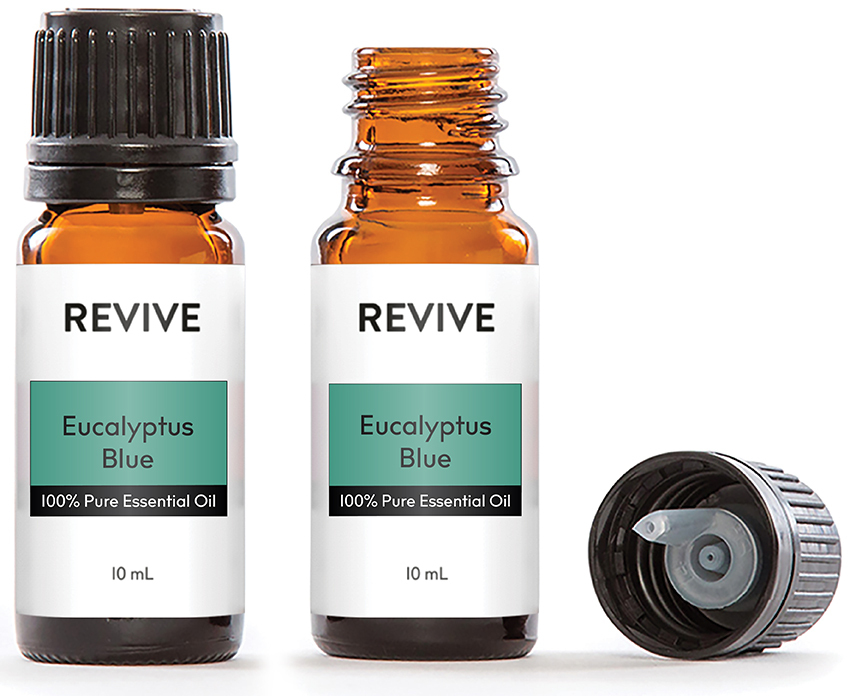
The oil I reach for first
Eucalyptus for blocked sinuses
Eucalyptus oil is the one essential oil with a real sinus trial behind it: its main compound, cineole, eased acute sinusitis symptoms within days. I use it in steam and in the diffuser at night.
- Pure, food grade Eucalyptus globulus oil
- 3 to 5 drops in a bowl of steaming water, or in the diffuser before bed
- In the diffuser from age 3; ages 2 to 3, a kids’ blend; no oils under 2
- Never undiluted on the skin, never in the nose
Affiliate link: we may earn a small commission at no extra cost to you.
A humidifier
Dry air thickens mucus and irritates the lining of your sinuses. A cool mist humidifier in the bedroom keeps the air at around 40 to 50% humidity. Clean it every day so it doesn’t grow mould, which would make sinus problems worse.
Warm compresses for sinus pain
A warm, damp cloth over your cheeks, nose and forehead for 5 to 10 minutes eases pressure and pain. Gently massaging the sinus points beside your nose and above your eyebrows helps too.
Fluids, broth and ginger tea
Plenty of water, warm broth and herbal teas keep mucus thin so it can drain. Ginger tea with lemon and honey is my favourite. See our tea for cough guide.
Sleep with your head raised
An extra pillow helps your sinuses drain at night and eases morning pressure and puffiness.
Herbal preparations
A systematic review of herbal medicines for sinusitis found promising results for a few preparations, including a combination of elderflower, cowslip, sorrel, verbena and gentian, and pelargonium (South African geranium) (Guo et al., 2006). Use ready-made preparations and follow the label.
Black seed oil
Black seed (Nigella sativa) oil has been used for headaches, colds and blocked noses since Avicenna. A review describes anti-inflammatory, antihistamine and antimicrobial effects that make it a promising sinus remedy, and in allergic rhinitis it reduced nasal congestion, though trials in sinusitis itself are still needed (Mahboubi, 2018). The usual dose is 500 to 1,000 mg up to three times a day. Avoid it in pregnancy.
Garlic, onion and spicy food
Garlic and onion are traditional immune foods, and a little horseradish or cayenne makes your nose run and briefly opens your sinuses. Skip the spicy food if you have reflux.
The Fungal Link: Apple Cider Vinegar and Coconut Oil
This is the part of sinus research that most people never hear about. When researchers at the Mayo Clinic examined the nasal mucus of people with chronic sinusitis using sensitive methods, they found fungi in 96% of them, and suggested that an immune reaction to fungi could drive much of chronic sinusitis (Ponikau et al., 1999). Later research described chronic sinusitis largely as an inflammatory disease, and antifungal treatment became one of the strategies studied (Amrol and Murray, 2005).
To be honest about it: antifungal medication sprayed into the nose or taken as tablets didn’t improve chronic sinusitis in the trials so far, and caused more side effects (Head et al., Cochrane, 2018). Fungi are everywhere we breathe, so the question is less “are fungi there” and more “how does my body react to them”. That’s why I prefer to look at the whole body: the gut, the mouth, diet and the immune system.
My fungal approach for a sinus infection
To date, the best fungal treatment I know to work is apple cider vinegar and coconut oil. With a sinus infection, this is what I do:
- Oil pulling with coconut oil, twice a day. Swish a tablespoon of virgin coconut oil around your mouth and between your teeth for 10 to 15 minutes, ideally first thing in the morning and before bed. Then spit it into the bin (not the sink, it hardens in the pipes), rinse your mouth with warm water and brush your teeth. Never swallow it.
- A shot of apple cider vinegar, three times a day. One tablespoon of raw, unfiltered apple cider vinegar in a glass of water, before meals. Always diluted, never neat. Drink it through a straw and rinse your mouth afterwards to protect your teeth.
What the research says: in the lab, both coconut oil and apple cider vinegar stop the growth of Candida yeast (Ogbolu et al., 2007; Yagnik et al., 2018). They haven’t been tested in people with sinusitis, so this is my own experience rather than proven treatment.
Safety: skip apple cider vinegar if you have reflux, a stomach ulcer or sensitive teeth, and talk to your doctor if you take diabetes or heart medication. Never put vinegar or oil into your nose. Oil pulling isn’t for young children who might swallow it.
Step 4: Clean the Air
Your sinuses filter every breath you take. The Sinus Cure puts clearing your air of dust mites, mould and damp at the heart of long-term sinus health, and with the fungal link in mind, I agree:
- Fix damp and mould in your home, especially in the bedroom and bathroom.
- Wash bedding weekly at 60 °C and use dust-mite covers on pillows.
- Air your home every day, and use an air purifier with a HEPA filter if you have allergies.
- Keep pets out of the bedroom if you react to them.
- Avoid smoke, strong perfumes and cleaning sprays.
Step 5: Eat Right
Some foods calm inflammation, others feed it. For sinus health, and especially with the fungal link, I’d cut back on sugar, white flour, alcohol and very processed food, which yeasts thrive on, and fill your plate with vegetables, garlic, onion, ginger, oily fish and fruit rich in vitamin C. Drink plenty of water. Notice whether dairy or certain foods make your nose more blocked, and keep a short food diary if you’re not sure. Our alkaline diet list is a good place to start.
Step 6: Reduce Stress
Stress and poor sleep weaken your immune system and make the lining of your nose more reactive. Slow breathing, a daily walk outdoors, yoga or tai chi and seven to eight hours of sleep are part of the treatment, not a luxury. People under more stress catch more colds, and colds are where most sinus infections begin (Cohen et al., 1991).
Step 7: Choose Medical Treatment Wisely
Most sinus infections don’t need antibiotics. A Cochrane review found that most adults with acute sinusitis get better without them, and that antibiotics offer only a small benefit with a real risk of side effects (Lemiengre et al., Cochrane, 2018). Antibiotics do matter for a true bacterial infection with severe symptoms or complications, so if your doctor prescribes them, ask: is this viral or bacterial, and what happens if we wait a few days?
Decongestant nasal sprays shouldn’t be used for more than three days, because the swelling can come back worse. If you have chronic sinusitis, polyps or a deviated septum, an ENT specialist can look inside your sinuses and discuss what fits your situation.
Is a Sinus Infection Contagious?
The sinus infection itself isn’t really contagious, but the cold virus that usually starts it is. You can pass that cold on, mostly in the first few days, and someone who catches it won’t necessarily get a sinus infection. Bacterial and fungal sinus infections aren’t spread from person to person. Wash your hands and cough into your elbow.
How Long Does a Sinus Infection Last?
- Viral: 7 to 10 days, usually improving after the first week.
- Bacterial: often longer than 10 days, sometimes with a second wave.
- Acute sinusitis: up to 4 weeks at most.
- Chronic sinusitis: 12 weeks or more.
Will a sinus infection go away on its own? Most do, especially viral ones. Home remedies help you feel better while your body clears it.
Sinus Infection in Pregnancy
Pregnancy hormones make the lining of the nose swell, so many pregnant women get a blocked nose and sinus problems. The safest remedies are salt water rinses (with sterile water), steam without essential oils in the first trimester, a humidifier, warm compresses, plenty of fluids, honey and sleeping with your head raised. Avoid black seed oil, apple cider vinegar shots and herbal preparations in pregnancy, and talk to your midwife or doctor before taking any medicine.
When to See a Doctor or ENT Specialist
- Emergency (112 / 911): swelling or redness around the eyes, changes in vision, a severe headache with a stiff neck, confusion, or a high fever that won’t come down.
- Your GP or family doctor for symptoms lasting more than 10 days, getting better then worse again, or a fever above 38.5 °C for more than three days.
- An ENT specialist (ear, nose and throat) for chronic sinusitis lasting 12 weeks or more, three or more sinus infections a year, a nose that’s always blocked on one side, polyps, or a lost sense of smell.
- An allergist when your sinus problems follow the seasons, or flare up around pets, dust or mould.
- A dentist for pain in one single tooth or in the lower jaw.
- A pediatrician for a child with a thick runny nose and cough lasting more than 10 days, or swelling around the eye.
Read more in when a cough needs a doctor.
Frequently Asked Questions
What is the best home remedy for a sinus infection?
A salt water nasal rinse with a neti pot or squeeze bottle, two to three times a day. It’s the remedy with the strongest research, and it works even better with steam, eucalyptus, warm compresses and plenty of fluids.
Is a sinus infection viral or bacterial?
Most are viral and improve within 7 to 10 days. A bacterial infection is more likely if symptoms last more than 10 days, get better and then worse again, or start with a high fever and severe face pain.
What does a sinus infection feel like?
Pressure and pain in your face, worse when you bend forward, with a blocked nose, thick mucus, a headache, sometimes toothache in the upper teeth, a puffy face and a reduced sense of smell.
Does apple cider vinegar help a sinus infection?
Apple cider vinegar stops the growth of yeast in the lab, but it hasn’t been tested in sinusitis. I take a tablespoon diluted in a glass of water three times a day during a sinus infection, together with coconut oil pulling. Never drink it neat or put it in your nose.
Is a sinus infection contagious?
The sinus infection itself isn’t really contagious, but the cold virus that usually causes it is, mostly in the first few days.
Will a sinus infection go away on its own?
Most do, usually within 7 to 10 days. Home remedies ease the symptoms in the meantime. See a doctor if it lasts more than 10 days or gets worse.
Does a humidifier help a sinus infection?
Yes. Moist air keeps mucus thin and soothes the lining of your sinuses. Use a cool mist humidifier and clean it daily so it doesn’t spread mould.
Can a sinus infection cause tooth and jaw pain?
Yes. The roots of your upper back teeth sit just under the cheek sinuses, so pressure there can feel like toothache or an aching jaw, usually in several teeth on one side.
Recommended
Some links on this page are affiliate links, marked as such. If you buy through them, we may earn a small commission at no extra cost to you. This article is for general information and does not replace a diagnosis from a qualified professional. Read our medical disclaimer or browse more natural remedies.

Comments are closed.