

Staying on top of inflammation can feel like a daily challenge, especially if you want to avoid harsh chemicals and rely on natural solutions instead. Many people are searching for gentle, proven remedies that fit easily into their lives and actually provide relief. By gathering scientifically validated natural anti-inflammatory ingredients such as turmeric, Manuka honey, garlic, and lavender essential oil, you build a flexible toolkit ready for home use whenever you need to calm inflammation or soothe discomfort.
Table of Contents
- Step 1: Gather Natural Anti-Inflammatory Ingredients
- Step 2: Prepare Turmeric, Manuka Honey, and Garlic Blends
- Step 3: Apply Lavender Essential Oil for Topical Relief
- Step 4: Use Remedies Consistently for Best Results
- Step 5: Monitor and Assess Inflammation Reduction
Quick Summary
| Key Point | Explanation |
|---|---|
| 1. Gather Natural Ingredients | Collect turmeric, Manuka honey, garlic, lavender oil, and ginger to create effective anti-inflammatory remedies. |
| 2. Prepare Effective Blends | Combine turmeric, honey, garlic, and black pepper for powerful, synergistic anti-inflammatory blends. |
| 3. Apply Topically for Relief | Use diluted lavender essential oil on inflamed areas for immediate topical relief from discomfort. |
| 4. Use Remedies Consistently | Regular use of remedies enhances their effectiveness, leading to sustained inflammation reduction over time. |
| 5. Monitor Progress | Keep a journal tracking symptoms and improvements to evaluate the effectiveness of your inflammation management approach. |
Step 1: Gather natural anti-inflammatory ingredients
Before you start treating inflammation, you need to assemble the right natural ingredients. The good news is that most of what you need is probably already available at your local grocery store or can be ordered online. Building a solid foundation of anti-inflammatory ingredients gives you options for different applications, whether you’re making a topical salve, brewing a tea, or preparing a culinary remedy.
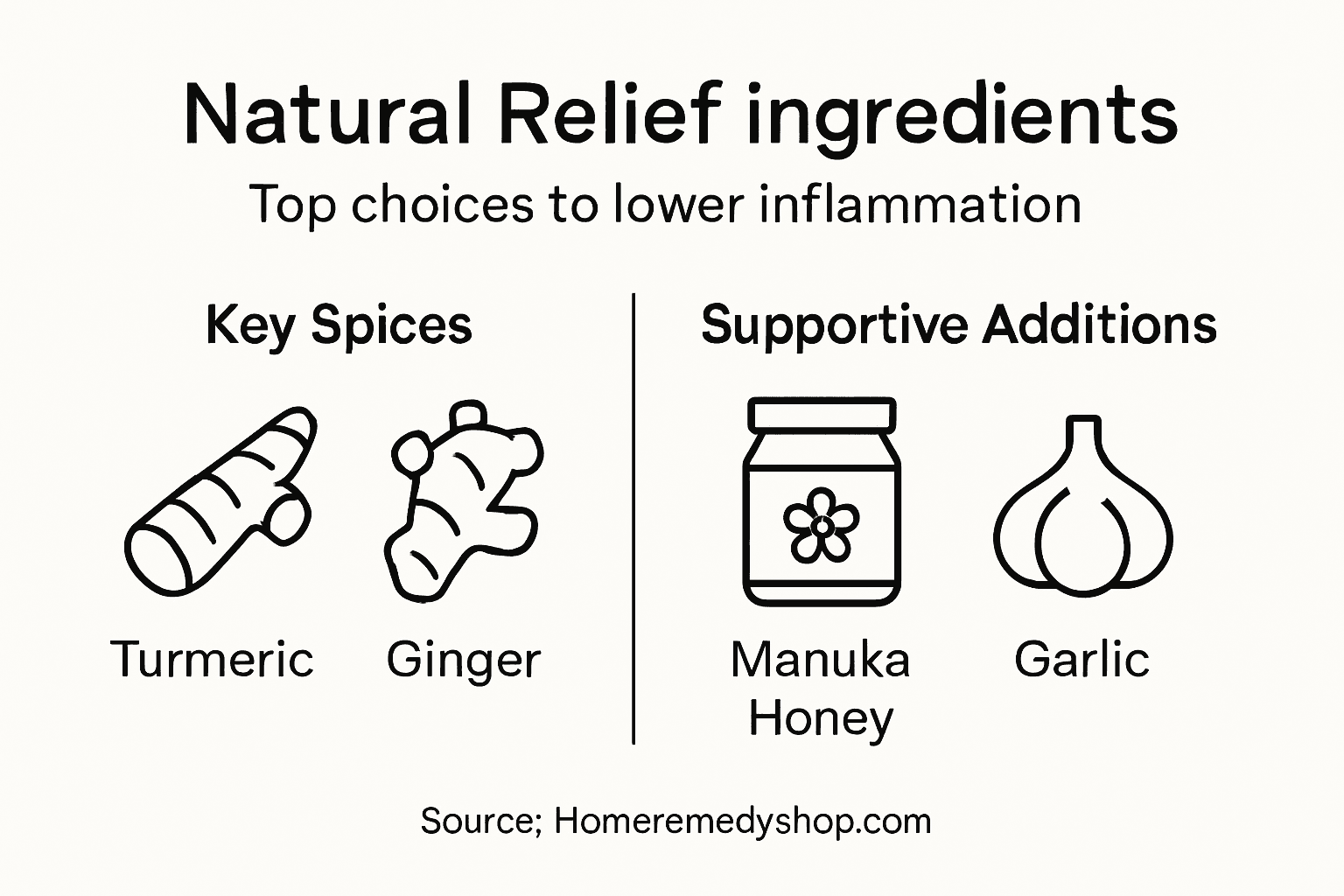
Start with turmeric, the golden spice that’s been used for thousands of years in traditional medicine. This isn’t just folklore—turmeric contains curcumin, a powerful compound that tackles inflammation at the cellular level. You’ll want ground turmeric for cooking and beverages, though some people prefer turmeric root if you can find it fresh. Next, grab Manuka honey, which differs from regular honey in its antibacterial and anti-inflammatory potency. The unique compounds in Manuka honey work synergistically with other ingredients and can be used straight from the jar or mixed into remedies. Garlic deserves a spot in your collection too. While garlic is often celebrated for its antibacterial properties, it also contains allicin and other compounds that reduce inflammatory responses in your body. Fresh garlic cloves work best, though garlic powder serves as a backup. Don’t overlook lavender essential oil—this aromatic oil reduces inflammation when applied topically and can be diffused or added to carrier oils for massage. Natural compounds from plants and fungi inhibit inflammatory signaling pathways, making these ingredients scientifically validated choices for your anti-inflammatory arsenal.
Round out your collection with ginger root (fresh is preferable), raw honey, olive oil, and any herbs you enjoy like rosemary or thyme. Store these ingredients in cool, dark places to preserve their potency. Having everything on hand means you can respond quickly when inflammation flares up instead of scrambling to find what you need.
Here is a summary of the top natural anti-inflammatory ingredients and their unique benefits:
| Ingredient | Key Compound | Primary Benefit |
|---|---|---|
| Turmeric | Curcumin | Cellular-level inflammation relief |
| Manuka Honey | Methylglyoxal | Enhanced antibacterial support |
| Garlic | Allicin | Reduced inflammatory responses |
| Lavender Oil | Linalool | Localized inflammation reduction |
| Ginger Root | Gingerol | Lowered swelling and discomfort |
| Olive Oil | Oleocanthal | Supports overall anti-inflammatory |
| Rosemary/Thyme | Rosmarinic acid | Synergistic anti-inflammatory effect |
Pro tip: Buy organic turmeric, Manuka honey, and garlic when possible, as these ingredients retain more of their active compounds without synthetic pesticides or processing that might diminish their anti-inflammatory effectiveness.
Step 2: Prepare turmeric, manuka honey, and garlic blends
Now that you have your ingredients assembled, it’s time to create the actual remedies. Preparing your own turmeric, Manuka honey, and garlic blends gives you complete control over quality and potency. The beauty of these combinations is that they work synergistically, with each ingredient amplifying the anti-inflammatory effects of the others. This is where your gathered ingredients transform into something genuinely therapeutic.

Start with your base blend by combining one cup of raw or Manuka honey with two to three tablespoons of turmeric powder in a clean glass jar. If you prefer using fresh turmeric, grate about two tablespoons of fresh root and mix it in. Here’s where black pepper becomes your secret weapon: add one quarter teaspoon of freshly ground black pepper. This might seem like a small detail, but black pepper contains piperine, which dramatically increases curcumin absorption in your body, making your blend significantly more effective. Combining turmeric and honey creates a potent anti-inflammatory booster that works better than either ingredient alone. Stir everything together thoroughly, then add minced fresh garlic or garlic powder (about one teaspoon) for enhanced antibacterial and anti-inflammatory benefits. Some people prefer to add the garlic after a few days of infusing if they find the flavor too strong initially. Seal your jar tightly and let it sit at room temperature for three to five days before using. This infusion period allows the flavors to meld and the compounds to work together more effectively. You can consume a teaspoon of this blend straight, stir it into warm water, or add it to smoothies and teas. The mixture should last several weeks when stored in a cool, dark place, though Manuka honey naturally has antimicrobial properties that help preserve it longer. Your blend is ready to use as soon as it’s mixed, but waiting those few days amplifies its potency significantly.
Pro tip: Make a double or triple batch and store extra jars in your pantry so you always have anti-inflammatory blend ready without needing to prepare it frequently.
Step 3: Apply lavender essential oil for topical relief
Lavender essential oil offers a powerful topical solution for localized inflammation. This aromatic remedy works directly on affected areas, delivering anti-inflammatory compounds where you need them most. Whether you’re dealing with joint discomfort, muscle tension, or inflamed skin, lavender oil provides relief that you can feel within minutes of application.
Never apply essential oil directly to your skin without diluting it first. Start by choosing a carrier oil such as coconut oil, olive oil, or jojoba oil, which will help the lavender disperse evenly and protect your skin from irritation. A good ratio is about 10 to 15 drops of lavender essential oil per tablespoon of carrier oil, though you can adjust based on your skin sensitivity. Mix the oils together in a small glass bottle and shake well before each use. When you’re ready to apply, pour a small amount into your palm and massage it gently into the inflamed area using circular motions. Lavender oil’s antimicrobial and anti-inflammatory components reduce inflammation by modulating immune responses, which means you’re getting science backed relief, not just pleasant scent. Work the blend into your skin for two to three minutes, allowing the warmth from your hands to help the oil penetrate deeper. You can apply this topical treatment up to three times daily, though many people find that morning and evening applications work well for maintaining consistent relief. Some people prefer wrapping the area with a soft cloth after application to keep the oil in place and enhance absorption. Pay attention to how your skin responds. If you notice any redness or irritation, reduce the frequency of application or use a weaker concentration.
Lavender oil combines beautifully with your turmeric and garlic blends for comprehensive inflammation management. While you’re using the oral blend internally, the topical lavender oil targets surface inflammation, giving you multiple angles of attack against discomfort. You can also add a few drops of lavender to your warm water turmeric drink for aromatherapy benefits while you consume it.
Pro tip: Store your diluted lavender oil blend in a dark glass bottle away from direct sunlight, as this protects the oil’s potency and extends its shelf life to several months.
Step 4: Use remedies consistently for best results
Consistency is where natural remedies transform from occasional relief into genuine healing. You’ve gathered your ingredients and prepared your blends, but the real magic happens when you commit to using them regularly over time. Natural anti-inflammatory compounds work gradually, building up in your system to create sustained improvements in how your body manages inflammation. This isn’t a quick fix situation, but rather a partnership with your body’s own healing processes.
Start by establishing a routine that fits seamlessly into your daily life. Take one teaspoon of your turmeric, Manuka honey, and garlic blend each morning with warm water or tea. This becomes your baseline, your daily anchor point. Many people find that morning consumption helps them start the day with reduced inflammation and sustained energy. If your inflammation tends to flare in the afternoon or evening, add a second dose at that time. Apply your diluted lavender oil blend to affected areas each morning and evening without fail. The key is regularity, not intensity. Natural anti-inflammatory remedies require consistent, ongoing use to achieve sustained reduction in chronic inflammation, which means skipping doses or going weeks without treatment significantly reduces effectiveness. Think of it like brushing your teeth. You don’t skip brushing for three days hoping it still counts. Your inflammation management works the same way. Track your remedies in a calendar or phone app if that helps you stay accountable. Note which days you used them and any changes you observe in your symptoms. This tracking serves two purposes: it keeps you consistent, and it helps you identify patterns in how your body responds.
Expect to notice gradual improvements over two to four weeks of consistent use. Some people feel relief within days, while others need a full month before significant changes emerge. Your body’s inflammation didn’t develop overnight, and it won’t disappear overnight either. The compounds in turmeric, garlic, and lavender work cumulatively, meaning each dose builds on the previous one. Skip a few days and you lose momentum. Stay consistent and you’ll hit a tipping point where the inflammation simply becomes less prominent in your daily experience.
Pair your topical and internal remedies with lifestyle adjustments for maximum effect. Reduce stress through meditation or gentle movement, sleep seven to nine hours nightly, and eat whole foods whenever possible. These factors amplify your remedies’ effectiveness far beyond what the blends alone could accomplish.
Pro tip: Set phone reminders for your remedy times during the first month until consistent use becomes automatic habit, making it impossible to forget your daily doses.
Step 5: Monitor and assess inflammation reduction
Tracking your progress is essential for understanding whether your natural remedies are working effectively. Without measurement, you’re essentially flying blind, unable to distinguish between genuine improvement and wishful thinking. Monitoring inflammation reduction gives you concrete data to guide your decisions about whether to continue your current approach, adjust dosages, or explore additional remedies.
Start with simple self-assessment methods you can use at home without any special equipment. Keep a daily journal documenting your inflammation symptoms, noting pain levels on a scale of one to ten, joint stiffness, swelling, energy levels, and how easily you move through your day. Write down what time you took your remedies and any other factors that might influence inflammation like sleep quality, stress levels, or physical activity. After two weeks, review your entries and look for patterns. Are mornings better than evenings? Does swelling decrease on days when you’re consistent with your blends? These observations provide valuable baseline data. Photograph any visible inflammation like swelling or redness so you can compare images weekly. Visual records offer undeniable proof of improvement that numbers alone cannot provide. Beyond self-observation, consider tracking objective measures like range of motion. If inflammation affects your joints, measure how far you can bend or extend them and record the distance weekly. Movement improvements often precede pain reduction, giving you encouraging data before you notice dramatic symptom changes.
For those interested in medical validation, advanced assessment of inflammatory activation uses biochemical markers to gauge treatment response, offering objective confirmation of your body’s inflammation levels. Ask your healthcare provider about testing for inflammatory markers like C-reactive protein through routine blood work. These tests provide a quantifiable baseline you can retest after eight to twelve weeks of consistent remedy use. The difference in your lab values provides scientific confirmation of what you’re already experiencing. Share your journal and progress photos with your healthcare provider to help them understand how natural remedies are affecting your specific situation. They may offer insights about whether your approach is working or suggest adjustments. Most importantly, remember that inflammation reduction isn’t always linear. You might experience great weeks followed by setback weeks as your body adjusts and your natural remedies continue working. These fluctuations are normal and expected, not signs of failure. Stay patient with the process while remaining vigilant about tracking what’s actually happening in your body.
The table below highlights common ways to assess inflammation reduction at home and with medical support:
| Method | What to Track | Benefit |
|---|---|---|
| Daily journal | Pain, stiffness, swelling | Identifies symptom trends easily |
| Photo documentation | Visible inflammation | Visual comparison over time |
| Range of motion test | Joint flexibility | Early warning of improvement |
| Lab blood test (CRP) | Inflammatory markers | Objective medical confirmation |
Pro tip: Create a simple spreadsheet with dates and symptom ratings so you can easily spot trends over weeks and months, providing clear visual evidence of progress that motivates continued consistency.
Discover Effective Natural Relief for Inflammation Today
If you are struggling with ongoing inflammation and looking for safe, scientifically supported ways to reduce swelling, discomfort, and redness, you are not alone. This guide highlights key natural ingredients like turmeric, Manuka honey, garlic, and lavender oil that work together to ease inflammation at the cellular level and provide targeted topical relief. We understand the frustration of managing chronic inflammation and the desire for a holistic approach that fits your lifestyle.

Empower yourself with trusted remedies and expert advice available at Homeremedyshop.com. Explore our detailed guides on blending potent anti-inflammatory ingredients, and find high-quality natural supplements and oils to support your healing journey. Take control of your health now and experience the benefits of consistent natural care by visiting Homeremedyshop.com. Start reducing inflammation today with remedies that combine tradition and scientific insight for lasting relief.
Frequently Asked Questions
What are some natural ingredients for at-home inflammation relief?
Start by gathering turmeric, Manuka honey, garlic, lavender essential oil, ginger root, and olive oil. These ingredients have unique anti-inflammatory properties and can be used in various forms like teas, topical applications, or culinary remedies.
How do I prepare a turmeric and Manuka honey blend?
Combine one cup of raw or Manuka honey with two to three tablespoons of turmeric powder in a glass jar. Add a quarter teaspoon of freshly ground black pepper to improve curcumin absorption and enhance the effectiveness of the blend.
How should I apply lavender essential oil for localized inflammation?
Dilute about 10 to 15 drops of lavender essential oil in one tablespoon of a carrier oil, like olive oil or coconut oil. Massage this mixture into the inflamed area up to three times daily for relief.
How long does it take to notice results from these natural remedies?
You might start noticing improvements in inflammation within two to four weeks of consistent use. To maximize effectiveness, take your blends daily and maintain a routine to support your body’s healing process.
How can I track the effectiveness of my natural remedies?
Keep a daily journal noting your pain levels, stiffness, and swelling, and compare these observations over time. Additionally, consider taking photos of any visible inflammation to monitor changes as you use your remedies.
What should I do if I experience irritation from the essential oils?
If you notice any redness or irritation, reduce the frequency of application or use a weaker concentration of the essential oil. Mixing with a larger amount of carrier oil can also help decrease irritation.
Recommended
- 11 Home Remedies for Natural Allergy Relief – Home Remedies
- 15 Helpful Home Remedies for Arthritis and Pain Relief – Home Remedies
- 23 Home Remedies to Cure Toothache Naturally and Safely – Home Remedies
- Effective Home Remedies for Burn Relief Naturally – Home Remedies
- Understanding Herbs for Hair Growth: Nature’s Solutions | MyHair
