
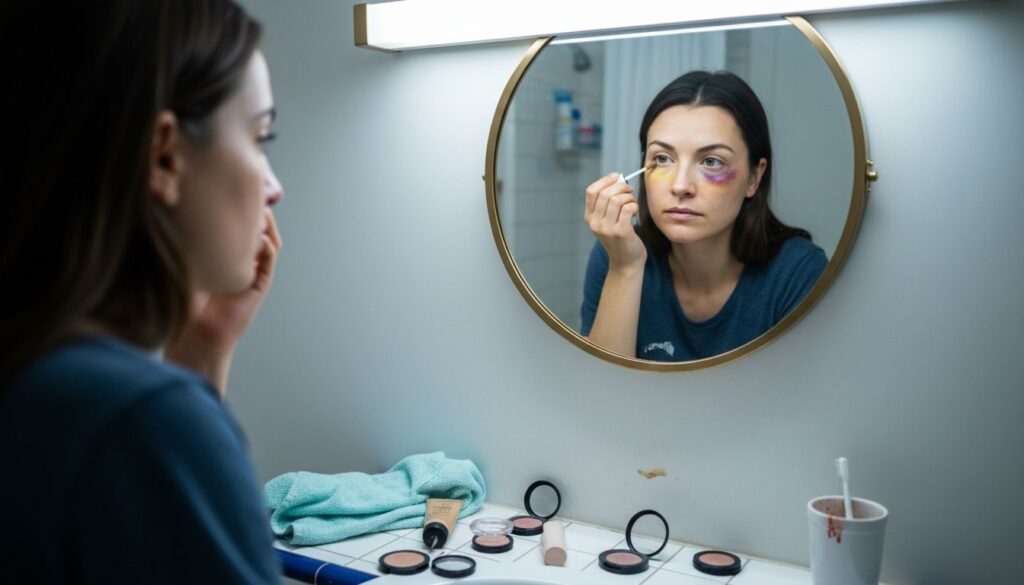
Every parent knows the worry that comes with a sudden bruise after an active day outdoors or during sports. A black eye is more than just dramatic discoloration—it signals blood and fluid pooling under the skin after facial impact, often leaving you searching for safe and natural ways to reduce swelling and hide the bruising fast. Understanding the real causes and stages lets you confidently choose remedies that support rapid healing and effective concealment for your loved ones.
In case you have to do this due to domestic violence, please reach out.
You can even reach out to us for emotional support and guidance. You can find our details at the bottom of the page.
Table of Contents
- What Is A Black Eye? Causes And Misconceptions
- Key Features Of Black Eye Bruising And Recovery
- Natural Remedies To Reduce Swelling And Discoloration
- Makeup Techniques For Effective Concealment
- Common Mistakes And Safety Precautions
Key Takeaways
| Point | Details |
|---|---|
| Understanding a Black Eye | A black eye is bruising around the eye due to soft tissue injury, not a direct injury to the eye itself. |
| Healing Progression | Bruising changes color from red, purple, green, yellow, to brown, typically healing within one to two weeks. |
| Effective Treatment | Cold compresses should be used first to reduce swelling, then switch to warm compresses for promoting healing. |
| Warning Signs | Seek immediate medical attention for vision changes, excessive bleeding, or if both eyes are bruised simultaneously. |
What Is a Black Eye? Causes and Misconceptions
Despite its name, a black eye doesn’t actually injure the eye itself in most cases. A black eye, or periorbital hematoma, refers to bruising around the eye caused by injury to the face or head. When you take a blow to the area around your eye, blood and fluid accumulate beneath the skin’s surface, creating the swelling and dark discoloration you see.
The injury happens to the soft tissue surrounding your eye socket, not the eyeball. Think of it like any other bruise on your body: when small blood vessels rupture from impact, blood pools underneath the skin. In this location, that pooled blood appears as dramatic darkening and puffiness that can make you look far worse than the actual injury.
Most people assume black eyes only come from direct trauma like a punch or fall. While these are common causes, periorbital hematomas can also result from facial surgery, dental work, or other head procedures. Some health conditions cause swelling around the eye without creating the characteristic bruising. Allergies and infections produce puffy eyes, but without the dark discoloration that defines a true black eye.
The color transformation reveals what’s happening beneath your skin. A fresh black eye appears purple or deep blue because fresh blood shows those colors. As healing progresses over several days, the bruise shifts to green, then yellow, then brown as your body breaks down the blood. This rainbow effect typically takes one to two weeks to fade completely.
Here’s a summary of typical black eye color changes and what each stage indicates:
| Stage of Bruise | Color Appearance | What It Means |
|---|---|---|
| Initial (Day 1) | Red or dark red | Fresh bleeding under skin |
| 1-2 Days | Purple or deep blue | Blood oxidizing, swelling peaks |
| 3-4 Days | Green or yellow | Blood breakdown, healing starts |
| 5-14 Days | Brown, fading skin | Bruise dispersing, near resolution |
More serious injuries require immediate attention. If you experience vision changes, significant bleeding, or swelling that doesn’t improve, seek medical care right away. Both eyes bruising simultaneously can signal a skull fracture, which demands professional evaluation. Internal eye bleeding, called hyphema, also requires urgent treatment despite looking similar to a regular black eye on the surface.
Understanding what causes your black eye helps you choose the right response. Physical activities, sports injuries, and accidents in children create most cases, especially in health-conscious families managing active lifestyles. Once you know what happened, you can move forward with natural healing methods and concealment strategies. For comprehensive approaches to reducing appearance quickly, home remedies for black eyes offer evidence-based options you can implement immediately.
Pro tip: Apply ice during the first 24 to 48 hours after the injury to reduce swelling and discoloration before trying concealment methods.
Key Features of Black Eye Bruising and Recovery
Your black eye follows a predictable color progression that tells you exactly how healing is advancing. When blood vessels rupture under the skin around your eye, ruptured blood vessels leak blood beneath the surface. Initially, the area appears red or dark red. Within hours, it shifts to purple or deep blue as the blood oxidizes. Over the next week or so, the colors transition through yellow and green before finally fading to brown and then disappearing completely. This rainbow effect typically takes about two weeks total, though the exact timeline varies based on the injury’s severity.
Swelling causes the most immediate discomfort and functional impact. The puffiness peaks around two days after the injury occurs, making it difficult or impossible to open your affected eye fully. You may experience pain and tenderness when touching the area. This swelling gradually decreases over the following days as your body reabsorbs the fluid. Cold compresses during the first 24 to 48 hours significantly reduce both swelling and bleeding by constricting blood vessels.
After the initial 48 hours pass, warm compresses become more effective at supporting recovery. Heat encourages circulation and helps drain remaining fluid from the affected tissue. Most black eyes heal completely without intervention within a few days or weeks. Your body naturally reabsorbs the accumulated blood and fluid without leaving lasting damage.
You need to watch for warning signs throughout recovery. Double vision, vision loss, or persistent bleeding inside the eye demand immediate medical attention. Swelling that worsens after improving, or symptoms that don’t improve as expected, indicate potential complications. If you have bruising in both eyes simultaneously, seek professional evaluation right away to rule out serious head injuries.
Many parents managing active children find that home remedies for black eyes speed recovery while reducing visible discoloration. Natural approaches work alongside your body’s healing process rather than against it. Understanding these recovery features helps you know what to expect and when to seek help.
Pro tip: Start with cold compresses in the first 48 hours to minimize swelling, then switch to warm compresses to promote drainage and speed the bruise’s color changes toward fading.
Natural Remedies to Reduce Swelling and Discoloration
Cold therapy is your first line of defense during the critical first 24 hours after injury. Applying cold compresses for 15 to 20 minutes every hour significantly reduces swelling and limits bleeding beneath the skin. If you don’t have an ice pack handy, grab a bag of frozen vegetables from your freezer and wrap it in a clean cloth. Never apply ice directly to your skin, as this can cause additional damage. This cooling effect constricts blood vessels and prevents fluid from accumulating excessively around your eye.
After the first 24 to 48 hours, switch your approach completely. Warm compresses now become more effective because heat opens blood vessels and promotes drainage of accumulated fluid. Apply warmth for similar 15 to 20 minute intervals to support your body’s natural healing process. Think of it as switching from stopping the leak to draining the pool. This transition marks the shift from limiting damage to actively promoting recovery.
Elevation reduces swelling dramatically by working with gravity. When you rest, keep your head elevated higher than your heart using extra pillows or a wedge pillow. This simple positioning encourages fluid to drain away from your face rather than pooling around your injured eye. Lying flat or keeping your head level makes swelling worse, especially when you first wake up.

One important caution: avoid using raw meat as a compress, despite its old reputation. This increases infection risk and provides no additional benefit over safer alternatives. Stick with ice packs, frozen vegetables, or warm compresses instead.
Protect your eye from further injury while it heals. Avoid activities that could cause re-injury, keep the area clean, and resist the urge to rub or press on the swollen tissue. For health-conscious families managing active children, combining these natural approaches with natural strategies for reducing swelling creates the fastest visible improvement.
If swelling worsens after improving, vision changes occur, or pain becomes severe, consult a healthcare provider immediately.
Pro tip: Alternate between 15 minute cold compress sessions and 15 minute breaks during the first day to maximize swelling reduction without causing ice burn.
Compare these home care strategies for black eye management:
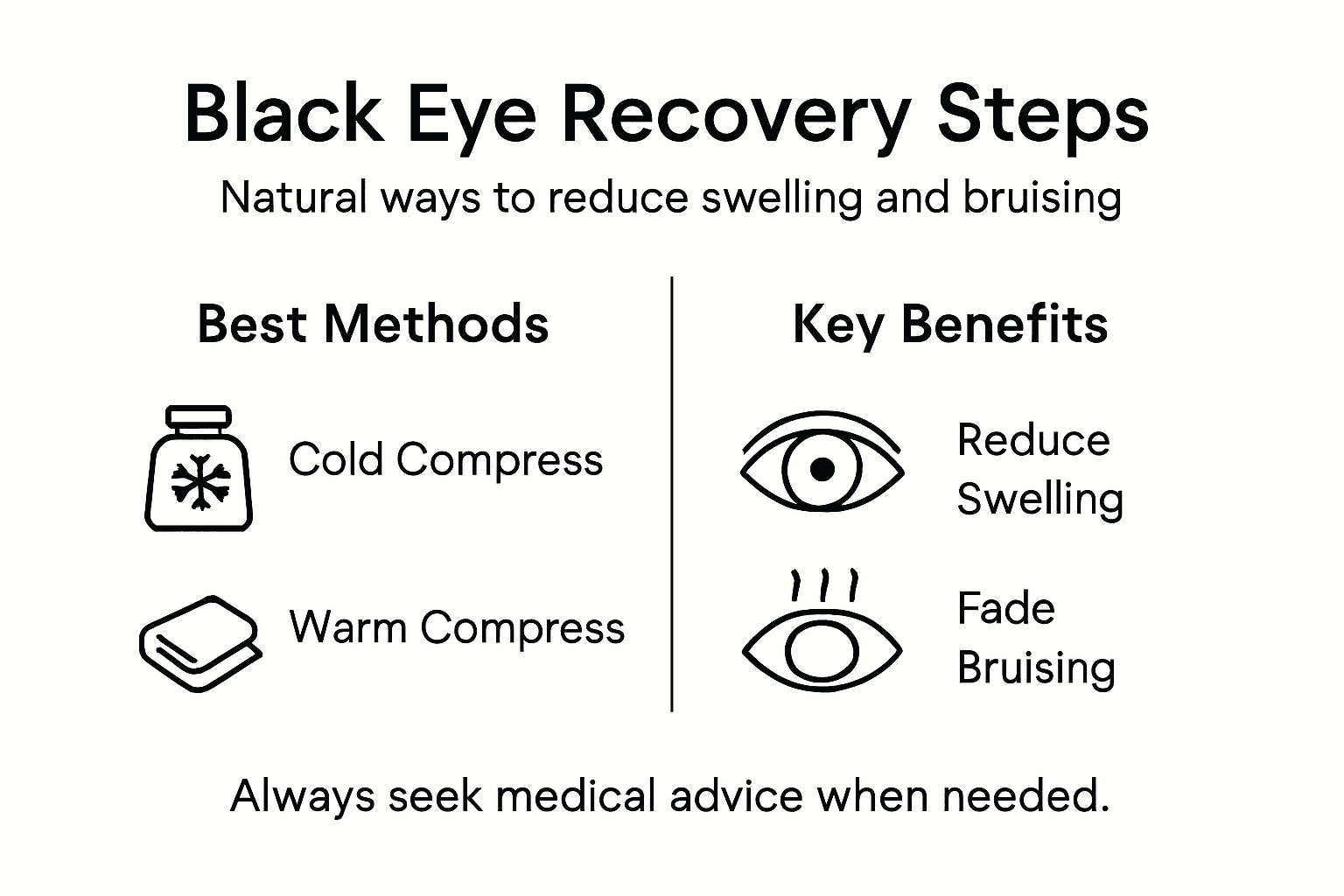
| Method | Best Time to Use | Key Benefit |
|---|---|---|
| Cold Compress | First 24-48 hours | Reduces swelling, limits bruising |
| Warm Compress | After 48 hours | Increases circulation, promotes healing |
| Head Elevation | Any time while resting | Minimizes fluid accumulation |
| Color-Correcting Makeup | When covering bruise | Conceals discoloration effectively |
Makeup Techniques for Effective Concealment
Color correction is your secret weapon for hiding a black eye effectively. The bruising around your eye displays multiple colors depending on its age, from purple and blue to yellow and green. Using color-correcting concealers neutralizes bruising tones before you apply regular makeup. For purple or blue hues, apply a yellow or peach corrector first. Green correctors work best against redness or pink undertones. This step prevents the bruise from showing through your final coverage.
After color correction, apply a full-coverage concealer matched to your skin tone. Opt for creamy, opaque formulas rather than sheer products, as they provide the density needed to hide discoloration completely. The key is matching your exact skin undertone—if you choose a shade too light or too dark, it will draw attention rather than blend seamlessly. Apply the concealer gently using a brush or sponge with soft tapping motions instead of rubbing or dragging across the sensitive eye area.
Contouring adds dimension and helps mask residual swelling. Use slightly darker shades along the areas where puffiness creates shadows, and apply lighter shades to the high points of your cheekbones. This technique tricks the eye into perceiving a flatter, more normal contour. Blend carefully to avoid harsh lines that look obviously applied.
Setting your makeup with translucent powder extends wear throughout the day and prevents creasing. Apply powder lightly using a fluffy brush, focusing on areas that tend to get oily. Heavy-handed powder application can cake and look obvious, so use restraint here.
Gentleness matters when removing black eye makeup. Never scrub or tug at the delicate eye area. Use a gentle makeup remover or cleansing oil, and pat your skin dry instead of rubbing. Removing makeup carefully prevents further irritation or damage during healing. For those seeking natural alternatives, homemade eye shadows offer gentler options if commercial products irritate your already sensitive skin.
Pro tip: Practice your concealment technique the night before when you need to wear it publicly, as rushing through application in the morning often results in streaky or uneven coverage.
Common Mistakes and Safety Precautions
The raw meat myth persists despite being genuinely dangerous. You may have heard that applying raw meat to a black eye reduces swelling, but this old remedy creates serious infection risks. Applying raw meat or unclean objects to the eye can introduce bacteria directly to your already compromised skin. Stick with clean ice packs, frozen vegetables in cloth, or sterile compresses instead. Your family’s health is worth abandoning this outdated approach.
Pressure and rubbing cause real damage during healing. Resisting the urge to press on your injured eye seems obvious, but many people unconsciously do it when pain or itching develops. This pressure can worsen the injury, increase swelling, and potentially damage delicate eye structures. Keep your hands away and resist the temptation to massage the area, no matter how much discomfort you feel.
Cold compress duration matters more than intensity. Applying ice continuously for hours can actually damage your skin and tissue. Instead, use ice for 15 to 20 minute intervals with breaks in between. This approach gives your skin time to recover between applications while still providing therapeutic cold therapy.
Ignoring warning signs puts your vision at risk. Vision changes, double vision, persistent severe pain, or bleeding that doesn’t stop require immediate medical evaluation. Many serious eye injuries look similar to simple black eyes on the surface. Incorrectly identifying injury severity or ignoring serious symptoms can delay critical treatment for conditions like hyphema or orbital fractures. When in doubt, get professional assessment.
Skipping elevation and early cold compress application prolongs recovery unnecessarily. Many people delay treatment, hoping the bruise will fade on its own. Starting cold therapy and elevation immediately within the first few hours makes a measurable difference in final appearance and healing speed.
Protect yourself from future injuries. For health-conscious families with active children, preventing re-injury during the healing phase is crucial. Avoid contact sports and activities where impact is likely. Wear protective eyewear during any activity that could cause face trauma.
Pro tip: Document your black eye with photos during the first day and then daily to track healing progress, helping you recognize when swelling worsens and medical attention becomes necessary.
Discover Natural Ways to Heal and Conceal Your Black Eye Quickly
Dealing with a black eye is frustrating not only because of the discomfort but also due to the visible bruising that can affect your confidence. This article highlights the importance of using gentle, natural remedies and color-correcting techniques to reduce swelling and disguise discoloration safely. If you want to support your body’s healing process and learn proven home remedies that go beyond concealment, you need trustworthy guidance and effective natural products.

At Homeremedyshop.com, we specialize in offering holistic wellness advice and natural solutions that help you recover faster while maintaining your skin’s health. From effective cold and warm compress methods to herbal supplements that support tissue repair, you can find everything you need to manage bruising naturally. Explore our home remedies for black eyes and embrace safe, natural healing methods today. Start your journey toward faster recovery with expert guidance and quality remedies from Homeremedyshop.com.
Frequently Asked Questions
How can I naturally reduce swelling from a black eye?
Applying cold compresses immediately for the first 24 to 48 hours can significantly reduce swelling and limit bruising. After that, switch to warm compresses to promote drainage and healing.
What is the best way to conceal a black eye using makeup?
Using color-correcting concealers is effective for neutralizing the colors of the bruise. For purple or blue tones, apply yellow or peach correctors first, and for redness, use green correctors. Then, follow with a full-coverage concealer that matches your skin tone.
Are there any home remedies to help heal a black eye?
Yes, applying cold compresses, keeping your head elevated, and using warm compresses after 48 hours can all support the healing process. Some natural remedies can complement these methods, focusing on reducing swelling and improving circulation.
What should I avoid doing when I have a black eye?
Avoid applying raw meat as a compress, pressing or rubbing the area, and using ice continuously for extended periods. These actions can cause infections or worsen your injury. Instead, stick with safe compresses and gentle care.
Recommended
- Get Rid of Black Eyes with These 10 Home Remedies – Home Remedies
- 15 Home Remedies to Get Rid of Black Eye + Infographic – Home Remedies
- How to Effectively Cover a Black Eye with Makeup – Home Remedies
- Top Home Remedies to Erase Black Circles Under Eyes – Home Remedies
- Understanding Natural Hair Care for Black Hair | MyHair
