
You wake up with itching, watery eyes and wonder if it is allergies, dry air, or something less obvious. For health-conscious adults who prefer holistic solutions, finding relief without standard medication is a priority. Understanding the key triggers like pollen, pet dander, and dry indoor air helps you identify the root of your discomfort and choose effective natural remedies that actually soothe your eyes instead of causing new problems.
Table of Contents
- What Causes Itchy Eyes And Key Triggers
- Types Of Eye Discomfort And Symptoms
- Effective Natural Remedies For Itchy Eyes
- Daily Rituals To Soothe And Hydrate Eyes
- Risks And Common Mistakes To Avoid
Key Takeaways
| Point | Details |
|---|---|
| Understand Triggers | Identify specific triggers for itchy eyes, such as allergens or dry environments, to manage symptoms effectively. |
| Avoid Rubbing | Refrain from rubbing your eyes to prevent worsening irritation and potential corneal damage. |
| Use Natural Remedies | Incorporate saline solutions and compresses to soothe irritation and improve eye hydration. |
| Seek Professional Help | If symptoms persist or worsen, consult a healthcare provider for assessment and appropriate treatment. |
What Causes Itchy Eyes and Key Triggers
Itchy eyes stem from various causes, and understanding what triggers your discomfort is the first step toward relief. The most common culprit is allergies, which affect millions of people year-round. When you encounter allergens like pollen, animal dander, dust mite feces, or mold, your immune system overreacts. This triggers allergic conjunctivitis, an inflammation of the conjunctiva (the clear membrane covering your white eye). The result is that characteristic itching, redness, tearing, and sometimes a mucous discharge that makes your eyes feel unbearable. Seasonal changes intensify these symptoms, particularly during spring and fall when pollen counts spike. But allergies aren’t the only problem. Dry eyes cause significant discomfort when your tears don’t provide adequate moisture or quality lubrication. This happens because you either produce too few tears or the tears you do produce evaporate too quickly. Cold, dry air and heating systems in winter months worsen this condition dramatically. Indoor environments filled with dust, pet hair, and humidity fluctuations also play a role in triggering dryness and itching.
Other underlying causes deserve attention as well. Blepharitis involves inflammation of your eyelids due to debris buildup along the lash line, which creates persistent itching and discomfort. Contact lens wearers frequently experience irritation from lens deposits, improper fit, or extended wear that reduces oxygen to your eyes. Environmental irritants like smoke, pollution, and chlorine can aggravate sensitive eyes quickly. Some people experience symptoms from dry indoor air, whereas others struggle with seasonal pollen exposure or reactions to pet dander. The key trigger varies from person to person, and understanding what causes itching helps you manage symptoms effectively rather than just treating them reactively.
One critical mistake many people make is rubbing their itchy eyes. This seems intuitive, but rubbing actually worsens the problem by releasing histamines (natural chemicals that increase itching) and potentially damaging your cornea. Instead of scratching that itch, identifying your specific trigger allows you to avoid it or minimize exposure. Keep a simple log for one to two weeks, noting when itching occurs, what you were doing, and what’s in your environment. Were you outside? Around pets? In an air-conditioned space? Did you just wake up? This detective work reveals patterns that point to your primary triggers, whether environmental allergens, dry conditions, or contact lens issues.
Here’s a comparison of common causes of itchy eyes and how they differ:
| Cause | Typical Symptoms | Main Trigger | Best Initial Action |
|---|---|---|---|
| Allergies | Itching, swelling, redness | Pollen, pet dander, dust | Avoid allergen exposure |
| Dry Eyes | Scratchiness, tearing | Low humidity, screen time | Use artificial tears |
| Blepharitis | Eyelid margin itching | Debris, bacteria buildup | Clean eyelids gently |
| Contact Lens Issues | Irritation, redness | Extended wear, deposits | Switch to glasses, clean lenses |
| Environmental Irritants | Burning, discomfort | Smoke, pollution, chlorine | Limit exposure, use eye protection |
Pro tip: Start your day with a cool cucumber slice on each eye for 5 to 10 minutes to hydrate and soothe before identifying triggers—this simple morning ritual reduces inflammation and prepares your eyes for the day ahead.
Types of Eye Discomfort and Symptoms
Eye discomfort manifests differently depending on the underlying cause, and recognizing what you’re experiencing helps you address the problem correctly. Some people describe their discomfort as a constant itching sensation that makes them want to rub their eyes constantly. Others experience burning, a sharp sensation that feels like sand is trapped underneath the eyelids. Redness often accompanies these symptoms, making your eyes appear irritated or tired. You might also notice watering or excessive tearing, which seems counterintuitive when your eyes feel dry. The key is understanding that eye discomfort ranges from mild irritation to serious conditions, and the specific symptoms you experience point toward what’s actually happening in or around your eyes. Dry eye syndrome, for example, produces that distinctive scratchy feeling combined with periods of excessive tearing as your eyes try to compensate. Blepharitis creates itching along the eyelid margin and sometimes involves crusty buildup in the morning. Allergic reactions tend to produce intense itching with significant swelling and redness.
Beyond the obvious symptoms, pay attention to warning signs that suggest something more serious. Vision changes, eye pain, and sensitivity to light warrant immediate medical evaluation. Blurred or double vision, floaters (small spots drifting across your field of vision), halos around lights, and sudden vision loss are red flags. Discharge from your eyes, particularly yellow or green mucous, indicates infection. Swelling that affects your ability to see or causes severe discomfort also demands prompt attention. The distinction between mild irritation and serious eye problems can mean the difference between temporary discomfort and permanent vision damage, so take these warning signs seriously.
Here’s what many people miss: symptom severity doesn’t always correlate with how serious the underlying condition is. Someone might have minimal discomfort from early-stage glaucoma, yet experience intense itching from a simple allergy. This is precisely why tracking your specific symptoms matters. Note whether your discomfort is constant or comes and goes. Does it worsen at certain times of day, like after screen time or when you wake up? Is it worse in specific environments, like your office or outdoors? Does your vision feel affected at all? These details help you and your healthcare provider pinpoint the cause. Many health-conscious individuals find that natural home remedies for itchy eyes work wonderfully for minor irritation, while other situations require professional diagnosis. Understanding your symptoms prevents unnecessary worry while ensuring you don’t overlook anything that needs medical attention.
Pro tip: Keep a symptom diary for three to five days, recording the time of day, what you were doing, your environment, and your specific symptoms to identify patterns that reveal whether your discomfort stems from allergies, dryness, or another cause.

- PRESERVATIVE-FREE: Specifically formulated without preservatives to quickly relieve dry, sensitive eyes
- DUAL-ACTION FORMULA: Quickly lubricates and hydrates
- SOOTHING: Delivers soothing hydration directly to your eye
Effective Natural Remedies for Itchy Eyes
Natural remedies offer genuine relief for itchy eyes without relying on pharmaceutical interventions. The first line of defense involves saline solutions, which you can either purchase or make at home. A saltwater solution works by gently cleansing your eyes and flushing out irritants like pollen, dust, and allergens that trigger itching. Mix one quarter teaspoon of salt with eight ounces of distilled water to create your own saltwater rinse. If you prefer a gentler approach or have roses growing in your yard, rose water serves as an excellent alternative. Simply soak dried rose petals in distilled water overnight, strain the liquid, and use it as an eye wash. Another powerful option is adding hyaluronic acid to your skincare routine around the eye area, as it provides deep hydration that combats dry eye symptoms at their source. These solutions address the root cause of itching by either removing irritants or restoring moisture to your eyes. Washing your eyelids daily with tear-free baby shampoo reduces the accumulation of debris and bacteria that contribute to inflammation and itching, particularly if you struggle with blepharitis.
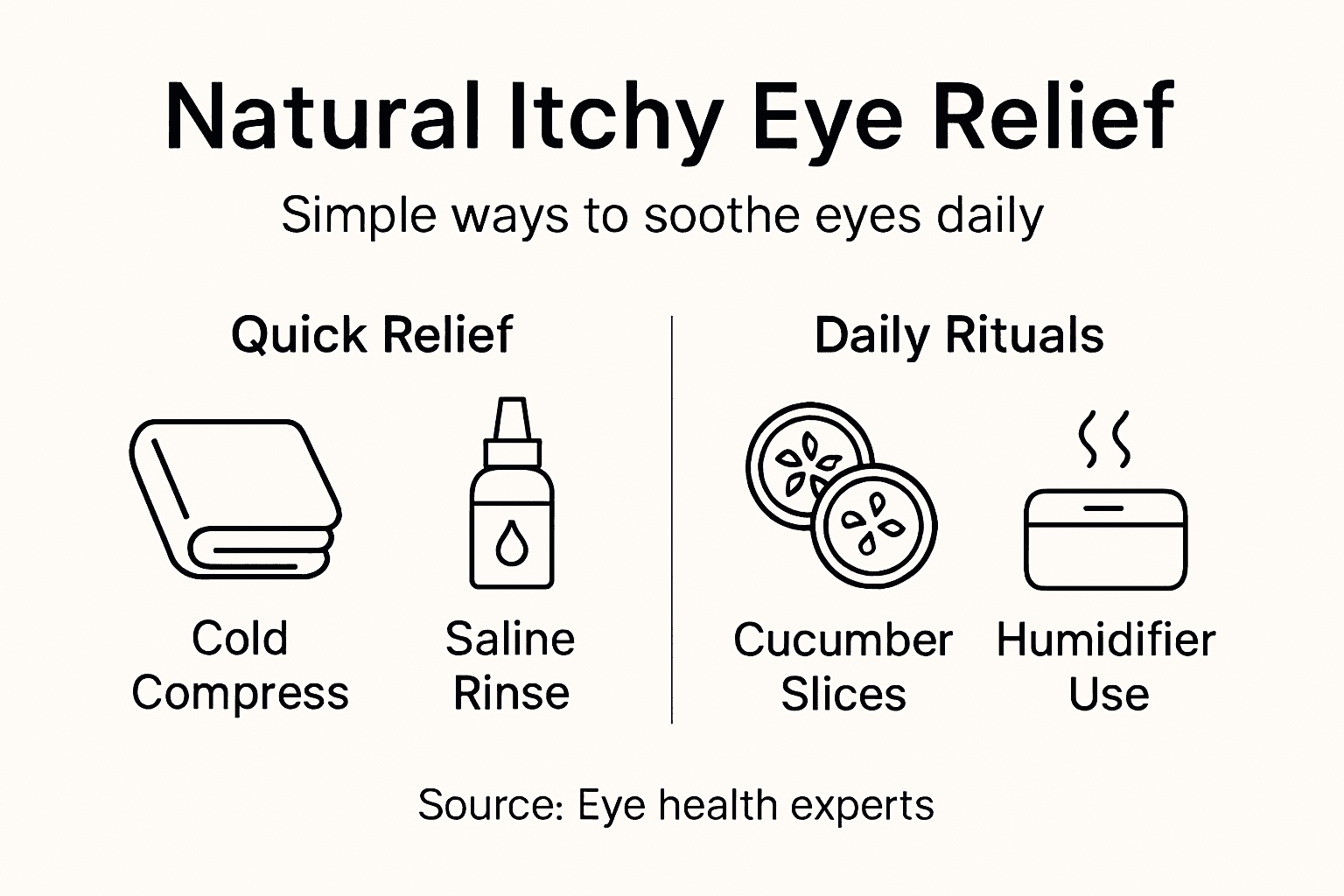
Cold and warm compresses represent another dimension of natural eye care. A cold compress constricts blood vessels and reduces inflammation almost immediately, making it ideal for acute itching and swelling. Apply a clean, cool cloth or refrigerated cucumber slices to your closed eyes for five to ten minutes in the morning. This morning ritual hydrates your eyes with natural moisture while reducing puffiness and calming irritation before your day begins. A warm compress, conversely, helps if you have blepharitis or clogged eyelid glands. Soak a clean cloth in warm water, close your eyes, and apply it gently for ten to fifteen minutes. This improves eyelid gland function and relieves the specific itching associated with debris buildup along your lash line. Artificial tears replenish moisture and improve tear film quality, especially when made from natural ingredients rather than synthetic compounds. Blinking deliberately and taking regular breaks from screens help maintain your natural tear production and prevent the dry eye symptoms that intensify itching.

Environmental management completes your natural remedies toolkit. Allergen avoidance directly addresses the source of your discomfort by staying indoors when pollen counts peak, keeping windows closed during high pollen seasons, and using air purifiers to filter irritants from your indoor space. If you have pets, regular bathing reduces the dander they shed, which triggers intense itching in susceptible individuals. Pay special attention to your bedroom, where dust mites accumulate in bedding and pillows. Washing sheets weekly in hot water and using dust mite covers on pillows significantly reduces nighttime itching. Maintaining proper eye hygiene by gently cleaning your eyelids prevents irritant accumulation. These natural approaches work synergistically, with each strategy addressing different aspects of eye irritation. The combination of saline solutions, hyaluronic acid hydration, strategic use of compresses, and trigger avoidance creates a comprehensive system that many health-conscious individuals find more effective than quick pharmaceutical fixes.
Pro tip: Start your morning by applying a cool cucumber slice on each eye for ten minutes while adding hyaluronic acid serum around your eye area, then use your homemade saltwater solution for the most comprehensive natural relief before the day’s irritants accumulate.
Below is a summary of natural remedies and their intended effects:
| Remedy | Primary Benefit | When to Use |
|---|---|---|
| Saline Solution | Flushes out irritants | After environmental exposure |
| Rose Water | Soothes and hydrates | Morning or evening routine |
| Hyaluronic Acid | Deep hydration | For persistent dryness |
| Cold Compress | Reduces inflammation | Acute itching or swelling |
| Warm Compress | Improves gland function | Eyelid buildup or morning discomfort |
Daily Rituals to Soothe and Hydrate Eyes
Establishing a consistent daily eye care routine transforms how your eyes feel and function. Begin your morning with cucumber slices or cool compresses applied to closed eyes for five to ten minutes. This ritual hydrates your eyes with natural moisture while reducing puffiness and inflammation before your day begins. The cool temperature constricts blood vessels, providing immediate relief from itching and redness. Follow this with preservative-free artificial tears applied gently to each eye. Unlike standard eye drops, preservative-free formulations avoid chemical irritants that can worsen dry eye symptoms over time. Apply tears three to four times throughout your day, especially after screen time or exposure to irritants. Warm compresses applied to eyelids improve oil gland function and enhance tear quality, making this an excellent evening ritual. Soak a clean cloth in warm water, close your eyes, and hold it gently against your eyelids for ten to fifteen minutes. This practice helps restore natural tear film and prevents the nighttime dryness that causes morning discomfort.
Environmental control matters just as much as topical care. Running a humidifier indoors maintains moisture during dry seasons when heating systems strip humidity from the air. A room humidity level between 30 and 50 percent prevents tear evaporation and reduces eye irritation. Position the humidifier near where you spend the most time, particularly in your bedroom where overnight dryness accumulates. Using an air purifier removes dust, pollen, and particulate matter that trigger itching and inflammation. These devices filter out common allergens and irritants, creating a cleaner environment for your sensitive eyes. Pair environmental controls with conscious screen habits by following the 20-20-20 rule: every 20 minutes of screen time, look at something 20 feet away for at least 20 seconds. This forces your eyes to refocus and encourages natural blinking, which spreads your tear film evenly and prevents the dry eye symptoms that intensify itching.
Protection extends beyond your home. When spending time outdoors, wrap-around sunglasses protect your eyes from particulate matter and UV rays while creating a barrier against wind that causes rapid tear evaporation. Choose sunglasses that block 99 to 100 percent of both UVA and UVB radiation. On days when air quality is poor, limit outdoor exposure entirely and keep windows closed to prevent irritants from entering your home. If you wear contact lenses, give your eyes regular breaks by switching to glasses on days when irritation flares. Your contact lenses trap irritants against your eye surface, intensifying itching and discomfort. Many health-conscious individuals find that incorporating DIY rosewater into their evening routine provides additional soothing benefits beyond standard artificial tears. Creating your own rosewater from roses in your garden adds a personalized, natural element to your daily care ritual. These interconnected practices create a comprehensive daily system that addresses itching from multiple angles.
Pro tip: Schedule your cucumber slice application and warm compress ritual at the exact same times each morning and evening, pairing them with your existing routines like brushing your teeth, so the habit becomes automatic and you never skip this crucial hydration step.
Risks and Common Mistakes to Avoid
The most damaging mistake you can make when dealing with itchy eyes is rubbing them. This instinctive reaction feels like it provides relief, but it actually worsens the problem significantly. When you rub your eyes, you release histamine and other inflammatory chemicals that increase itching rather than decrease it. The friction also risks scratching your cornea, the clear outer layer protecting your eye. Rubbing eyes can lead to keratoconus, a serious condition where your cornea gradually thins and distorts, causing blurred vision and potentially requiring surgical intervention. Beyond corneal damage, rubbing spreads infections like pink eye and other contagious eye conditions to both eyes and to other people through your hands. The urge to rub intensifies when eyes feel dry or irritated, creating a vicious cycle where rubbing causes more dryness and itching. Instead of giving in to this impulse, use preservative-free artificial tears to address the underlying dryness, apply a cool compress for immediate relief, or simply blink more deliberately to stimulate natural tear production.
Another common pitfall involves overusing medicated eye drops, particularly combination antihistamine and vasoconstrictor formulations. These drops constrict blood vessels in your eyes, reducing redness temporarily. However, using them continuously for more than two weeks causes rebound redness, where your eyes become even more irritated and red when you stop using the drops. This dependency cycle forces you to use drops more frequently just to maintain the same effect. Additionally, many people treat symptoms without identifying the underlying cause of their itching. Using antihistamine drops for dry eye won’t solve the problem because dry eye requires hydration, not allergy treatment. Conversely, applying artificial tears to allergic itching won’t provide relief because the real issue is an immune overreaction to allergens. This mismatch between treatment and cause explains why some people experience persistent symptoms despite consistent effort. Before starting any treatment regimen, invest time in identifying whether your itching stems from allergies, dry eye, blepharitis, contact lens irritation, or environmental irritants. This clarity ensures you address the root cause rather than just masking symptoms temporarily.
Neglecting to seek professional help represents another significant mistake. Persistent or severe eye symptoms warrant evaluation by a healthcare provider to rule out serious conditions and prevent complications. Symptoms lasting more than two weeks, accompanied by vision changes, pain, discharge, or light sensitivity, require professional assessment. Some eye conditions mimic simple itching but can cause permanent vision loss if left untreated. Similarly, washing your hands thoroughly before touching your eyes prevents spreading infections that you might introduce through contaminated fingers. Use tissues instead of fingers when your eyes feel itchy, and avoid sharing eye cosmetics, eye drops, or contact lens equipment with others. Taking these precautions seems simple, yet many people overlook them because they underestimate how easily infections transmit through eye contact. Health-conscious individuals often believe their natural immunity will protect them, but eye infections don’t work that way. Bacteria and viruses bypass your immune system when they contact your eyes directly.
Pro tip: Keep your hands away from your eyes by wearing cotton gloves during peak itching times, keeping your nails trimmed short to minimize damage if you accidentally rub, and using a timer to remind yourself to apply artificial tears every hour instead of touching your eyes.
Discover Natural Relief for Itchy Eyes Today
Struggling with persistent itchy eyes caused by allergies, dry conditions, or eyelid inflammation can be overwhelming. This article highlights the common triggers that lead to irritation and discomfort such as allergic conjunctivitis, blepharitis, and environmental factors. If you are seeking gentle yet effective natural remedies to soothe your eyes and restore comfort, understanding these causes is vital. Rather than masking symptoms, embrace solutions that target the root cause like saline rinses, hyaluronic acid hydration, and cold compresses.

Take control of your eye health now by exploring trusted natural remedies and holistic wellness products tailored for itchy eyes at Homeremedyshop.com. This resource empowers you with detailed guides and herbal supplements designed to ease irritation safely and improve your daily eye care routine. Don’t wait until discomfort worsens. Visit our site today to begin your journey toward clear, comfortable eyes.
Frequently Asked Questions
What are the common causes of itchy eyes?
Itchy eyes can be caused by a variety of factors, including allergies (such as pollen, pet dander, and dust mites), dry eyes, blepharitis, contact lens irritation, and environmental irritants like smoke and pollution.
How can I naturally relieve itchy eyes?
Natural remedies for itchy eyes include using saline solutions to flush out irritants, applying cold or warm compresses, and using products with hyaluronic acid for hydration. Keeping a clean environment and avoiding allergens can also help.
What daily rituals can help soothe my itchy eyes?
Establishing daily rituals such as applying cool cucumber slices or a cold compress in the morning, using preservative-free artificial tears throughout the day, and applying a warm compress in the evening can significantly improve eye comfort and hydration.
Why should I avoid rubbing my eyes when they itch?
Rubbing your eyes can release histamines and worsen itching. It can also lead to potential damage to the cornea and spread infections. Instead, consider using cool compresses or artificial tears for relief.
Recommended
- Say Goodbye to Itchy Eyes with These Home Remedies – Home Remedies
- Home Remedies for Pink Eye Relief: Natural Solutions – Home Remedies
- Home Remedies for Eye Infection: 15 Quick and Harmless Solutions
- 26 Home Remedies for Pink Eye Relief – Home Remedies
- 7 Essential Natural Hair Care Products for Healthier Hair | MyHair
