
Every health-conscious parent faces the challenge of soothing a child’s irritated, watery eyes when pink eye strikes. With more than 3 million American cases reported annually, this common condition affects families in every corner of the globe. Understanding the symptoms and natural solutions empowers you to choose holistic healing over conventional medications, supporting your child’s comfort while embracing gentle, proven remedies.
Table of Contents
- Pink Eye Explained: Symptoms And Causes
- Types Of Pink Eye And Key Differences
- Natural Remedies For Pink Eye Relief
- Using Boric Acid Safely And Effectively
- Heatpacks And Massage For Swelling
- Risks, Precautions, And When To See A Doctor
Key Takeaways
| Point | Details |
|---|---|
| Understanding Pink Eye | Pink eye, or conjunctivitis, can arise from viral, bacterial, or allergic sources, with symptoms including redness, itching, and discharge. |
| Types of Pink Eye | Viral, bacterial, and allergic conjunctivitis require different management strategies; viral is highly contagious, while allergic is not. |
| Home Remedies | Natural remedies like warm compresses and proper hygiene can alleviate symptoms and support recovery. |
| When to Seek Help | Immediate medical attention is advisable for severe pain, vision changes, or prolonged symptoms to avoid complications. |
Pink Eye Explained: Symptoms and Causes
Pink eye, medically known as conjunctivitis, is an inflammation of the conjunctiva – the thin, transparent membrane covering the white part of your eye and inner eyelid. According to Mayo Clinic’s medical experts, this condition can cause significant discomfort and potentially spread rapidly if not properly managed.
The primary symptoms of pink eye typically include redness, itching, and a gritty sensation in the eye. Patients often experience increased tear production, a sticky or watery discharge that might cause eyelashes to crust over, and increased sensitivity to light. Wikipedia’s medical research indicates that these symptoms can vary depending on the underlying cause, which might be viral, bacterial, or allergic in nature.
Pink eye generally stems from several distinct sources. Viral infections represent the most common cause, often accompanying respiratory illnesses like common colds. Bacterial infections can also trigger conjunctivitis, typically requiring different treatment approaches. Allergic reactions to environmental irritants like pollen, pet dander, or cosmetic products represent another significant source of pink eye. Chemical splashes, contact lens complications, and blocked tear ducts in infants can additionally contribute to this condition.
Pro tip: Wash your hands frequently and avoid touching or rubbing your eyes to minimize the risk of spreading or contracting pink eye.
Types of Pink Eye and Key Differences
Pink eye, or conjunctivitis, manifests in three primary variations, each with unique characteristics and transmission risks. According to the American Academy of Ophthalmology, these types include viral, bacterial, and allergic conjunctivitis, which differ significantly in their origin, symptoms, and potential for spreading.
Viral conjunctivitis represents the most prevalent form, characterized by watery, red eyes that often accompany respiratory infections like common colds. This highly contagious variant typically resolves without medical intervention within several days. Bacterial conjunctivitis, in contrast, produces a thick, sticky discharge and may require antibiotic treatment. Pediatric health experts note that newborns are particularly susceptible to serious complications from bacterial and viral eye infections, necessitating immediate medical assessment.
Allergic conjunctivitis stands apart as the non-infectious variant, triggered by environmental irritants such as pollen, pet dander, or cosmetic products. Unlike infectious types, allergic pink eye causes intense itching and eye watering without posing a transmission risk. The symptoms typically manifest with swollen eyelids and persistent discomfort, often responding well to antihistamine treatments or environmental modifications.
Pro tip: Differentiate your pink eye type by observing discharge consistency and consulting a healthcare professional for accurate diagnosis and targeted treatment.
Here is a concise comparison of the main types of pink eye for easy reference:
| Type | Typical Triggers | Main Symptoms | Contagiousness |
|---|---|---|---|
| Viral Conjunctivitis | Cold viruses, respiratory germs | Watery, red, irritated eyes | Highly contagious |
| Bacterial Conjunctivitis | Bacteria, dirty hands or objects | Thick, sticky discharge | Contagious |
| Allergic Conjunctivitis | Pollen, pet dander, cosmetics | Itching, swelling, tearing | Not contagious |
Natural Remedies for Pink Eye Relief
Pink eye treatment often begins with gentle, accessible home remedies designed to alleviate symptoms and promote healing. According to Cleveland Clinic health experts, several natural approaches can provide significant relief while supporting the body’s natural recovery process.
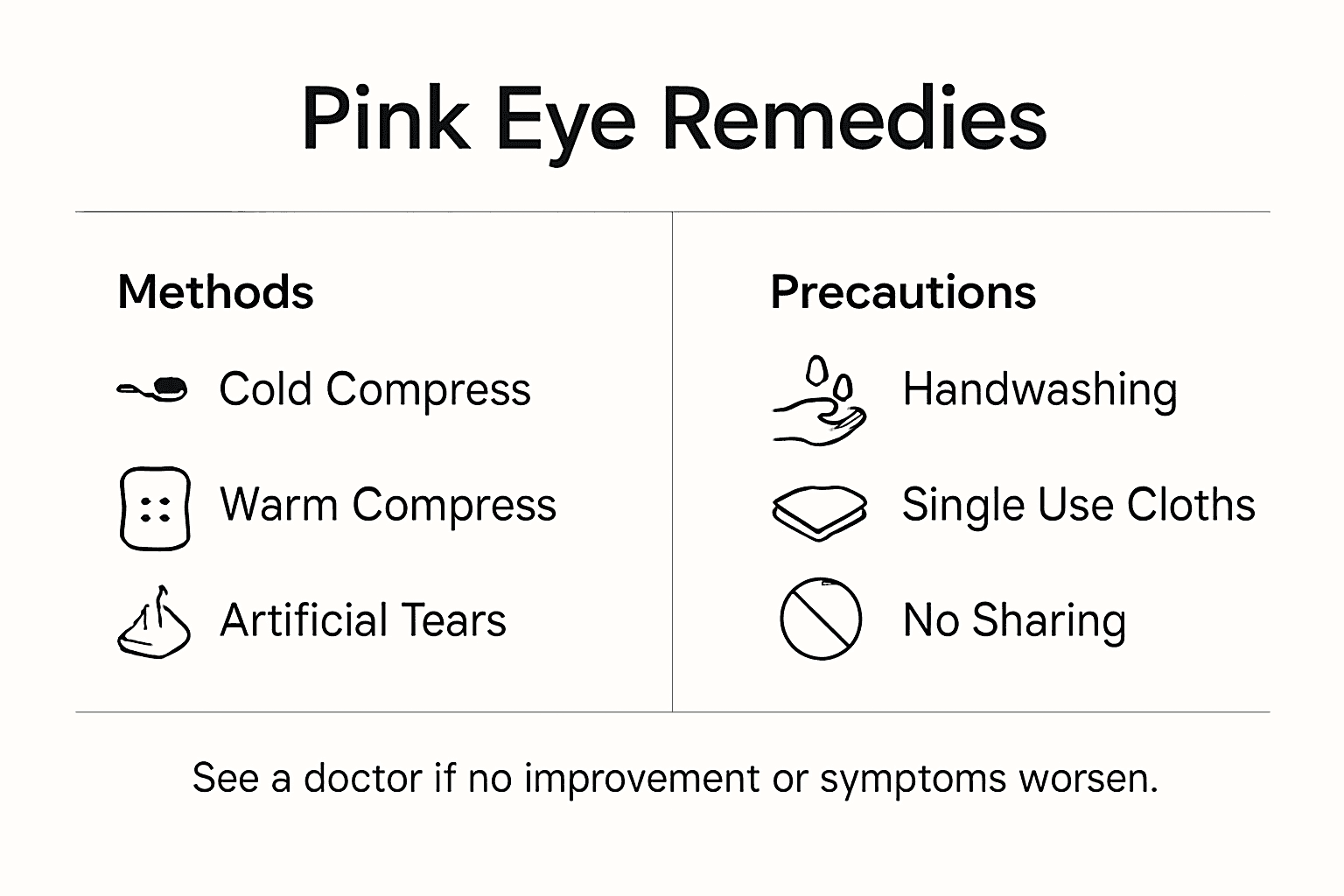
Compresses play a crucial role in managing pink eye symptoms. Applying a cold compress can help reduce inflammation and soothe irritated eyes, while warm compresses may help break down crusty discharge and improve circulation. The American Academy of Ophthalmology recommends using clean, soft cloths and changing them frequently to prevent potential reinfection. Artificial tears can also provide substantial relief, helping to flush out irritants and keep the eyes hydrated during the healing process.

Hygiene is paramount when dealing with pink eye. Patients should wash their hands frequently, avoid touching or rubbing their eyes, and use separate towels and washcloths to prevent spreading the infection. For allergic conjunctivitis, identifying and removing potential allergens from the environment can significantly reduce symptoms. Over-the-counter antihistamine eye drops may also provide additional relief for those experiencing allergic reactions.
Pro tip: Create a dedicated recovery kit with clean washcloths, artificial tears, and disposable tissues to manage pink eye symptoms while minimizing the risk of spreading infection.
Using Boric Acid Safely and Effectively
Boric acid has long been recognized for its potential therapeutic properties in treating eye-related conditions, particularly conjunctivitis. Scientific research from the National Center for Biotechnology Information reveals its historical use as an antiseptic and antifungal agent, though modern medical practitioners caution against unsupervised application.
When considering boric acid for pink eye treatment, strict dilution and precise application are paramount. The recommended approach involves preparing a sterile, highly diluted solution and applying it carefully to avoid potential tissue damage. Pharmacists can assist in creating the appropriate concentration, typically involving mixing a small amount of pharmaceutical-grade boric acid with sterile water. Patients should never attempt to create these solutions independently without professional guidance.
The safety profile of boric acid demands careful consideration. While traditional in some medical practices, contemporary healthcare increasingly recommends alternative treatments with lower toxicity risks. Potential side effects include eye irritation, burning sensations, and more serious complications if improper concentrations are used. Always consult a healthcare professional before attempting any home remedy, especially when dealing with sensitive areas like the eyes.
Pro tip: Consult your healthcare provider before using boric acid and always purchase pharmaceutical-grade solutions from licensed pharmacies to ensure safety and effectiveness.
Heatpacks and Massage for Swelling
Heatpacks offer a powerful natural remedy for reducing eye-related swelling and discomfort associated with pink eye. The American Academy of Ophthalmology recommends warm compresses as an effective home treatment to alleviate inflammation and promote healing in eye conditions.
Applying a heatpack requires careful technique to maximize therapeutic benefits. Start by selecting a clean, soft cloth or specialized medical compress, warming it to a comfortable temperature that will not burn sensitive eye tissue. Gently place the warm compress over the affected eye for 10-15 minutes, allowing the heat to penetrate and stimulate blood circulation. The warmth helps loosen accumulated debris, reduces swelling, and supports the body’s natural healing mechanisms.
Following heat application, gentle massage techniques can further enhance recovery. Using clean fingers, apply light pressure around the eye area, moving in soft circular motions to encourage lymphatic drainage and reduce fluid buildup. This technique helps disperse accumulated liquids and can provide significant relief from swelling and discomfort. However, patients should maintain extreme caution, using minimal pressure and stopping immediately if experiencing increased pain.
Pro tip: Create a dedicated eye care kit with clean washcloths, a microwaveable heatpack, and hand sanitizer to ensure hygienic treatment of eye swelling.
Risks, Precautions, and When to See a Doctor
Pink eye can range from a mild irritation to a potentially serious condition requiring immediate medical intervention. Mayo Clinic medical experts emphasize the importance of recognizing warning signs that indicate a need for professional medical assessment.
Certain symptoms should prompt immediate medical attention. These include severe eye pain, significant vision changes, persistent light sensitivity, and intense redness that does not improve within several days. Contact lens wearers should discontinue lens use immediately upon experiencing symptoms and consult an eye care professional. Individuals with compromised immune systems, diabetes, or other underlying health conditions face higher risks of complications and should be especially vigilant.
Prevention remains crucial in managing pink eye transmission. Practice strict personal hygiene by washing hands frequently, avoiding touching or rubbing eyes, and using separate towels and washcloths. If you or a family member experiences pink eye, minimize close contact, disinfect shared surfaces, and replace eye makeup to prevent reinfection. The American Academy of Ophthalmology recommends taking precautions such as not sharing personal items and maintaining a clean environment to reduce infection spread.
The following table summarizes best practices for pink eye prevention and when to seek medical care:
| Situation | Recommended Action | Why It Matters |
|---|---|---|
| New or worsening pain | See a doctor immediately | Early care prevents damage |
| Using contact lenses | Discontinue use, consult professional | Reduces risk of serious issues |
| Sharing towels or makeup | Avoid sharing personal items | Lowers risk of spreading germs |
| Feeling contagious at home | Isolate personal items, sanitize surfaces | Protects family and friends |
Pro tip: Create a dedicated isolation protocol for family members with pink eye, including separate personal items and frequent hand sanitization to minimize transmission risk.
Discover Effective Natural Remedies for Pink Eye Relief Today
If you have been struggling with the discomfort and redness of pink eye, it can feel frustrating to find safe and gentle solutions that actually work. This article highlights common challenges like swelling, itching, and discharge caused by viral, bacterial, or allergic conjunctivitis. You deserve relief methods that ease your symptoms while supporting your eye health naturally. That is why exploring well-researched home remedies and holistic treatments is so important.

Take control of your healing journey with trusted natural solutions from Homeremedyshop.com. Our platform provides detailed guides and carefully selected herbal remedies designed to soothe inflammation and promote recovery. Do not wait for symptoms to worsen. Start today with expert-backed advice and quality products tailored for eye care and overall wellness. Visit Homeremedyshop.com to learn how you can naturally support your eyes and boost comfort with every step.
Frequently Asked Questions
What are some effective home remedies for pink eye relief?
Applying cold or warm compresses can help reduce inflammation and soothe irritated eyes. Additionally, using artificial tears can flush out irritants and keep the eyes hydrated.
How can hygiene help in managing pink eye?
Maintaining strict hygiene is crucial. Wash your hands frequently, avoid touching or rubbing your eyes, and use separate towels and washcloths to prevent spreading the infection.
Can allergic conjunctivitis be treated with natural remedies?
Yes, allergic conjunctivitis can benefit from antihistamine eye drops and removing potential allergens from your environment, which can significantly reduce symptoms.
Is boric acid a safe home remedy for pink eye?
Boric acid can be used, but it should always be diluted properly and applied with caution. Consult a healthcare professional before trying it to avoid potential side effects.
Recommended
- 26 Home Remedies for Pink Eye Relief – Home Remedies
- 15 Home Remedies for Pink Eye in Babies – Home Remedies
- Home Remedies for Eye Infection: 15 Quick and Harmless Solutions
- Say Goodbye to Itchy Eyes with These Home Remedies – Home Remedies


Pingback: Itchy Eyes Relief: Natural Solutions and Daily Care