

Most American adults experience dental pain at least once in their lives, but finding natural relief for root canal discomfort is often challenging. Addressing these symptoms with holistic solutions can bring comfort while waiting for professional care, especially if you value wellness and prefer non-pharmaceutical approaches. This guide reveals effective natural remedies and easy home strategies used by American and European households to manage root canal pain, supporting healing and peace of mind safely.
Table of Contents
- Step 1: Gather Natural Pain Relief Tools and Supplies
- Step 2: Apply Salted Cotton for Targeted Drainage
- Step 3: Use Clove Essential Oil for Fast Pain Relief
- Step 4: Stay Hydrated to Support Healing
- Step 5: Sleep With a Mouth Guard to Reduce Pressure
- Step 6: Consult a Dentist for Ongoing Pain
Quick Summary
| Key Point | Explanation |
|---|---|
| 1. Use a Warm Saltwater Rinse | A warm saltwater solution reduces inflammation and kills bacteria, aiding comfort and cleaning around the root canal area. |
| 2. Apply Salted Cotton for Infection Drainage | Saturate cotton with saltwater and place it on the infected area to draw out irritation and help minimize bacteria. |
| 3. Use Clove Oil for Fast Pain Relief | Diluted clove oil provides quick pain relief due to its analgesic properties; apply sparingly to avoid sensitivity. |
| 4. Stay Hydrated for Better Healing | Drinking enough water supports healing by flushing toxins and maintaining tissue moisture, crucial after dental work. |
| 5. Consult a Dentist for Ongoing Pain | Persistent pain requires professional evaluation to prevent complications and ensure proper healing following a root canal. |
Step 1: Gather Natural Pain Relief Tools and Supplies
When dealing with root canal pain, having the right natural remedies and supplies ready can provide significant relief and comfort. Your home toolkit should include several key items that can help manage discomfort and support healing while you wait to see your dentist.
Start by collecting essential supplies like a warm saltwater solution for rinsing to reduce inflammation and kill bacteria. Prepare this by mixing one teaspoon of salt into a cup of warm water. Additionally, gather cold compresses or clean washcloths that can help numb the affected area and reduce swelling. Pure clove oil works exceptionally well for pain management due to its natural analgesic properties. You will also want to have clean cotton swabs or cotton balls available for applying remedies.
Keep a mouth guard nearby to protect your teeth from grinding, especially during sleep. Prepare a small container of salt to place directly next to the infected area which can help drain and heal the infection faster. Stay hydrated by keeping water easily accessible, as drinking plenty of fluids supports your body’s natural healing process.
Pro tip: Always consult your dentist before attempting home treatments and schedule a professional examination as quickly as possible to address the root canal properly.
Here’s a summary of common natural pain relief tools and their main benefits for root canal discomfort:
| Tool or Remedy | Main Benefit | Special Consideration |
|---|---|---|
| Warm saltwater rinse | Reduces inflammation, kills bacteria | Mix 1 tsp salt in warm water |
| Cold compress | Numbs area, eases swelling | Apply for short intervals |
| Clove oil | Provides fast analgesic relief | Always dilute before use |
| Mouth guard | Prevents nighttime tooth grinding | Use a proper fit for comfort |
| Cotton balls/swabs | Apply remedies directly | Must be clean when applying |
| Water bottle | Supports overall healing | Sip frequently through the day |
Step 2: Apply Salted Cotton for Targeted Drainage
Targeting drainage and reducing infection around a root canal requires a precise and careful approach. By using salted cotton, you can help manage pain and support the healing process while minimizing bacterial growth.
Saltwater-soaked cotton applications provide a strategic method for managing root canal discomfort. Take a clean cotton ball and thoroughly saturate it with a strong saltwater solution prepared by mixing one teaspoon of salt into a cup of warm water. Gently place the moistened cotton directly against the infected area, allowing it to absorb drainage and reduce bacterial presence. Maintain the cotton in place for 10 to 15 minutes, replacing it with a fresh piece when it becomes saturated. This process helps draw out infection and provides a natural cleansing mechanism for the affected site.
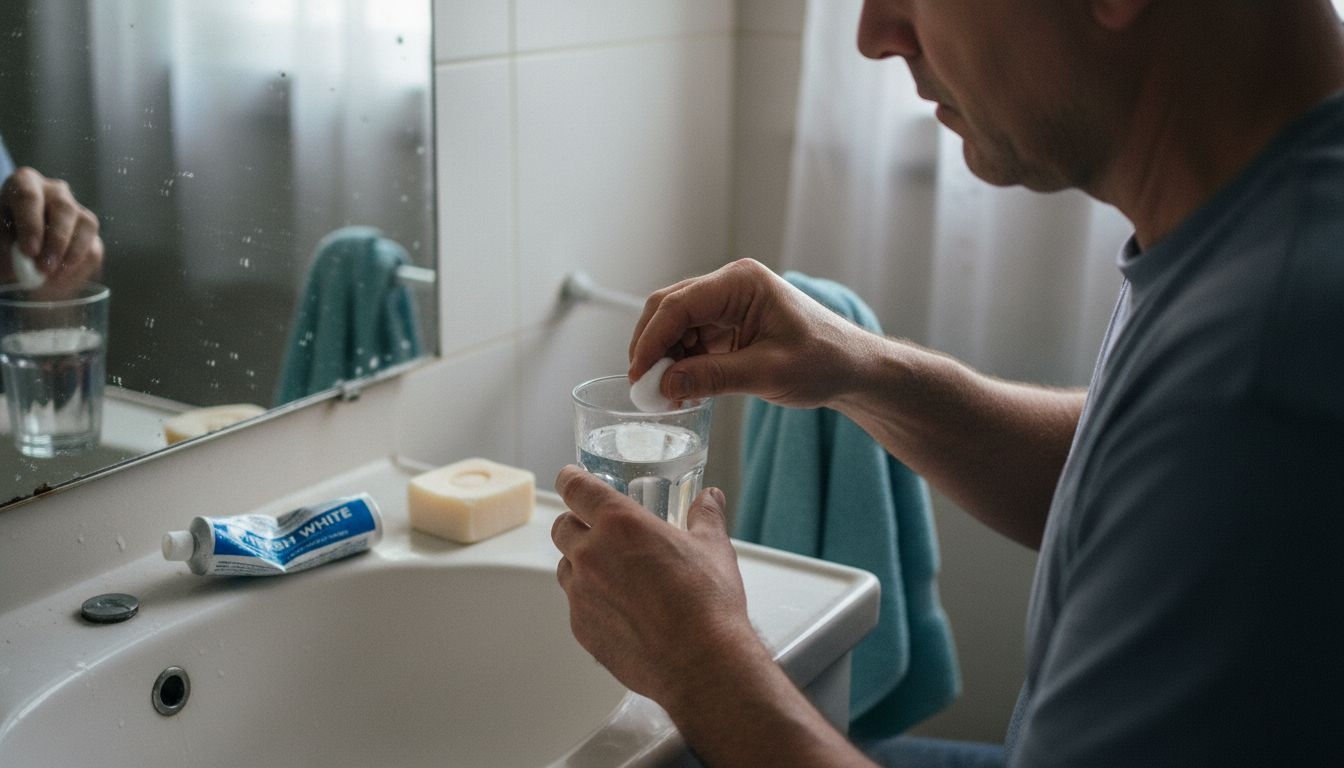
The key is consistent but gentle application. Do not press too hard or leave the cotton in place for extended periods that might irritate the surrounding tissue. Monitor the area for any changes in pain or swelling, and be prepared to adjust your approach based on your body’s response.
Pro tip: Wash your hands thoroughly before and after applying the salted cotton to prevent introducing additional bacteria to the sensitive area.
Step 3: Use Clove Essential Oil for Fast Pain Relief
Clove essential oil offers a powerful natural solution for managing root canal pain and providing quick temporary relief. Understanding how to apply this remarkable remedy can significantly reduce your discomfort and support your healing process.
Clove essential oil contains eugenol, a natural compound with potent analgesic and anti-inflammatory properties. To use effectively, dilute a few drops of pure clove oil with a carrier oil like coconut or olive oil to prevent skin irritation. Dip a clean cotton swab into the diluted mixture and gently apply directly to the painful area, using a light dabbing motion. The oil will help numb the sensation and reduce inflammation around the root canal site. Repeat the application every 2 to 3 hours as needed, but be careful not to overuse, as clove oil is highly concentrated.
Remember that while clove essential oil provides temporary relief, it is not a permanent solution. The numbing effect can help you manage pain until you can receive professional dental treatment. Always use the oil sparingly and stop if you experience increased sensitivity or adverse reactions.
Pro tip: Test the diluted clove oil on a small patch of skin first to ensure you do not have an allergic reaction before applying it near the root canal area.
Step 4: Stay Hydrated to Support Healing
Healing from a root canal requires a comprehensive approach that goes beyond dental treatment. Proper hydration plays a crucial role in supporting your body’s natural recovery process and managing post procedure discomfort.
Maintaining proper fluid intake helps flush toxins from your system and keeps oral tissues moisturized during healing. Aim to drink at least eight 8-ounce glasses of water throughout the day, focusing on pure water rather than sugary or acidic beverages that could irritate the sensitive root canal area. Room temperature water works best, as extremely cold or hot liquids might trigger additional sensitivity. Consider adding a slice of lemon or cucumber for subtle flavor if plain water feels monotonous, but avoid acidic drinks that could potentially interfere with healing.
Remember that hydration supports more than just oral recovery. It helps transport nutrients to healing tissues, reduces inflammation, and supports your overall immune response. If plain water feels challenging, you can incorporate herbal teas or clear broths to increase your fluid intake while providing additional healing benefits.
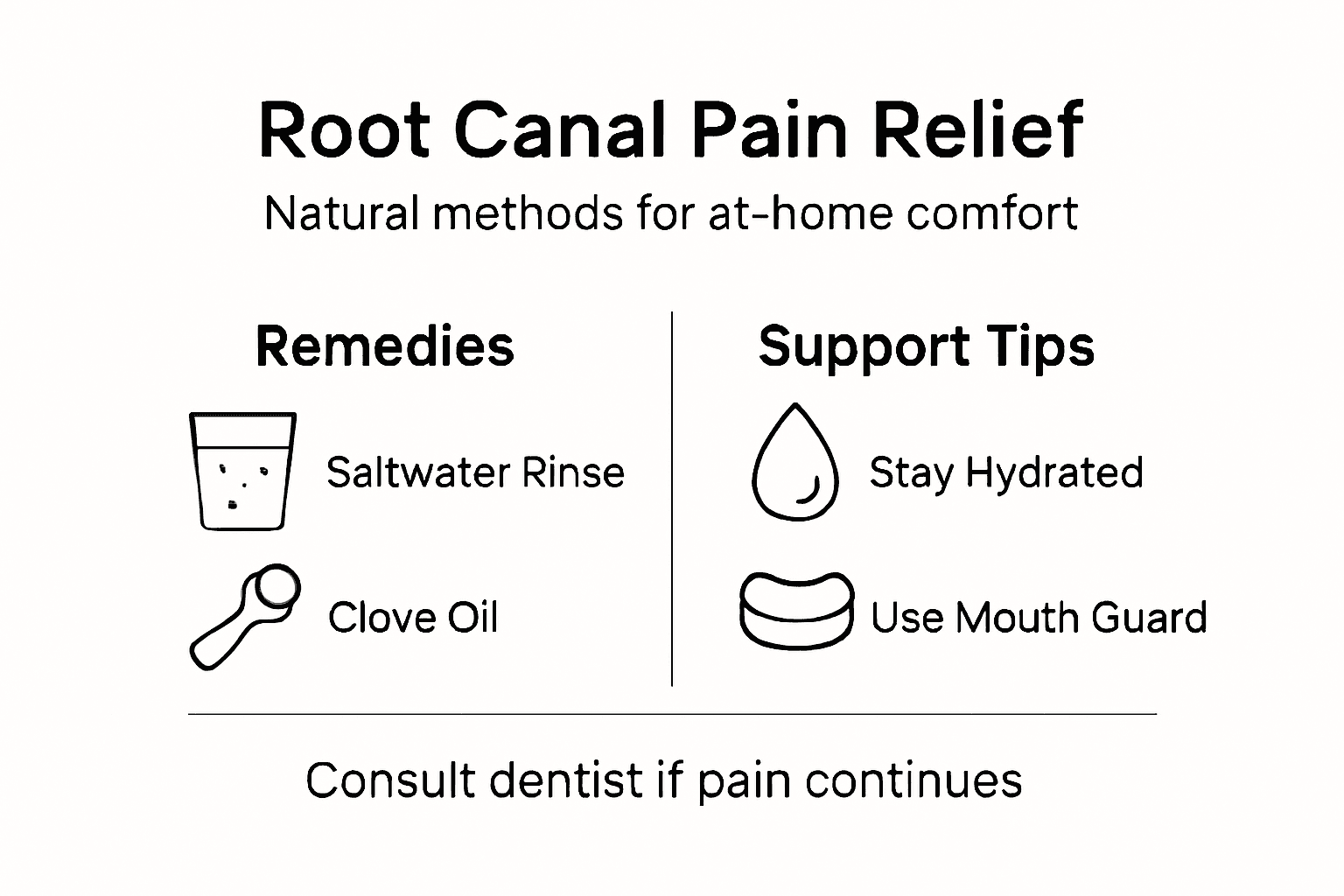
Pro tip: Keep a large water bottle nearby and set hourly reminders to ensure you consistently drink water throughout the day.
This table compares the effectiveness and limitations of three natural pain relief methods:
| Home Remedy | Effectiveness | Key Limitation |
|---|---|---|
| Salted cotton | Cleans infection, reduces bacteria | Short-term only, may irritate tissue |
| Clove oil | Rapid pain relief, anti-inflammatory | Overuse may cause sensitivity |
| Hydration (water) | Helps healing, reduces inflammation | Does not numb pain directly |
Step 5: Sleep With a Mouth Guard to Reduce Pressure
Managing root canal pain extends beyond daytime care and requires strategic nighttime protection. A mouth guard serves as a critical tool in preventing additional discomfort and supporting your healing process during sleep.
Mouth guards help reduce mechanical stress around the treated tooth by creating a protective barrier that prevents grinding and clenching. Choose a silicon mouth guard that fits comfortably and provides a soft cushion between your upper and lower teeth. Before bed, rinse the mouth guard with warm water and carefully place it to cover your teeth evenly. This simple step can significantly minimize pressure on the sensitive root canal area, allowing your mouth to rest and recover without additional trauma.
The right mouth guard not only protects your dental work but also helps maintain proper jaw alignment during sleep. This alignment reduces overall tension in your jaw muscles and prevents unconscious grinding that could potentially reopen or irritate the healing root canal site.
Pro tip: Boil and bite mouth guards offer the most personalized fit for maximum comfort and protection.
Step 6: Consult a Dentist for Ongoing Pain
Natural home remedies provide temporary relief, but persistent root canal pain demands professional medical attention. Recognizing when to seek expert dental care is crucial for preventing potential complications and ensuring proper healing.
Persistent pain requires professional evaluation to diagnose underlying issues that home treatments cannot resolve. Schedule an appointment with your dentist if you experience continuous discomfort, increasing pain intensity, swelling, fever, or signs of infection. During the consultation, be prepared to describe your symptoms in detail including when the pain started, its location, severity, and any factors that worsen or alleviate the discomfort. Your dentist can perform necessary examinations such as X-rays to identify potential infections, nerve complications, or structural problems that might require additional treatment.
Remember that early professional intervention can prevent more serious dental complications and ensure your root canal heals properly. Your dentist might recommend additional treatments like antibiotics, further dental procedures, or adjustments to your current healing approach.
Pro tip: Before your dental appointment, create a detailed symptom journal documenting your pain levels, duration, and any home remedies you have already tried.
Discover Natural Solutions to Ease Root Canal Pain at Home
If you are struggling with the discomfort and inflammation of root canal pain, finding gentle yet effective remedies is a top priority. This article highlights the challenge of managing pain caused by infection and sensitivity while awaiting professional dental care. You want relief from swelling and throbbing without relying solely on conventional medications. Natural therapies like saltwater rinses and clove oil offer soothing benefits but locating trusted products to safely support your healing journey can feel overwhelming.

At Homeremedyshop.com, we understand the emotional toll root canal pain takes and the need for reliable, holistic options you can use at home. Our platform provides expert guidance along with carefully selected natural remedies designed to reduce inflammation, fight infection, and comfort sensitive areas gently. Explore our extensive collection of herbal supplements and wellness information so you can address root canal pain naturally while supporting your overall health. Act now to empower yourself with knowledge and products tailored to help you find calm during dental recovery. Start your healing journey today at Homeremedyshop.com and discover solutions rooted in tradition and science.
Frequently Asked Questions
How can I reduce root canal pain naturally at home?
You can reduce root canal pain naturally by using remedies like warm saltwater rinses, cold compresses, or clove oil. Start by mixing one teaspoon of salt in a cup of warm water and rinse your mouth several times a day to help reduce inflammation and kill bacteria.
What natural remedies can I use to ease root canal pain?
Consider using a combination of salted cotton applications and clove essential oil for effective pain relief. Apply salted cotton soaked in a strong saltwater solution directly to the affected area for 10 to 15 minutes, and use diluted clove oil to numb pain by gently dabbing it on the area every 2 to 3 hours as needed.
How does staying hydrated help with root canal pain relief?
Staying hydrated supports your body’s natural healing process and reduces inflammation in the oral tissues. Aim to drink at least eight 8-ounce glasses of water daily, and consider using room temperature water to avoid triggering sensitivity.
Can sleeping with a mouth guard help relieve root canal pain?
Yes, sleeping with a mouth guard can help relieve root canal pain by preventing teeth grinding and minimizing pressure on the treated tooth. Use a properly fitting silicon mouth guard at night to create a protective barrier, allowing your mouth to rest and recover without additional trauma.
When should I consult a dentist about root canal pain?
You should consult a dentist if you experience persistent pain, increasing discomfort, swelling, fever, or signs of infection. Schedule an appointment and be prepared to discuss your symptoms in detail to ensure proper treatment and prevent complications.
Recommended
- 9 Home Remedies for Root Canal Pain – Home Remedies
- 23 Home Remedies to Cure Toothache Naturally and Safely – Home Remedies
- 15 Home Remedies for Tooth Nerve Pain – Home Remedies
- 7 Home Remedies for Quick Wisdom Teeth Pain Relief – Home Remedies
- Ultimate Period Pain Relief Guide (E-Bok) – Dova
