
Most American adults struggling with hair loss often overlook the power of simple homemade remedies. Hair thinning and shedding impact millions around the world, yet natural solutions remain both accessible and surprisingly effective. By using proven ingredients and holistic scalp care, you can address the root causes of hair loss without relying on synthetic products. This guide reveals how everyday methods can transform your hair restoration journey while supporting overall scalp health.
Table of Contents
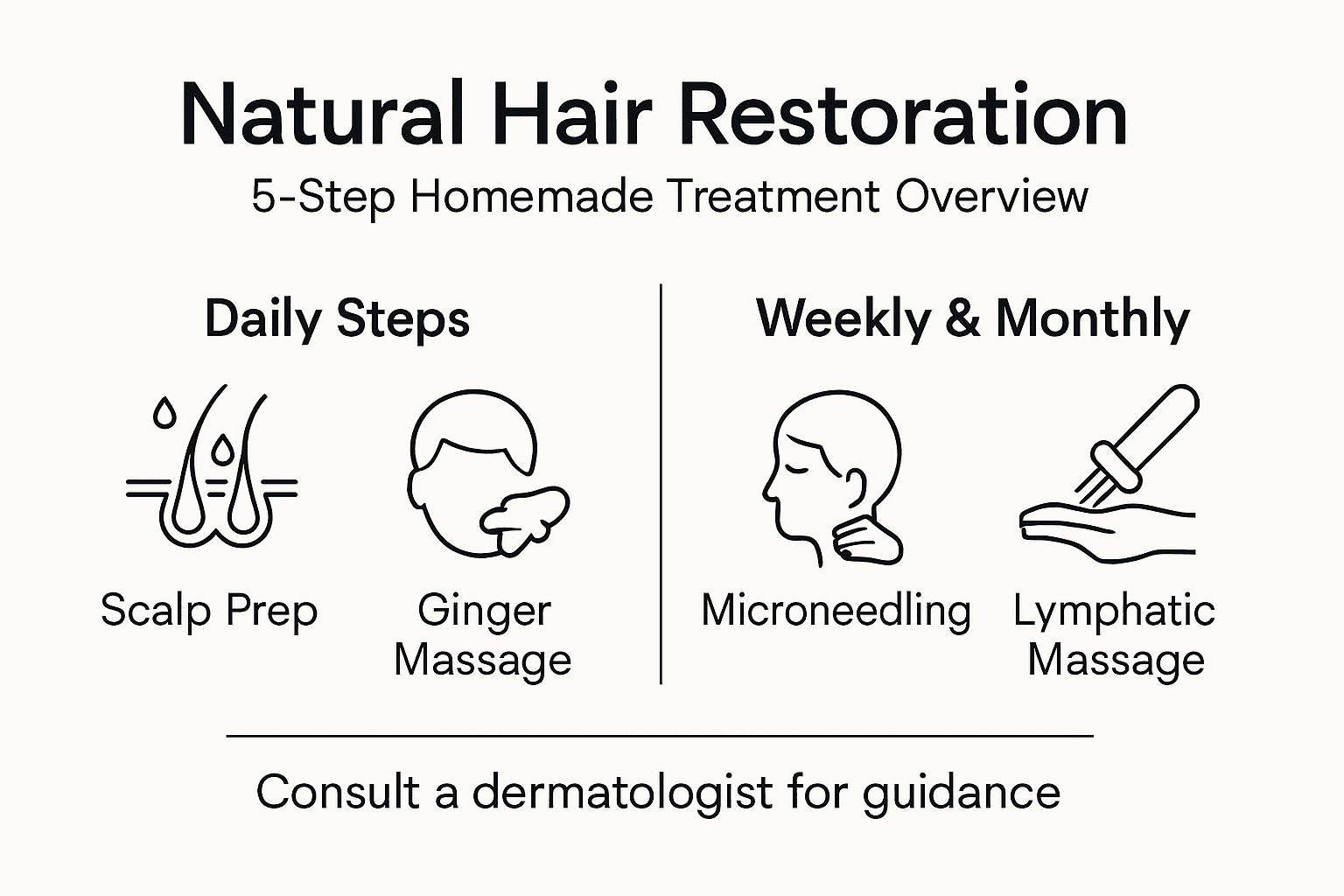
- Step 1: Prepare Scalp And Natural Ingredients For Treatment
- Step 2: Perform Daily Ginger And Rosemary Scalp Massages
- Step 3: Apply Weekly Spikey Faceroller And Essential Oils
- Step 4: Implement Monthly Lymphatic Scalp Massage
- Step 5: Maintain Stress-Free Balanced Lifestyle And Healthy Diet
Quick Summary
| Key Point | Explanation |
|---|---|
| 1. Start with scalp preparation | Clean and stimulate the scalp using natural ingredients like amla and coconut oil to maximize hair growth effectiveness. |
| 2. Perform daily scalp massages | Use ginger and rosemary oil to massage your scalp for 5-10 minutes to enhance circulation and promote hair follicle activation. |
| 3. Utilize a spikey faceroller weekly | Apply a derma roller before essential oils to create micro-punctures that improve absorption and increase blood flow to hair follicles. |
| 4. Conduct monthly lymphatic massages | Engage in lymphatic scalp massages to detoxify and reduce inflammation, which supports healthy hair growth. |
| 5. Maintain a balanced lifestyle | Focus on a nutritious diet and stress management to support hair health, as overall wellness impacts hair restoration. |
Step 1: Prepare scalp and natural ingredients for treatment
Preparing your scalp and gathering the right natural ingredients are foundational steps in your hair restoration journey. This process involves strategic cleansing, selecting potent herbal components, and creating an optimal environment for hair growth.
Start by thoroughly understanding your scalp condition. Herbal hair treatments rely on nutrient-rich oils that strengthen hair follicles. Select ingredients like amla, fenugreek, aloe vera, and coconut oil. These natural compounds deliver essential vitamins and antioxidants directly to your scalp. Mix these ingredients carefully, ensuring they are pure and free from synthetic additives.
Your preparation should focus on gentle scalp stimulation and deep cleansing. Remove excess sebum and dirt using mild natural cleansers. Massage the scalp to improve circulation and prepare hair follicles for treatment absorption. The goal is creating a clean, receptive scalp environment that maximizes the effectiveness of your homemade hair restoration remedy.
No layout selected.
Pro tip: Store your prepared herbal mixture in a cool, dark place to preserve its potency and prevent ingredient degradation.
Here’s an overview of popular natural ingredients and their primary hair benefits:
| Ingredient | Key Benefit | Common Usage |
|---|---|---|
| Amla | Strengthens follicles | Oil blends, masks |
| Fenugreek | Boosts growth, reduces dandruff | Pastes, infused oils |
| Aloe Vera | Soothes, hydrates scalp | Serums, leave-in |
| Coconut Oil | Nourishes, prevents breakage | Direct application, mixes |
Step 2: Perform daily ginger and rosemary scalp massages
Daily scalp massages using ginger and rosemary are powerful techniques for stimulating hair growth and improving overall scalp health. These natural ingredients work synergistically to combat hair loss and promote robust follicle function.

Scalp massage techniques demonstrate remarkable potential in enhancing hair restoration. Prepare a mixture of ginger extract and rosemary essential oil to create your massage blend. Warm the oils slightly to improve absorption and increase blood circulation. Use your fingertips to apply gentle yet firm pressure, moving in circular motions across your entire scalp. Focus on areas with thinning hair or noticeable hair loss. The massage should last approximately 5 to 10 minutes, ensuring comprehensive coverage and deep stimulation of hair follicles.
Consistent daily practice is key to seeing meaningful results. The mechanical stimulation combined with the herbal properties of ginger and rosemary can activate dormant hair follicles, improve nutrient delivery, and potentially reduce inflammation. Perform these massages preferably in the evening when you can relax and allow the oils to penetrate deeply into your scalp.
Pro tip: Use a gentle but firm touch during massages to avoid causing scalp irritation while still promoting optimal blood circulation.
Step 3: Apply weekly spikey faceroller and essential oils
Incorporating a spikey faceroller and essential oils into your weekly hair restoration routine can significantly enhance follicle stimulation and promote healthier hair growth. This targeted approach combines mechanical stimulation with potent botanical extracts to revitalize your scalp.
Microneedling techniques with essential oils offer a powerful method for natural hair restoration. Begin by selecting a high quality derma roller with fine microneedles specifically designed for scalp treatment. Before rolling, thoroughly sanitize the tool to prevent potential infection. Gently roll the device across your scalp using light pressure in multiple directions horizontal, vertical, and diagonal to create micro punctures that enhance product absorption. Immediately after rolling, apply a blend of essential oils like rosemary, cedarwood, and aloe vera mixed with a carrier oil such as jojoba or coconut oil.
Consistent weekly application is crucial for optimal results. The micro injuries created by the roller trigger your body’s natural healing response, stimulating collagen production and improving blood circulation to hair follicles. This process helps reduce scalp inflammation and creates a more receptive environment for hair growth. Always allow at least a week between treatments to give your scalp adequate time to heal and regenerate.
Pro tip: Store your derma roller in a clean, dry environment and replace it every 3 to 4 months to maintain sterility and effectiveness.
Step 4: Implement monthly lymphatic scalp massage
A monthly lymphatic scalp massage is a strategic approach to supporting hair health by improving circulation and removing toxins that can impede natural hair growth. This specialized technique goes beyond simple relaxation to actively support your scalp’s biological processes.
Lymphatic drainage techniques provide a targeted method for scalp detoxification and rejuvenation. Begin by using your fingertips to apply gentle yet firm pressure in specific patterns that encourage lymph fluid movement. Start at the base of your skull and use soft sweeping motions moving towards your ears and down the sides of your neck. Focus on applying consistent light pressure rather than deep massage. The goal is to stimulate lymph flow without causing discomfort or stress to your scalp.
Consistent monthly lymphatic massage supports your body’s natural detoxification processes. By improving circulation and reducing inflammation, you create an optimal environment for hair follicle health. This technique helps clear metabolic waste and reduce scalp congestion that can potentially contribute to hair loss. Pay attention to your scalp’s response and adjust pressure and technique accordingly to maintain comfort and effectiveness.
Pro tip: Use a few drops of lightweight carrier oil like jojoba during your massage to enhance glide and provide additional nourishment to your scalp.
This table compares scalp massage methods by their focus and typical results:
| Massage Technique | Focus Area | Expected Benefit |
|---|---|---|
| Daily ginger & rosemary | Stimulates follicles | Enhanced growth, reduced loss |
| Weekly spikey faceroller | Boosts absorption | Higher circulation, improved product uptake |
| Monthly lymphatic massage | Detoxification | Reduced inflammation, better scalp health |
Step 5: Maintain stress-free balanced lifestyle and healthy diet
Addressing hair loss requires a holistic approach that goes beyond topical treatments and focuses on overall health and wellness. Your lifestyle and nutritional choices play a critical role in supporting natural hair restoration and preventing further hair loss.
Nutritional strategies for hair health emphasize the importance of a balanced diet rich in essential vitamins and minerals. Focus on consuming foods that provide key nutrients like vitamin B complex, vitamin D, zinc, and iron. Include protein sources such as lean meats, fish, eggs, legumes, and nuts. Incorporate antioxidant rich fruits and vegetables that combat oxidative stress. Minimize processed foods, refined sugars, and excessive caffeine that can disrupt hormonal balance and contribute to inflammation.
Stress management is equally crucial in preventing hair loss. Implement daily practices like meditation, yoga, deep breathing exercises, or regular physical activity to reduce cortisol levels. Prioritize consistent sleep patterns and create boundaries between work and personal life. Engage in hobbies and social connections that bring joy and relaxation. Remember that chronic stress can significantly disrupt hair growth cycles and overall health, making stress reduction a fundamental component of your hair restoration strategy.
Pro tip: Consider keeping a wellness journal to track your diet, stress levels, and hair health progress and identify patterns that support or hinder your hair restoration goals.
Discover Natural Solutions for Hair Loss That Work
Struggling with hair loss can be deeply frustrating especially when you want a safe and effective natural approach. This article highlights practical steps like daily ginger and rosemary scalp massages along with weekly spikey faceroller treatments that stimulate hair follicles and boost growth. You deserve remedies that combine ancient wisdom with modern support to restore your confidence and the health of your scalp.

Explore a carefully curated selection of herbal supplements and natural products designed to complement your homemade hair restoration routine. Visit Homeremedyshop.com now and empower your journey with trusted remedies crafted to enhance scalp circulation, reduce inflammation, and nourish your hair from root to tip. Don’t wait to take control of your hair health and experience the lasting benefits of holistic care today. For detailed guides and top-quality natural products start your transformation at Homeremedyshop.com.
Frequently Asked Questions
How can I prepare my scalp for homemade hair loss treatment?
To prepare your scalp for hair loss treatment, start by cleansing it gently to remove excess sebum and dirt. Massage your scalp to improve circulation, which helps the absorption of nutrients from the natural ingredients like amla, fenugreek, and coconut oil.
What natural ingredients should I use for hair restoration at home?
Use nutrient-rich ingredients such as amla, fenugreek, aloe vera, and coconut oil for homemade hair restoration. Combine these ingredients into oils or masks and apply them to your scalp to deliver essential vitamins and antioxidants directly to hair follicles.
How often should I perform scalp massages for hair growth?
Perform daily scalp massages using ginger and rosemary essential oils to stimulate hair growth effectively. Spend about 5 to 10 minutes each day massaging your scalp in circular motions to enhance circulation and boost nutrient delivery to your hair follicles.
What benefits does a spikey faceroller provide for hair restoration?
Using a spikey faceroller weekly can boost absorption of hair restoration products and improve blood circulation to your scalp. Roll the device gently across your scalp to create micro punctures and then apply essential oils to enhance the treatment’s effectiveness.
How can lymphatic scalp massage support hair health?
Monthly lymphatic scalp massages improve circulation and promote detoxification, which can aid overall hair health. Apply gentle pressure in sweeping motions to encourage lymph fluid movement and reduce inflammation, creating a healthy environment for hair follicles.
What lifestyle changes can I make to support hair restoration?
Adopt a balanced diet rich in vitamins and minerals along with stress-reducing practices to support your hair restoration efforts. Focus on whole foods, manage stress with activities like yoga, and ensure you get enough sleep to create an optimal environment for hair growth.
Recommended
- DIY Hair Tonic with Natural Ingredients – Home Remedies
- 24 Powerful Home Remedies for Reducing Hair Loss – Home Remedies
- 50 Home Remedies for Baldness – Home Remedies
- Say Goodbye to Hair Fall with the Best Hair Masks | Home Remedy
- Best Hair Mask for Hair Growth at Home: 2025 Guide | MyHair
