
Sore Feet: How to Help Sore Feet With Soaks, Massage and Gentle Movements

Written by Montoya Sigafoose, founder of Home Remedy Shop · Medically reviewed by Veronique Claes d’Erckenteel, D.C., chiropractor since 1991 · Last reviewed: 27 October 2026
The quickest way to help sore feet is a warm soak, a massage and a few gentle movements. Soak your feet for 15 minutes in warm water with half a cup of Epsom salt, then massage them with a cooling cream from the toes up to the calves, and finish with ankle circles, toe curls and a calf stretch to get the blood moving again. If you have sore feet from standing all day, put them up and roll them over a frozen water bottle; for sore feet after walking or running, check your shoes and build up slowly. Sore feet should feel better within a day or two; see a doctor if the pain is sharp, swollen or lasts more than a week.
Sore feet are your body’s way of saying they’ve done a lot: long shifts, a city trip, a new running plan, new shoes or simply getting older. Most of the time it’s tired muscles and overloaded tissue that recover with rest and care. In this guide you’ll find why your feet hurt after standing, walking and running, the best soaks for sore feet, how to massage them, gentle movements to bring relief, and when sore feet are something more. For more foot care, see our guide to home remedies for calluses, or browse all our natural home remedies.
The short version
- Soak: warm water with Epsom salt, 15 minutes.
- Massage: a cooling cream, from toes to calves.
- Move: ankle circles, toe curls, arch and calf stretches.
- Cool down: a frozen water bottle under the arch, feet up.
- Support: cushioned shoes, gel insoles, a second pair at work.
- Check: sharp pain, swelling, numbness or pain that lasts a week.
See a doctor if your foot is swollen, bruised or you can’t put weight on it after a fall or twist, if the pain is sharp in one spot of the bone (possible stress fracture, common after increasing running), if one foot or calf is swollen, warm and red, if you have numbness, tingling or burning, or if the soreness lasts more than a week despite rest. If you have diabetes, check your feet daily, avoid hot soaks and see your doctor for any wound or new pain.
Table of Contents
- Sore Feet Standing All Day
- Sore Feet After Walking
- Sore Feet After Running
- Sore Feet in the Morning and With Age
- Soak for Sore Feet
- How to Massage Sore Feet
- Gentle Movements for Sore Feet
- More Home Remedies for Sore Feet
- When Sore Feet Are Something More
- Frequently Asked Questions
Sore Feet Standing All Day
Standing still for hours is harder on your feet than walking. Your muscles hold the same position, blood pools in your feet, and the arch and heel take your full weight the whole time. Nurses, shop and restaurant staff, teachers, hairdressers and factory workers know this pain well: in nurses, long standing is linked to a range of foot and ankle problems (Bernardes et al., 2023).
- Shift your weight often, and walk a few steps every 20 to 30 minutes.
- Stand on a cushioned mat: anti-fatigue mats reduced pain and fatigue in surgical staff who stand for hours (Ünver et al., 2023).
- Wear cushioned shoes and gel insoles, and change your shoes halfway through the day.
- Do ankle pumps and toe curls during breaks to get the blood moving.
- Light compression socks help if your feet and ankles also swell; see swollen feet.
- In the evening: feet up for 15 minutes, an Epsom salt soak and a cooling cream massage.
Sore Feet After Walking
Sore feet after walking usually come from more steps than you’re used to (a holiday, a hike, a city trip), hard pavements, or shoes that are worn out, too flat or too tight. Typical spots: the balls of the feet, the arches and the heels.
- Build up long walks gradually, and take breaks to sit with your feet up.
- Walk in well-fitting shoes with cushioning and arch support, broken in before a trip.
- Wear moisture-wicking socks to prevent blisters.
- After the walk: soak, massage and stretch.
- Heel pain with your first steps in the morning? That’s typical of plantar fasciitis.
Sore Feet After Running
Some soreness after a long or hard run is normal and should fade within 1 to 2 days. Running increases the load on your feet several times over, and sudden jumps in distance, a previous injury and other training errors are among the main risk factors for running injuries (Correia et al., 2024).
- Increase your weekly distance gradually, and plan easy days between hard ones.
- Replace running shoes every 500 to 800 km, and rotate two pairs.
- Mix in softer surfaces like trails, grass and tracks.
- After the run: cool water or a frozen bottle, a massage and calf stretches.
- Foam rolling the calves after exercise can reduce muscle soreness (Wiewelhove et al., 2019).
- Pain in one spot on top of the foot that gets worse with every run needs a check for a stress fracture.
Sore Feet in the Morning and With Age
In the morning: if your feet are stiff and sore with your first steps, the tissue under your foot has tightened overnight. Before you get up, do 10 ankle circles and pull your toes back for 20 seconds, and keep supportive slippers next to the bed so you don’t walk barefoot on hard floors. Sharp heel pain with your first steps is a classic sign of plantar fasciitis.
With age: the natural fat pad under your heel and the ball of your foot gets thinner over the years, so your feet have less natural cushioning. Gel insoles, cushioned shoes, daily foot movements and a regular massage make a big difference, and moisturising keeps the skin from cracking. In pregnancy, extra weight and fluid also make feet sore: put them up often and wear wide, supportive shoes.
Soak for Sore Feet

A foot soak is the classic remedy for sore, tired feet. Warm water relaxes the muscles and gets the blood flowing; cool water calms hot, throbbing feet. Warm foot baths also improved sleep quality and comfort in recent trials (Aşut et al., 2025).
Epsom Salt for Sore Feet

Epsom salt (magnesium sulfate) is the best-known soak for sore feet. It makes the bath feel more relaxing and leaves your feet soft. How much magnesium your skin actually absorbs is still debated (Gröber et al., 2017), but the warm soak itself brings real relief.
- Dissolve half a cup of Epsom salt in a foot bath of warm water.
- Soak for 15 to 20 minutes, then dry well between your toes.
- Test the water with your elbow first if you have diabetes or numb feet.
Other Soaks for Sore Feet
- Hot and cold: 3 minutes in warm water, 1 minute in cool water, 3 to 4 times, ending with cool. Great for tired, slightly swollen feet.
- Essential oils: 5 drops of lavender, peppermint or eucalyptus mixed into the Epsom salt first, then added to warm water.
- Mustard seeds: 2 tablespoons of crushed mustard seeds in warm water, a traditional warming soak.
- Vinegar: a cup of apple cider vinegar in warm water freshens tired, sweaty feet; see also smelly feet.

How to Massage Sore Feet
A massage is one of the best things you can do for sore feet. It loosens tight muscles, brings fresh blood to the tissue and simply feels wonderful after a long day. In a meta-analysis, hand and foot massage clearly reduced pain (Zhang et al., 2025).
- Warm up: sit down, cross one foot over your knee and apply a cooling cream or a little oil.
- Stroke: long, firm strokes with both thumbs from your toes to your heel, 10 times.
- Circles: small, firm circles with your thumbs along the arch, the ball of the foot and around the heel.
- Toes: gently pull and rotate each toe, and spread them apart with your fingers.
- Ankle and calf: squeeze up from the ankle to the knee, always towards the heart, to move fluid and blood back up.
- Finish: 5 minutes on each foot, then put your feet up.
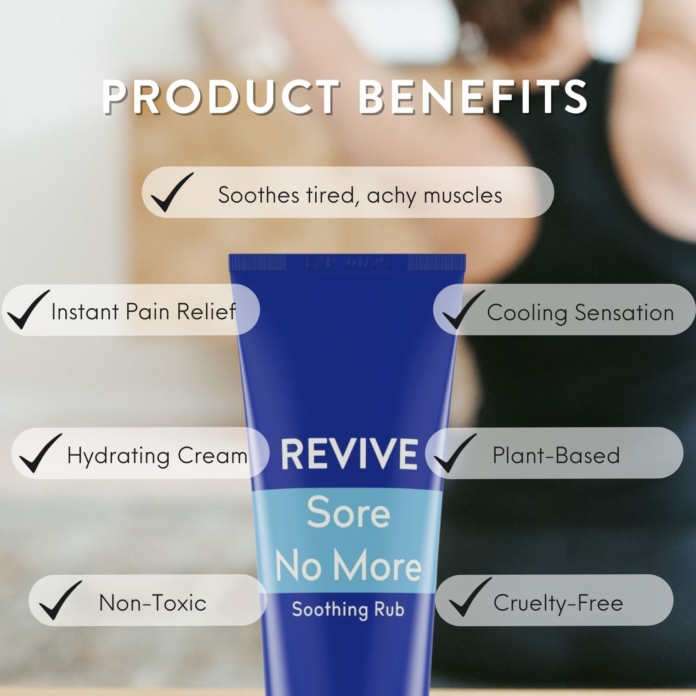
Cooling relief for tired feet
The cooling cream I use on sore feet
After a long day standing, walking or running, I massage a cooling cream into my feet and calves. Revive’s Sore No More rub combines menthol with peppermint and wintergreen oils for a fresh, cooling feeling on aching muscles, and it absorbs quickly without a greasy layer.
- Plant-based, with menthol, peppermint and wintergreen
- Massage into feet and calves, up to 4 times a day
- Adults and children 12 and older
- Not on broken skin, not with a heating pad; skip it if you’re allergic to aspirin or take blood thinners (wintergreen contains salicylates)
Affiliate link: we may earn a small commission at no extra cost to you.
Gentle Movements for Sore Feet

Gentle movement gets the blood flowing to sore feet and keeps the muscles and joints supple. Your calf muscles act as a pump that pushes blood back up from your feet (Ghorbanzadeh et al., 2025). Do these slowly, morning and evening, and during breaks if you stand all day:
- Toe spreads: spread your toes as wide as you can, hold 5 seconds, relax. 10 times.
- Toe curls: curl your toes down as if gripping the floor, hold 5 seconds, then lift them up. 10 times.
- Ankle circles: 10 slow circles in each direction, each foot.
- Ankle pumps: point your feet down, then pull them up towards you. 20 times, to get the blood moving.
- Arch stretch: cross one foot over your knee, pull your toes back gently and hold for 20 seconds. 3 times each foot.
- Calf stretch: hands on a wall, one leg back with the heel down, lean forward for 30 seconds. Then bend the back knee slightly and hold 30 seconds more.
- Ball roll: roll a tennis or massage ball under each foot for 1 to 2 minutes.
- Towel scrunches: scrunch a towel towards you with your toes, then push it away. 1 minute each foot.
- Heel raises: rise slowly onto your toes and lower down. 15 times, holding on for balance.
More Home Remedies for Sore Feet
1. Ice or a frozen water bottle

Cold calms throbbing, hot, swollen feet quickly.
- Roll a frozen water bottle under each foot for 5 to 10 minutes.
- Or wrap ice in a thin towel and hold it on sore spots for 10 minutes.
- Never put ice directly on the skin; skip it with poor circulation or numb feet.
2. Put your feet up
Raising your feet lets fluid and blood flow back after a long day standing.
- Lie down with your feet on a few pillows, above heart level, for 15 to 20 minutes.
- Wiggle your toes and circle your ankles while you rest.
3. Warming cayenne or clove foot rub

For stiff, achy (not hot or swollen) feet, warmth relaxes the muscles.
- Mix a pinch of cayenne pepper or 2 drops of clove oil into a tablespoon of coconut or olive oil.
- Massage into the soles, avoiding broken skin, and wash your hands well afterwards.
- Patch-test first; stop if it burns.
4. Cabbage leaf wrap

A traditional cooling wrap for hot, puffy feet.
- Chill a few cabbage leaves in the fridge and crush them lightly with a rolling pin.
- Wrap them around your feet, cover with a thin sock and rest for 20 to 30 minutes.
5. Turmeric and anti-inflammatory foods

What you eat affects how your body handles everyday aches.
- Cook with turmeric, ginger and garlic.
- Eat plenty of vegetables, berries, oily fish, nuts and seeds; cut sugar and processed food.
- Drink enough water: dehydration makes muscles cramp and ache.
6. Cushioned shoes and gel insoles
Most sore feet start with shoes that don’t support or cushion you.
- Shoes with a cushioned sole, arch support and room for your toes.
- Gel or cushioned insoles in your work and walking shoes.
- Replace running shoes every 500 to 800 km, and rotate two pairs.
What the research says: Cushioned insoles and flooring reduced foot and leg discomfort in people who stand for long periods (Speed et al., 2018), and silicone insoles eased heel pain as a first treatment (Yucel et al., 2013).
7. Change your shoes during the day
Different shoes load your feet differently.
- Keep a second, comfortable pair at work.
- Avoid high heels and completely flat shoes for long days.
- Go barefoot on soft surfaces like grass or sand when you can.
8. Look after your weight and calves
Extra weight and tight calves both add strain to every step.
- Stretch your calves daily (see the movements below).
- Gentle, steady weight loss takes a lot of pressure off your feet.
What the research says: A higher body weight is strongly linked to ongoing heel and foot pain (Irving et al., 2006).

When Sore Feet Are Something More
If your feet keep hurting in the same way, there may be a specific cause:
- Heel pain, worst in the morning: plantar fasciitis.
- Burning feet: burning sensation in feet.
- Numbness and tingling: numbness in hands and feet.
- Swollen feet and ankles: swollen feet.
- Hard skin and painful spots: calluses and corns or cracked heels.
- Pain and stiffness in the toe joints: arthritis or gout; see a doctor.
Frequently Asked Questions
How do you help sore feet fast?
Soak them in warm water with Epsom salt for 15 minutes, massage them with a cooling cream from toes to calves, do a few ankle circles and toe curls, and put your feet up.
How do I stop my feet hurting from standing all day?
Wear cushioned shoes and gel insoles, stand on an anti-fatigue mat, shift your weight and move every 20 to 30 minutes, and soak and massage your feet in the evening.
Does Epsom salt help sore feet?
Yes, a warm Epsom salt soak relaxes tired muscles and brings relief. Use half a cup in warm water for 15 to 20 minutes.
What is the best soak for sore feet?
Warm water with Epsom salt, with a few drops of lavender or peppermint oil. For hot, throbbing feet, a contrast soak of warm and cool water works well.
Why do my feet hurt after walking?
More steps than you’re used to, hard pavements, or worn, flat or tight shoes. Build up slowly and wear cushioned, supportive shoes.
Is it normal for feet to be sore after running?
Some soreness after a long or hard run is normal and fades within 1 to 2 days. Sharp, localised or worsening pain needs a check.
Is massage good for sore feet?
Yes. Massage loosens tight muscles, brings fresh blood to the feet and reduces pain. Five minutes per foot with a cooling cream is enough.
Should I use ice or heat for sore feet?
Ice or a frozen water bottle for hot, swollen, throbbing feet; warmth for stiff, achy feet. Contrast soaks combine both.
When should I see a doctor for sore feet?
When the pain is sharp, swollen or bruised, you can’t walk normally, you have numbness or burning, or the soreness lasts more than a week.
Recommended
Some links on this page are affiliate links, marked as such. If you buy through them, we may earn a small commission at no extra cost to you. This article is for general information and does not replace a diagnosis from a qualified professional. Read our medical disclaimer or browse more natural remedies.

Pingback: Natural Remedies for Burning Feet: Causes and Fast Relief