
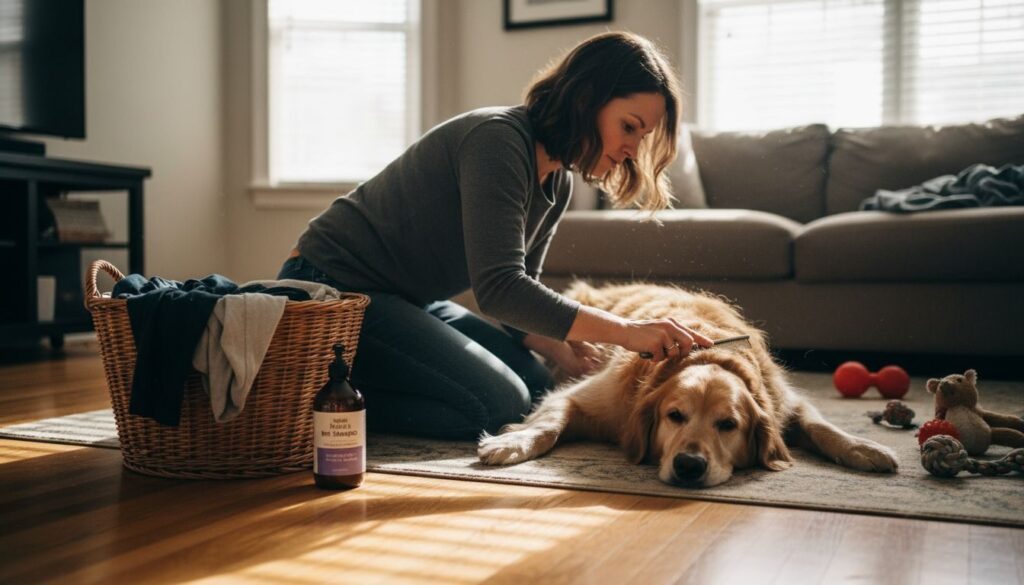
Over 50 million American households welcome pets into their homes, yet battling fleas remains one of the most common frustrations. Persistent fleas not only torment your animal but can also infest bedding, carpets, and toys, creating havoc throughout your living space. Discover how proven natural remedies and essential tips can help protect your American pet and home from these stubborn pests, using solutions recommended by trusted health organizations and experts.
Table of Contents
- 1. Regularly Comb Your Pet’s Fur With A Lice Comb
- 2. Bathe Pets Using Natural Lice Shampoo Formulas
- 3. Apply Tea Tree And Sage Essential Oils Safely
- 4. Use Apple Cider Vinegar Spray To Deter Fleas
- 5. Wash Pet Bedding And Toys In Hot Water
- 6. Vacuum Carpets And Upholstery Frequently
- 7. Cite Trusted Natural Health Sources And Reviews
Quick Summary
| Takeaway | Explanation |
|---|---|
| 1. Regularly Combing is Essential | Use a fine-toothed lice comb daily during flea season to effectively remove fleas from your pet’s fur. |
| 2. Bathe with Natural Shampoos | Use homemade natural shampoos with gentle ingredients to eliminate fleas while protecting your pet’s skin. |
| 3. Use Apple Cider Vinegar Spray | A mix of equal parts apple cider vinegar and water creates a spray that deters fleas and soothes skin. |
| 4. Wash Bedding and Toys in Hot Water | Wash all pet bedding and toys in hot water to kill fleas, larvae, and eggs effectively. |
| 5. Frequent Vacuuming is Important | Regularly vacuum carpets and upholstery to disrupt the flea life cycle and reduce infestations at home. |
1. Regularly Comb Your Pet’s Fur with a Lice Comb
Flea combs are your first line of defense in battling these tiny, persistent parasites. When it comes to removing fleas from your furry friend, a fine-toothed lice comb is an essential tool that can make a significant difference in managing these irritating insects.
Research has demonstrated the remarkable effectiveness of regular combing. A PubMed study revealed that the majority of fleas are removed within the first 5 minutes of thorough combing, which means consistent grooming can substantially reduce flea populations on your pet.
To effectively use a lice comb, start by positioning your pet in a well-lit area. Carefully run the fine-toothed comb through your pet’s fur, paying close attention to areas like the neck, tail base, and belly where fleas tend to congregate. According to the New York State Department of Health, this process not only removes adult fleas but also helps you monitor the success of your overall flea control strategy.
For best results, dip the comb in a solution of warm water and mild soap between passes to trap and eliminate any fleas you remove. White paper or a light-colored towel underneath your pet can help you spot the tiny dark fleas more easily.
Pro Tip: Comb your pet daily during flea season and at least weekly during other times, using slow, deliberate strokes to ensure you catch as many fleas as possible.
2. Bathe Pets Using Natural Lice Shampoo Formulas
Natural shampoo formulas offer a gentle yet effective approach to combating pet fleas without harsh chemicals. Bathing your pet with specialized shampoos can help eliminate existing fleas while protecting your furry friend’s skin and coat.
The American Kennel Club recommends creating a homemade solution that combines gentle cleansing with natural ingredients. Their recipe includes warm water, non-toxic dish soap, and white vinegar, which work together to clean your pet’s coat while being kind to their skin.
When selecting a flea shampoo, look for formulations that contain natural insecticidal ingredients. EPA-registered shampoos with coconut conditioners can effectively target fleas while simultaneously improving your pet’s coat health, adding body and luster to their fur.
To maximize effectiveness, thoroughly wet your pet’s coat before applying the shampoo. Massage the solution into the fur, paying special attention to areas where fleas typically hide such as the neck, tail base, and behind the ears. Allow the shampoo to sit for several minutes before rinsing completely.
For pets with sensitive skin, always do a small patch test first and rinse thoroughly to prevent any potential irritation. Natural ingredients can be powerful yet gentle when used correctly.
Pro Tip: Combine bathing with regular combing to create a comprehensive flea removal strategy that addresses both adult fleas and potential eggs.
3. Apply Tea Tree and Sage Essential Oils Safely
Essential oils can be powerful natural solutions for managing pet fleas when used with careful consideration and proper knowledge. Tea tree and sage essential oils offer remarkable properties that can help repel and combat these persistent parasites.
Pet grooming products combining tea tree and eucalyptus oils demonstrate how these natural ingredients can effectively discourage skin irritations while providing soothing benefits. However, it is crucial to understand that essential oils must be used with extreme caution around pets.
Before applying any essential oil, always dilute them with a carrier oil such as coconut or almond oil. Pure essential oils are extremely concentrated and can be toxic to pets if used directly on their skin. A safe dilution ratio is typically 1 drop of essential oil per 50 drops of carrier oil.
Tea tree oil has natural antiseptic and antifungal properties that can help combat fleas, while sage oil provides additional repellent characteristics. When used correctly, these oils can create an environment that is less hospitable to fleas.
Pet owners should perform a small patch test before widespread application and watch for any signs of skin irritation or allergic reaction. Certain pets may be more sensitive to essential oils, so individual tolerance can vary significantly.
Pro Tip: Always consult with a veterinarian before introducing essential oils into your pet’s flea treatment regimen to ensure safety and appropriateness for your specific animal.
4. Use Apple Cider Vinegar Spray to Deter Fleas
Apple cider vinegar represents a natural and cost effective solution for managing pet flea populations. This pantry staple offers more than just culinary uses it can be a powerful weapon in your flea prevention arsenal.
Veterinary experts recommend using vinegar based solutions to create an environment that is inhospitable to fleas. The acidic nature of apple cider vinegar disrupts the pH balance that fleas prefer, making your pet less attractive to these persistent parasites.
To create an effective apple cider vinegar spray, mix equal parts water and raw unfiltered apple cider vinegar in a clean spray bottle. Before application, test a small area of your pet’s fur to ensure no skin sensitivity exists. Spray lightly on your pet’s coat avoiding the face and any open wounds, focusing on areas where fleas typically hide such as the neck and tail base.
The spray works by creating an acidic environment on your pet’s skin that fleas find uncomfortable. Additionally, apple cider vinegar can help soothe existing skin irritations caused by flea bites, providing a dual benefit of prevention and relief.
For maximum effectiveness, combine this spray with other flea control methods such as regular combing and maintaining a clean living environment. Routine cleaning practices like vacuuming and washing pet bedding in hot water can significantly reduce flea populations.
Pro Tip: Reapply the apple cider vinegar spray every few days and always dilute it properly to prevent skin irritation or discomfort for your pet.
5. Wash Pet Bedding and Toys in Hot Water
Flea infestations are not limited to your pet’s fur they can quickly spread through bedding, toys, and household surfaces. Washing these items in hot water represents a critical strategy in comprehensive flea elimination.
Public health experts recommend using high temperature washing to effectively kill fleas, larvae, and eggs. Hot water serves as a powerful weapon against these persistent parasites, destroying them at every life stage.
To implement this strategy, gather all pet bedding, blankets, plush toys, and fabric items that your pet frequently contacts. Wash these items in water temperatures of at least 140 degrees Fahrenheit, which is hot enough to kill fleas and their eggs instantly. Follow the wash cycle with a high heat dryer setting to ensure complete eradication.
The Natural Resources Defense Council emphasizes the importance of thorough cleaning, noting that vacuuming and washing items can significantly reduce the risk of reinfestation. Pay special attention to crevices, carpets, and areas where your pet spends considerable time.
Remember that flea control is a multistep process. Washing bedding and toys should be combined with other strategies like regular pet grooming, using flea prevention treatments, and maintaining a clean living environment.
Pro Tip: Repeat the hot water washing process every week during active flea season to maintain a consistent barrier against these unwanted guests.
6. Vacuum Carpets and Upholstery Frequently
Vacuuming is more than just a cleaning routine it is a strategic weapon in your battle against pet fleas. The right vacuuming technique can disrupt the flea life cycle and significantly reduce their population in your home.
Environmental health experts reveal that vacuuming does more than simply remove visible debris. The vibrations from your vacuum actually stimulate flea pupae to emerge as adults, making them vulnerable to subsequent elimination methods.
To maximize effectiveness, focus on key areas where fleas tend to hide. Thoroughly vacuum carpets, area rugs, upholstered furniture, pet bedding, and even cracks in hardwood floors. Pay special attention to dark, humid spaces like under furniture and in corners where flea eggs and larvae thrive.
Public health guidelines recommend regular vacuuming to remove food sources, larvae, and eggs. Immediately after vacuuming, seal and dispose of the vacuum bag or canister contents in an outdoor trash bin to prevent any captured fleas from reinfesting your home.
Consider using a vacuum with a strong suction and preferably a HEPA filter, which can trap even the smallest flea particles. For homes with severe infestations, vacuum daily during the initial treatment phase, then transition to a few times per week for maintenance.
Pro Tip: Sprinkle food grade diatomaceous earth on carpets before vacuuming to enhance flea elimination, letting it sit for a few hours to dehydrate and kill any remaining insects.
7. Cite Trusted Natural Health Sources and Reviews
Navigating the world of pet health remedies requires careful research and reliable information. Understanding how to identify and utilize trusted natural health sources can make a significant difference in your pet’s wellness and flea prevention strategy.
Reputable organizations like the American Kennel Club provide expert guidance on natural pet care solutions. These sources offer scientifically backed recommendations that help pet owners make informed decisions about flea treatment and prevention.
When researching natural health sources, look for organizations with established credibility in veterinary and animal health. Professional associations, university veterinary departments, and nonprofit environmental health organizations often provide the most comprehensive and reliable information.
The Natural Resources Defense Council offers comprehensive reviews that examine potential health hazards in commercial flea treatments. These detailed analyses can help you understand the risks and benefits of different flea control methods.
Key characteristics of trustworthy sources include clear citations of scientific research, expert authorship, regular content updates, and a commitment to presenting balanced, evidence based information. Avoid websites with excessive marketing language or unsubstantiated claims.
Pro Tip: Cross reference information from multiple reputable sources and consult with your veterinarian before implementing any new flea treatment strategy for your pet.
Below is a comprehensive table summarizing the key strategies and steps for managing pet fleas discussed throughout the article.
| Strategy | Implementation | Benefits/Outcomes |
|---|---|---|
| Comb Pet’s Fur | Use a fine-toothed lice comb daily during flea season; run through pet’s fur focusing on neck, tail base, and belly. Dip comb in soapy water between passes. | Removes most fleas within 5 minutes; helps monitor flea control success. |
| Natural Shampoo Bath | Use a homemade or natural shampoo formula with non-toxic ingredients like dish soap and vinegar; massage thoroughly into fur. | Eliminates existing fleas; protects skin and adds coat luster. |
| Essential Oils | Dilute tea tree and sage oils with a carrier oil; apply carefully after a patch test. | Repels fleas naturally; provides antiseptic and antifungal benefits. |
| Apple Cider Vinegar Spray | Mix equal parts water and apple cider vinegar; spray lightly on pet’s coat avoiding face. | Creates an environment fleas find uncomfortable; soothes skin irritations. |
| Wash Bedding & Toys | Wash items in hot water at least 140 degrees Fahrenheit weekly; follow with high heat drying. | Kills fleas, larvae, and eggs; reduces reinfestation risk. |
| Vacuuming | Focus on carpets, upholstery, and dark areas; use a vacuum with strong suction and a HEPA filter. | Disrupts flea life cycle; stimulates pupae to become vulnerable adults. |
| Trustworthy Sources | Use trusted sources like American Kennel Club for health solutions; consult veterinarian. | Informed decisions on flea treatment and prevention; reduces reliance on harmful treatments. |
Discover Natural Solutions to Protect Your Pet from Fleas Today
Dealing with persistent pet fleas can be stressful and exhausting. This article highlights how everyday remedies like lice combing, apple cider vinegar spray, and essential oils can help reduce flea populations while keeping your beloved pets safe. If you are seeking effective natural products and trusted guidance that align with these holistic approaches, Homeremedyshop.com offers carefully selected herbal supplements and natural remedies designed to support your pet’s wellness and flea prevention journey.

Take control now and create a flea-free environment for your furry friend with expert advice and quality natural remedies from Homeremedyshop.com. Explore our resources and solutions to combine proven home treatments with all-natural products that soothe and protect your pets. Visit us today to empower yourself with safe, effective remedies that work alongside your daily flea prevention routine.
Frequently Asked Questions
How often should I comb my pet’s fur to remove fleas effectively?
Regularly comb your pet’s fur with a fine-toothed lice comb at least once a day during flea season and weekly at other times. Focus on areas like the neck and tail base to catch fleas early and help reduce their population.
What natural ingredients can I use to make a flea shampoo for my pet?
You can create a homemade flea shampoo using warm water, non-toxic dish soap, and white vinegar. Mix these ingredients to gently cleanse your pet’s coat and help eliminate existing fleas while being kind to their skin.
How can I safely use essential oils to deter fleas on my pet?
Dilute tea tree or sage essential oils with a carrier oil, using a ratio of 1 drop of essential oil per 50 drops of carrier oil. Apply the mixture carefully to your pet’s fur, avoiding direct contact with their skin to prevent irritation.
How do I use apple cider vinegar to deter fleas?
Mix equal parts of raw unfiltered apple cider vinegar and water in a spray bottle, then lightly mist your pet’s coat while avoiding the face. This spray creates an uncomfortable environment for fleas, and you should reapply it every few days for continued effectiveness.
Why is it important to wash my pet’s bedding and toys in hot water?
Washing your pet’s bedding and toys in water temperatures of at least 140 degrees Fahrenheit kills fleas, larvae, and eggs. Do this weekly during flea season to maintain a clean environment and reduce the risk of reinfestation.
How can vacuuming help control flea populations in my home?
Vacuuming frequently disrupts the flea life cycle by removing eggs, larvae, and adult fleas from carpets and upholstery. Vacuum high-traffic areas thoroughly and dispose of the contents immediately to prevent reinfestation, aiming to vacuum daily during initial treatment phases.
Recommended
- Effective Home Remedies for Fleas – Home Remedies
- 14 Home Remedies to Get Rid of Fleas Quickly – Home Remedies
- Getting Rid of Fleas for Good: Top Home Remedies – Home Remedies
- 17 Home Remedies for Fleas on Cats – Home Remedies

