

Over 60 percent of American adults report experiencing nose pain at least once yearly, ranging from mild pressure to sharp discomfort. This often overlooked symptom impacts quality of life, especially for those who prefer holistic methods over pharmaceuticals. Understanding nose pain’s distinct causes and identifying natural management strategies empowers health-conscious individuals and parents to find relief without relying on conventional medicines.
Table of Contents
- What Is Nose Pain: Causes and Symptoms
- Types of Nose Pain and Key Differences
- How to Identify Your Nose Pain Source
- Natural Remedies for Each Type of Pain
- When to Seek Medical Help for Nose Pain
Key Takeaways
| Point | Details |
|---|---|
| Nose Pain Complexity | Nose pain can arise from various sources, including nerve pathways and systemic health issues, making diagnosis challenging. |
| Type Classification | Key types of nose pain include acute sinusitis, chronic sinusitis, trigeminal neuralgia, and allergic rhinitis, each with distinct symptoms. |
| Natural Remedies | Targeted natural remedies can effectively address specific types of nose pain, such as saline rinses for infections and local honey for allergies. |
| When to Seek Help | Persistent or worsening nose pain, especially with accompanying severe symptoms, warrants immediate medical attention for proper evaluation. |
What Is Nose Pain: Causes and Symptoms
Nose pain is a complex sensory experience involving discomfort, pressure, and sharp or burning sensations within the nasal region. Unlike simple surface-level irritation, this pain can originate from multiple sources including internal structures, nerve pathways, and surrounding tissues. Understanding the underlying mechanisms helps individuals identify potential causes and seek appropriate treatment.
Nose pain often results from various physiological triggers, with neuralgic pain involving nerve pathways being particularly significant. The trigeminal nerve, responsible for facial sensations, can generate burning or stabbing sensations that manifest as nasal discomfort. These neurological responses might emerge immediately after an injury or develop weeks later, making precise diagnosis challenging.
Clinical evaluation of nose pain typically requires comprehensive examination techniques. Medical professionals may utilize advanced diagnostic tools like CT scans and nasal endoscopy to determine the exact origin of pain. Common causes include post-traumatic injuries, inflammatory conditions, nerve compression, and underlying systemic health issues. Symptoms can range from localized tenderness and pressure to more intense, radiating pain that affects surrounding facial regions.
Pro Tip: Keep a detailed pain diary tracking location, intensity, duration, and potential triggers to help healthcare providers accurately diagnose the underlying cause of your nose pain.
Types of Nose Pain and Key Differences
Nose pain is not a uniform experience but a complex condition with distinct variations depending on underlying causes. Sinusitis represents a primary categorization of nasal discomfort, presenting in acute and chronic forms that significantly impact an individual’s respiratory and sensory experience. Acute sinusitis typically emerges suddenly, often triggered by viral infections, and manifests with intense facial pressure and rapid onset of symptoms.
Different types of nose pain emerge from various physiological triggers. Acute sinusitis usually lasts less than four weeks and involves sudden inflammation, while chronic sinusitis persists beyond 12 weeks with ongoing inflammatory responses. Specific nose pain disorders demonstrate unique symptom patterns including nasal obstruction, discharge, facial pressure, and potential reduction in smell sensitivity. Some conditions cause localized, sharp pain, whereas others generate widespread, systemic discomfort.
Neurological conditions also contribute to nose pain complexity. Trigeminal neuralgia, for instance, can generate intense, electric shock-like sensations radiating through nasal regions. Allergic rhinitis presents another distinct pain profile, characterized by persistent inflammation and hypersensitivity to environmental triggers. Each pain type requires nuanced understanding to ensure appropriate treatment and management.
Here’s a summary of common causes of nose pain and how they differ:
| Cause of Nose Pain | Typical Symptoms | Usual Duration | Diagnostic Clues |
|---|---|---|---|
| Acute Sinusitis | Sudden pressure, congestion | Under 4 weeks | Rapid onset, intense pain |
| Chronic Sinusitis | Persistent ache, stuffiness | Over 12 weeks | Recurring symptoms, fatigue |
| Trigeminal Neuralgia | Sharp, electric pain | Episodic, unpredictable | Facial nerve trigger points |
| Allergic Rhinitis | Itchy, burning sensation | Seasonal or ongoing | Sensitivity to allergens |
| Post-Traumatic Injury | Localized tenderness | Varies | Recent injury history |
Pro Tip: Record specific characteristics of your nose pain, including exact location, intensity, and accompanying symptoms, to help healthcare professionals accurately diagnose your condition.
How to Identify Your Nose Pain Source
Nose pain diagnosis requires a systematic approach that combines careful observation and detailed medical assessment. Detailed medical history evaluation serves as the critical first step in understanding the underlying cause of nasal discomfort. Patients should track specific characteristics of their pain, including precise location, intensity, duration, and any accompanying symptoms that might provide crucial diagnostic clues.

Key diagnostic indicators help differentiate various nose pain sources. Symptom patterns play a significant role in identifying potential conditions. Sharp, localized pain might suggest nerve involvement or injury, while widespread facial pressure could indicate sinus inflammation. Specific symptom characteristics help distinguish between acute and chronic conditions, with duration and response to initial treatments providing important diagnostic insights. Nasal discharge color, thickness, and frequency can also reveal whether the pain stems from viral infections, bacterial issues, or allergic responses.
Medical professionals typically employ a comprehensive approach to nose pain diagnosis. Physical examinations focus on assessing nasal mucosa, checking sinus tenderness, and performing neurological evaluations. Advanced imaging techniques like CT scans become valuable when infection, structural abnormalities, or potential tumors are suspected. Environmental factors, recent illnesses, and personal medical history also contribute to a comprehensive understanding of the pain’s potential origins.
Pro Tip: Create a detailed symptom journal documenting your nose pain, including timing, intensity, and potential triggers, to provide healthcare providers with comprehensive diagnostic information.
Natural Remedies for Each Type of Pain
Different nose pain types require targeted natural approaches that address specific underlying conditions. Home remedies can effectively manage mild sinus-related discomfort through strategic interventions designed to reduce inflammation and support the body’s healing process. Understanding the specific pain type allows individuals to select the most appropriate natural treatment strategy.
For viral and bacterial sinus infections, hydration and rest form the cornerstone of natural healing. Saline nasal rinses help clear mucus and reduce inflammation, while warm compresses can alleviate facial pressure and discomfort. Steam inhalation provides additional relief by opening nasal passages and reducing congestion. Herbal teas with anti-inflammatory properties like ginger and chamomile can support the immune system and help manage pain naturally.
Natural healing techniques support various nose pain sources, including allergic reactions and nerve-related discomfort. For allergic rhinitis, avoiding environmental triggers and using local honey can help reduce inflammatory responses. Essential oils like eucalyptus and peppermint can provide natural decongestion and pain relief. Individuals with nerve-related pain might benefit from gentle massage techniques, stress reduction practices, and targeted nutritional support that reduces overall inflammation.
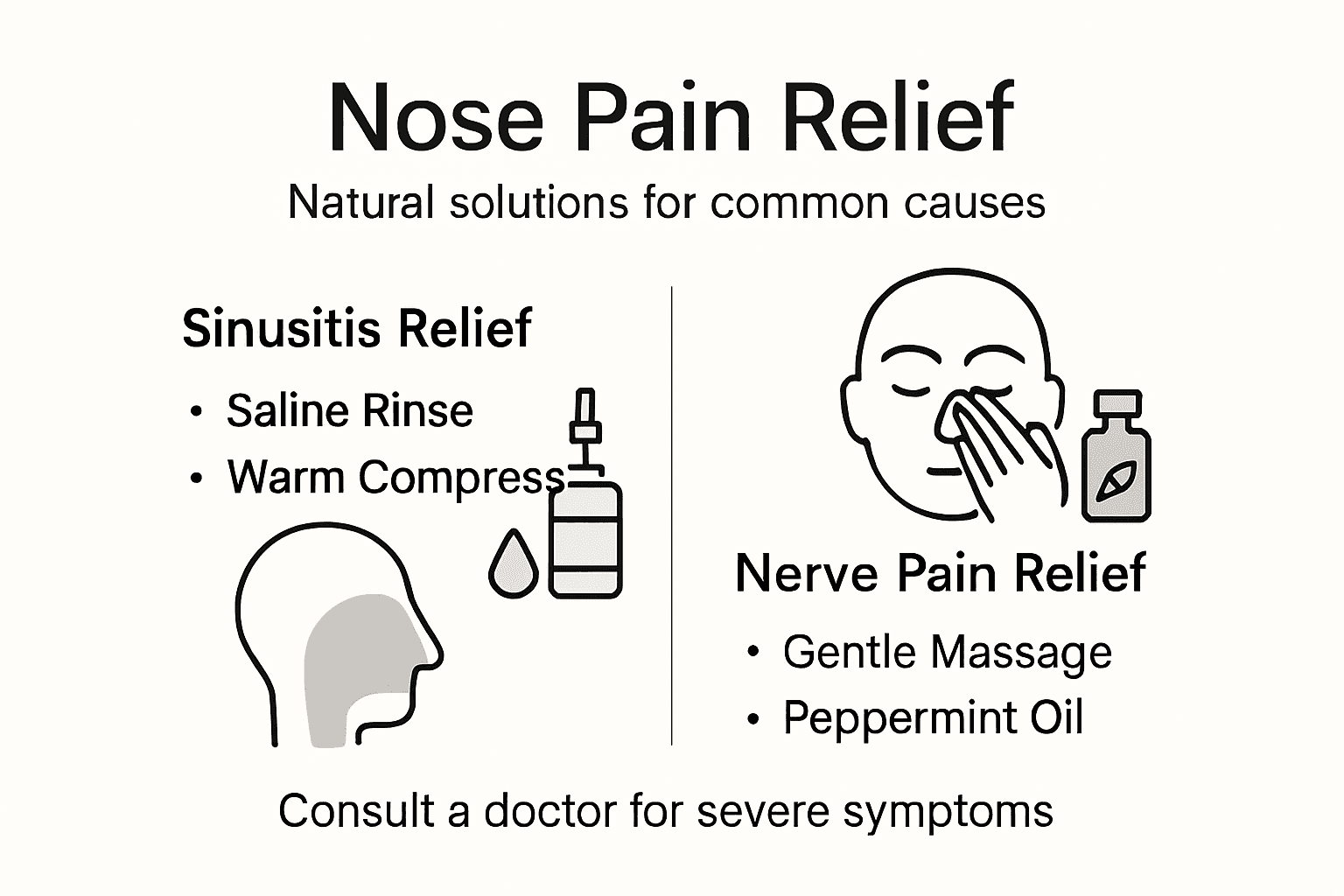
Compare natural approaches for different nose pain types:
| Pain Type | Recommended Natural Remedy | Primary Benefit | Special Considerations |
|---|---|---|---|
| Sinus Infection | Saline rinses, steam | Eases congestion, drainage | Avoid contaminated water |
| Allergic Rhinitis | Local honey, essential oils | Reduces inflammation | Monitor for allergic reactions |
| Nerve Pain | Gentle massage, ginger tea | Relieves tension, soothes | Time massage carefully |
Pro Tip: Create a personalized natural remedy kit with saline spray, warm compress, herbal tea, and essential oils to address different nose pain scenarios quickly and effectively.
When to Seek Medical Help for Nose Pain
Nose pain becomes a serious medical concern when certain critical symptoms emerge that indicate potential underlying health complications. Persistent symptoms requiring medical attention include pain lasting beyond 10 days, unexpected worsening of discomfort, or the presence of additional warning signs that suggest more complex medical conditions.
Specific red flags demand immediate medical evaluation. High fever accompanied by nose pain signals potential infection, while severe facial swelling or vision changes could indicate serious inflammatory responses. Individuals with recurrent sinus infections, those who do not respond to initial treatments, or people with compromised immune systems should seek professional medical advice promptly. Immunocompromised patients require immediate medical consultation for any new or intensifying nasal symptoms.
Certain population groups need heightened vigilance regarding nose pain. People with chronic health conditions, respiratory vulnerabilities, or autoimmune disorders should consult healthcare providers more quickly than otherwise healthy individuals. Signs that warrant urgent medical intervention include uncontrolled pain, difficulty breathing, greenish or bloody nasal discharge, and symptoms that significantly disrupt daily functioning or show no improvement after a week of home treatment.
Pro Tip: Photograph or document your symptoms with precise dates and descriptions to provide healthcare providers with comprehensive information during your medical consultation.
Discover Natural Solutions to Ease Your Nose Pain Today
Dealing with sharp or persistent nose pain can be overwhelming and impact your daily comfort. Whether your symptoms stem from sinus inflammation, nerve irritation like trigeminal neuralgia, or allergic reactions, finding safe and effective relief is essential. You deserve remedies that address your specific type of nose discomfort while supporting your body’s natural healing.
At Homeremedyshop.com, we empower you with a wide range of natural remedies carefully selected to soothe nasal pain and reduce inflammation. Explore detailed guides on home treatments for sinus infections and allergy relief alongside herbal supplements designed to calm nerve-related pain. Don’t wait until symptoms worsen or interfere with your well-being. Take control of your health with trusted natural therapies today and experience the difference of holistic care.
Start your journey to comfort now by visiting Homeremedyshop.com and uncover natural healing options tailored to your nose pain. Learn how traditional and scientific methods combine to bring you gentle, effective relief.
Frequently Asked Questions
What are the common causes of nose pain?
Nose pain can result from various causes, including acute sinusitis, chronic sinusitis, trigeminal neuralgia, allergic rhinitis, and post-traumatic injuries. Each condition presents with distinct symptoms and requires different approaches for effective treatment.
How can I naturally relieve sinus-related nose pain?
Natural remedies for sinus-related pain include staying hydrated, using saline nasal rinses to clear mucus, applying warm compresses to relieve facial pressure, and inhaling steam to open nasal passages. Herbal teas with anti-inflammatory properties like ginger and chamomile can also support healing.
When should I seek medical help for nose pain?
Seek medical attention if you experience nose pain lasting more than 10 days, a high fever, severe facial swelling, vision changes, or if your symptoms worsen despite home treatment. Individuals with chronic health conditions or a weakened immune system should consult a healthcare provider promptly.
What types of symptoms can differentiate acute sinusitis from chronic sinusitis?
Acute sinusitis typically presents with sudden onset symptoms lasting less than four weeks, including intense facial pressure. In contrast, chronic sinusitis lasts over 12 weeks with ongoing inflammatory responses, often including recurring symptoms like fatigue and a persistent ache.
Recommended
- 10 Home Remedies for Sinus Pressure Relief
- How to Stop a Runny Nose from Ruining Your Day! – Home Remedies
- Sinus Pressure Relief: 15 Home Remedies to Soothe Your Breath Quickly
- How to Get Rid of a Sinus Headache with Home Remedies – Home Remedies
- The Most Common Cause of Back Pain | Baggizmo
- Why does my dental implant hurt when I chew? – Albania Dental Implants

