
For many American adults, severe indigestion can disrupt daily life far beyond the dinner table. More than 60 million North Americans experience challenging digestive symptoms each year, driving a growing interest in holistic solutions. If you value natural healing over conventional treatments and are ready to reclaim your gut comfort, this guide delivers actionable steps rooted in proven home remedies and mindful lifestyle changes.
Table of Contents
- Step 1: Prepare A Calm Digestive Environment
- Step 2: Apply Clockwise Massage With Digest Essential Oils
- Step 3: Drink Fennel Or Digestive Herbal Tea
- Step 4: Eat Fiber-Rich Fruits Like Kiwi Instead Of Heavy Meals
- Step 5: Monitor And Assess Relief For Ongoing Comfort
Quick Summary
| Key Insight | Explanation |
|---|---|
| 1. Create a Calming Eating Environment | Modify your eating habits to reduce stress by eating slowly, avoiding distractions, and practicing relaxation techniques. |
| 2. Utilize Essential Oils for Massage | Apply digestive-friendly essential oils like fennel or peppermint in a clockwise abdominal massage to alleviate discomfort. |
| 3. Drink Herbal Teas for Digestion | Consume fennel or digestive herbal teas between meals to calm your gut and reduce inflammation effectively. |
| 4. Choose Fiber-Rich Fruits | Opt for light, fiber-rich fruits like kiwi instead of heavy meals during digestive distress to aid digestion. |
| 5. Monitor Your Digestive Responses | Keep a symptom diary to track food intake, reactions, and identify effective strategies or triggers for your digestion. |
Step 1: Prepare a Calm Digestive Environment
Creating a calm digestive environment starts with understanding how your daily habits impact your gut health. Proper preparation involves strategically modifying your eating patterns and lifestyle to reduce digestive stress and promote smoother digestion.
To establish a supportive digestive atmosphere, begin by examining your current diet and identifying trigger foods that cause indigestion. Fatty, greasy foods, caffeine, carbonated drinks, and alcohol can significantly disrupt your digestive process. Instead, focus on consuming whole foods that are easily digestible and provide essential nutrients. Eating slowly and mindfully allows your body to process food more efficiently, reducing the likelihood of uncomfortable digestive reactions.
Stress plays a critical role in digestive health, so incorporating relaxation techniques becomes essential. Consider practicing deep breathing exercises before meals, creating a calm eating environment without distractions like television or work. Smaller, more frequent meals can also help manage digestive strain and prevent overwhelming your system. Medical professionals recommend carefully reviewing your dietary habits and potential medication interactions that might contribute to digestive discomfort.
Pro tip: Keep a food journal to track which meals cause digestive distress and which promote comfort, helping you create a personalized digestive wellness strategy.
Here’s a comparison of common trigger foods and their impact on digestive wellness:
| Food Type | Potential Digestive Issue | Alternative Recommendation |
|---|---|---|
| Fatty and greasy | Increases indigestion risk | Grilled chicken, steamed vegetables |
| Carbonated drinks | Causes bloating and gas | Water, herbal teas |
| Caffeinated drinks | Can trigger acid reflux | Decaffeinated herbal tea |
| Alcohol | Irritates stomach lining | Sparkling water with lemon |
Step 2: Apply Clockwise Massage with Digest Essential Oils
Massaging your abdomen using essential oils can provide targeted relief for digestive discomfort and help create a soothing internal environment. This technique focuses on stimulating digestive muscles and promoting relaxation through gentle circular motions and strategic oil application.
Aromatherapy with essential oils can offer supportive benefits for relaxation and muscle tension, making it an excellent approach for managing indigestion. Select digestive-friendly essential oils like fennel or peppermint, which are known for their calming properties. Before applying, dilute the essential oil with a carrier oil such as coconut or jojoba to prevent skin irritation. Position your hand just below your ribcage and begin massaging in a clockwise circular motion, following the natural path of your large intestine.
Carefully apply consistent pressure while maintaining smooth, rhythmic movements. Proper essential oil application can help stimulate the nervous system and potentially relax gastrointestinal smooth muscles, potentially reducing digestive tension. Spend approximately 3 to 5 minutes performing the massage, breathing deeply and maintaining a relaxed posture to enhance the therapeutic effect.
Pro tip: Warm your massage oil slightly between your hands before application to improve absorption and create a more comfortable sensory experience.
Step 3: Drink Fennel or Digestive Herbal Tea
Herbal teas offer a soothing and natural approach to managing digestive discomfort, with fennel tea emerging as a particularly powerful remedy for indigestion. By preparing and consuming these healing beverages, you can help calm your digestive system and reduce inflammation.
Fennel seed extract has demonstrated remarkable potential for improving gastrointestinal health, making it an excellent choice for those struggling with digestive issues. To prepare fennel tea, steep one teaspoon of crushed fennel seeds in hot water for 10 minutes, then strain and drink while warm. You can also combine fennel with other digestive supporting herbs like peppermint or ginger to create a more complex healing blend. For optimal benefits, aim to drink the tea between meals or shortly before bedtime.
Consider rotating between different digestive herbal teas to provide variety and maximize potential therapeutic effects. Chamomile, peppermint, and ginger teas also offer excellent digestive support, each bringing unique properties to help soothe your gut and reduce inflammation. Always use fresh, high quality herbs and allow the tea to cool slightly before consuming to prevent irritation.
Pro tip: Add a small amount of raw honey to your herbal tea for additional antimicrobial benefits and to enhance the overall flavor profile.
Step 4: Eat Fiber-Rich Fruits Like Kiwi Instead of Heavy Meals
Choosing the right foods during indigestion can make a significant difference in your digestive comfort and overall healing process. Shifting from heavy, difficult-to-digest meals to light fiber-rich fruits provides a gentle approach to supporting your digestive system.
Kiwi offers exceptional digestive benefits by promoting gut health and improving stool regularity, making it an ideal alternative to complex meals during periods of digestive distress. The high fiber content helps soften stool, reduce bloating, and support a balanced gut microbiome. When experiencing indigestion, replace your regular meal with a serving of fresh kiwi or create a simple fruit salad combining kiwi with other easily digestible fruits like papaya or banana.

Dietary fiber plays a crucial role in managing digestive symptoms and promoting comfortable bowel movements, particularly for individuals struggling with functional dyspepsia. Start with small portions to allow your digestive system to adjust, and focus on consuming fresh, ripe fruits that are rich in natural enzymes and fiber. Consider alternating between different fiber-rich fruits to provide variety and ensure comprehensive nutritional support.
Pro tip: Slice kiwi and let it sit at room temperature for 10 minutes before eating to enhance its natural digestive enzymes and improve nutrient absorption.
Here’s a summary of key fiber-rich fruits for easier digestion:
| Fruit | Fiber Type | Digestive Benefit |
|---|---|---|
| Kiwi | Soluble/insoluble | Supports regular bowel movements |
| Papaya | Soluble | Contains papain for digestion |
| Banana | Soluble | Soothes stomach lining |
| Apple | Insoluble/soluble | Increases stool bulk |
Step 5: Monitor and Assess Relief for Ongoing Comfort
Tracking your body’s response to digestive interventions helps you understand your unique healing process and identify which strategies provide the most effective relief. By systematically monitoring your symptoms and reactions, you can fine tune your approach to managing indigestion.
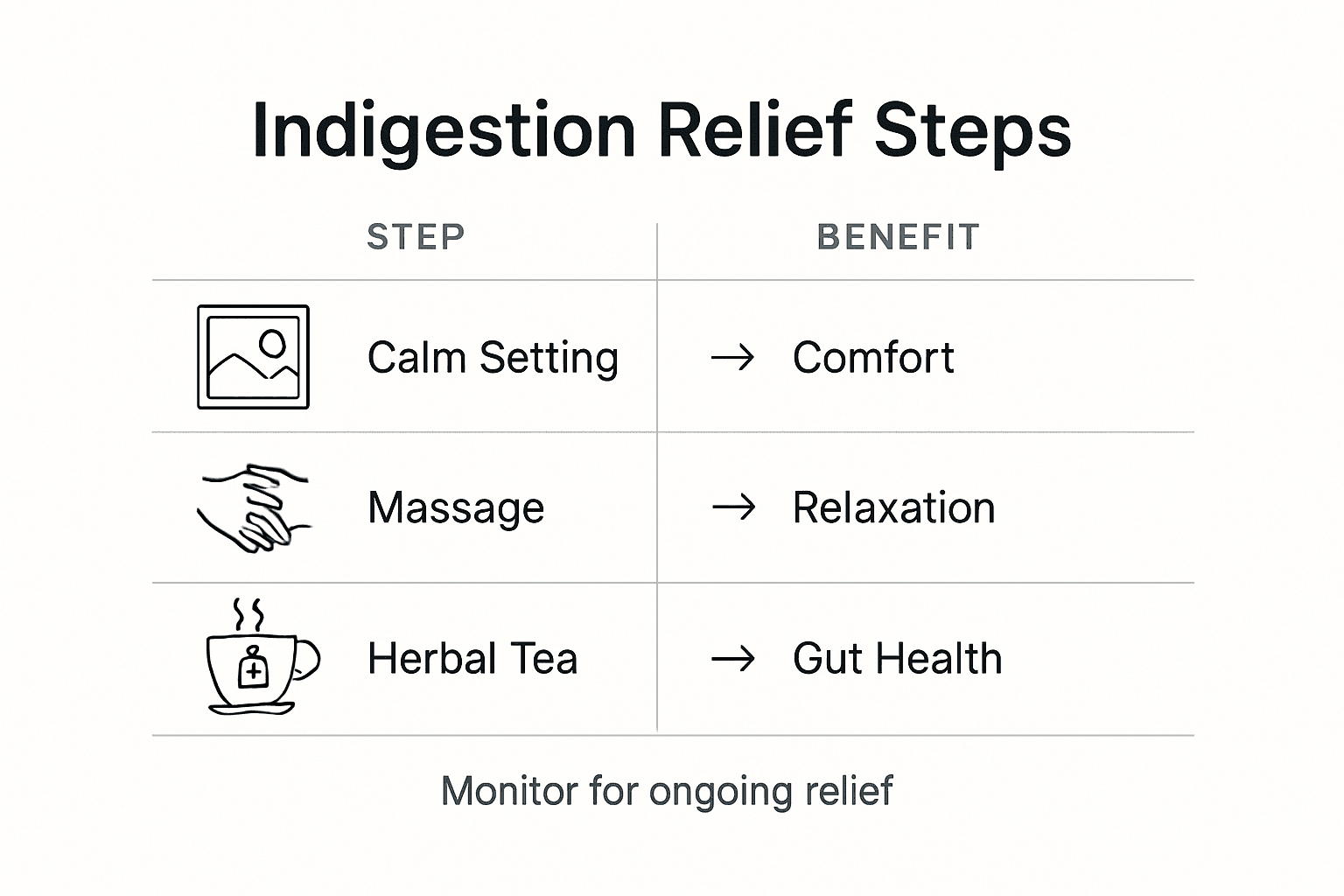
Effective management of indigestion requires continuous assessment of symptoms to determine treatment effectiveness, which means creating a detailed symptom diary becomes crucial. Record specific details about what you eat, when symptoms occur, their intensity, and how long they last. Note key information such as time of day, food types, stress levels, and any remedies you have tried. Pay attention to patterns that might reveal specific triggers or successful interventions.
Medical professionals recommend tracking symptom frequency, severity, and potential underlying conditions to develop a comprehensive understanding of your digestive health. If symptoms persist beyond two weeks or become increasingly intense, schedule a consultation with a healthcare provider. Your documented observations can provide valuable insights that help medical professionals develop a targeted treatment plan.
Pro tip: Use a smartphone app or digital spreadsheet to track your symptoms for easy pattern recognition and future reference.
Support Your Digestive Health Naturally with Trusted Remedies
Severe indigestion can disrupt your daily life and leave you searching for safe and effective solutions. This article highlights key challenges like managing digestive discomfort through calming environments, clock-wise abdominal massage, and herbal teas such as fennel. If you are looking to alleviate indigestion holistically and want trustworthy natural options, Homeremedyshop.com offers a curated selection of herbal supplements and detailed guidance to empower your self-care journey.

Take control of your digestive wellness today by exploring proven natural remedies for indigestion. Visit our site to discover carefully chosen herbs, essential oils, and wellness tips designed to soothe your gut and improve your comfort. Don’t wait for discomfort to worsen. Start your path to relief with expert advice and quality products at Homeremedyshop.com. See how natural therapies can support your health with confidence and ease.
Frequently Asked Questions
What are effective home remedies for severe indigestion?
Home remedies for severe indigestion include dietary adjustments, clockwise abdominal massage with essential oils, and herbal teas like fennel. Start by avoiding fatty foods and carbonated drinks while incorporating whole foods and gentle spices into your meals.
How can I create a calm digestive environment at home?
To create a calm digestive environment, focus on your eating habits and reduce distractions during meals. Try eating slowly in a serene space and practice relaxation techniques, such as deep breathing, to enhance digestion.
What essential oils are best for relieving digestive discomfort?
Fennel and peppermint essential oils are effective for relieving digestive discomfort. Apply diluted essential oil to your abdomen and massage in a clockwise motion for about 3 to 5 minutes to stimulate digestion.
How can herbal teas help with indigestion?
Herbal teas, particularly fennel, peppermint, and ginger, can soothe digestive discomfort and inflammation. Prepare a cup of fresh herbal tea and sip it slowly between meals or before bedtime to calm your gut.
What fruits are beneficial for digestion during indigestion?
Fiber-rich fruits like kiwi, papaya, and bananas are beneficial during episodes of indigestion due to their natural enzymes and high fiber content. Replace heavy meals with a serving of fresh kiwi or a fruit salad to support digestion and improve comfort.
How should I track my symptoms to manage indigestion effectively?
Keep a symptom diary to record what you eat, when symptoms occur, and their intensity. Tracking these details can help you identify patterns and triggers, allowing you to adjust your diet and strategies for better digestive health.
Recommended
- 21 Home Remedies for Relieving Indigestion – Home Remedies
- 30 Effective Home Remedies for Relieving Gas in 2022
- 27 Home Remedies for Removal of Acid Reflux – Home Remedies
- 27 Heartburn Remedies: How to Get Rid of Heartburn at Home?


Pingback: 7 Essential Natural Remedies for Parents to Try Now - Home Remedies